By

August 10, 2026
How Does Import Duty Work in the UK? A Guide for UK Importers
If your business imports goods into the UK, you may need to pay Customs Duty, import VAT and other import charges before the goods can enter the UK market.
Understanding how UK import duty works is important because these charges can significantly affect the true cost of importing products.
In this guide, we explain how import duty works in the UK, how Customs Duty is calculated, how commodity codes affect duty rates and how businesses can check what they may need to pay.
Import duty is a tax that may be charged when goods are imported into the UK.
The amount payable depends on several factors, including:
Customs Duty should not be confused with import VAT. A shipment can potentially be subject to both.
When goods are imported into the UK, they generally need to be declared to customs.
For businesses, the process typically involves:
1. Classifying the goods
The importer needs to determine the appropriate commodity code for the product.
2. Determining the origin
The origin of the goods can affect the Customs Duty rate, particularly where a trade agreement or preferential tariff is available.
3. Determining the customs value
A customs value must be established for the imported goods.
4. Checking the applicable tariff
The commodity code, origin and other details are used to determine the applicable Customs Duty rate and any additional measures.
5. Calculating Customs Duty
Where duty applies on an ad valorem basis, it is generally calculated as a percentage of the relevant customs value.
6. Calculating import VAT and other charges
Import VAT may also be payable, together with Excise Duty or other charges for certain products.
HMRC states that Customs Duty is often charged as a percentage of the customs value of imported goods. The primary valuation method is normally the transaction value—the price actually paid or payable for goods sold for import into the UK, subject to the required adjustments.
A commodity code is a classification number used to identify a particular type of product for customs purposes.
It is one of the most important pieces of information when importing goods into the UK.
The commodity code helps determine:
Using an incorrect commodity code could result in paying the wrong amount of duty or incorrectly completing your customs declaration.
Businesses can search for the appropriate code using the official UK Trade Tariff.
There is no single UK import duty rate.
The rate depends primarily on the goods being imported and their tariff classification.
Some goods can attract a zero rate of Customs Duty, while other products can be subject to a percentage-based duty or other tariff measures.
This is why businesses should avoid assuming that all imported products are charged at the same percentage.
You can check current commodity codes, Customs Duty rates and VAT information through the official UK Trade Tariff:
Check UK commodity codes and import duty rates on GOV.UK
For many products, Customs Duty is calculated using the customs value of the imported goods.
A simplified example illustrates how this can work.
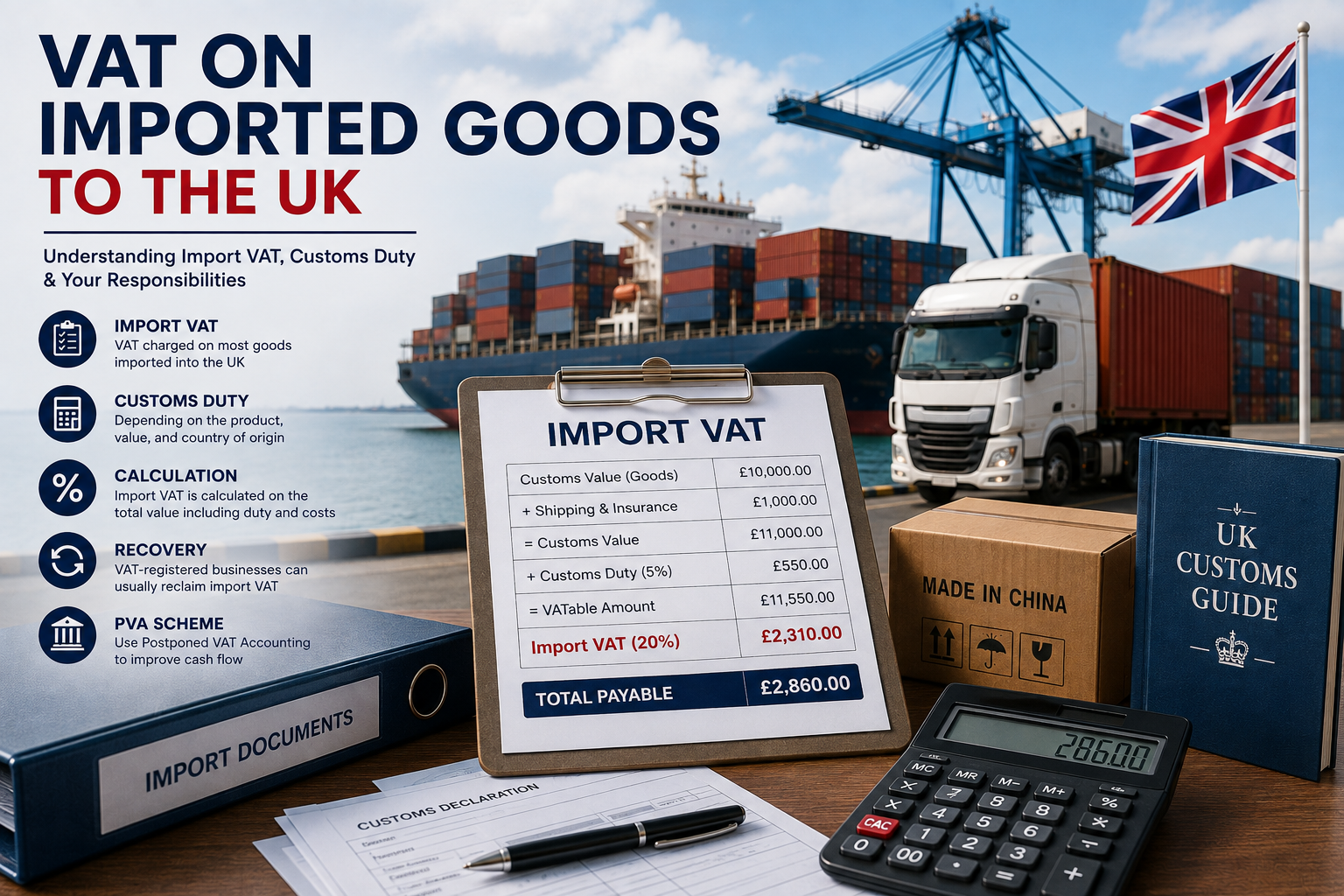
Suppose a UK company imports products with an applicable customs value of £10,000.
If the applicable Customs Duty rate were 5%:
£10,000 × 5% = £500 Customs Duty
The business would therefore have £500 of Customs Duty to account for.
This is only an illustration. Actual customs valuation can be more complicated because certain costs and adjustments may need to be included or excluded when establishing the customs value.
HMRC provides six customs valuation methods, with the transaction value method normally considered first.
Potentially, yes.
Businesses should not assume Customs Duty is calculated solely from the supplier's invoice price.
Depending on the circumstances and valuation rules, costs associated with getting the goods to the UK can form part of the customs value.
HMRC publishes specific guidance covering delivery costs and other adjustments when determining customs value.
This means the customs value can sometimes be higher than simply the amount shown as the product price on the commercial invoice.
Customs Duty and import VAT are separate charges.
Customs Duty is determined according to customs rules, including the classification, origin and value of the goods.
Import VAT is calculated using a VAT value based on the customs value, with certain additional amounts added.
HMRC states that the import VAT value can include applicable Customs Duty and other charges, as well as relevant incidental expenses such as transport, insurance and packing costs.
For example, a shipment could potentially involve:
Goods → Customs Value → Customs Duty → VAT Value → Import VAT
This is why businesses should consider the full landed cost of an imported product rather than looking only at its purchase price.
VAT-registered businesses may, subject to the normal VAT recovery rules and appropriate evidence, be able to recover import VAT relating to business imports.
This is different from Customs Duty.
Customs Duty is generally a cost of importing the goods and is not reclaimed through the VAT return in the same way as recoverable import VAT.
Businesses should therefore distinguish between Customs Duty and import VAT when calculating product margins.
Yes.
The origin of a product can have a major impact on the amount of Customs Duty payable.
The UK has trade agreements with various countries and territories. If goods satisfy the applicable rules of origin, they may qualify for a reduced or zero preferential tariff.
However, simply purchasing a product from a country covered by a trade agreement does not automatically mean the goods qualify.
The product must satisfy the relevant origin requirements and the importer must comply with the applicable evidence and customs requirements.
Not necessarily.
Following Brexit, goods moving between the EU and Great Britain are subject to customs procedures.
However, under the UK-EU trading arrangements, qualifying originating goods can potentially benefit from preferential tariff treatment.
The key issue is origin, not simply where the goods were shipped from.
For example, goods dispatched from an EU warehouse are not automatically EU-originating goods.
Goods imported from China are also classified using the relevant UK commodity code.
The importer should check:
Businesses importing from China should therefore calculate the total landed cost before agreeing to supplier pricing.
The landed cost is the total cost of getting an imported product to your business or its intended destination.
Depending on the transaction, this can include:
Product cost + freight + insurance + Customs Duty + import VAT + customs clearance + handling + other import-related charges
For an importer, landed cost is one of the most important figures when deciding whether a product can be sold profitably.
A product that appears inexpensive at the supplier level may become considerably more expensive once freight, duties and other charges are included.
Who is responsible for import charges can depend on the contractual arrangements and the agreed Incoterms.
The importer of record will normally have responsibility for the customs declaration and associated import obligations.
Businesses should therefore agree with suppliers and freight companies who is responsible for:
Understanding these responsibilities before shipment can prevent unexpected costs when goods reach the UK.
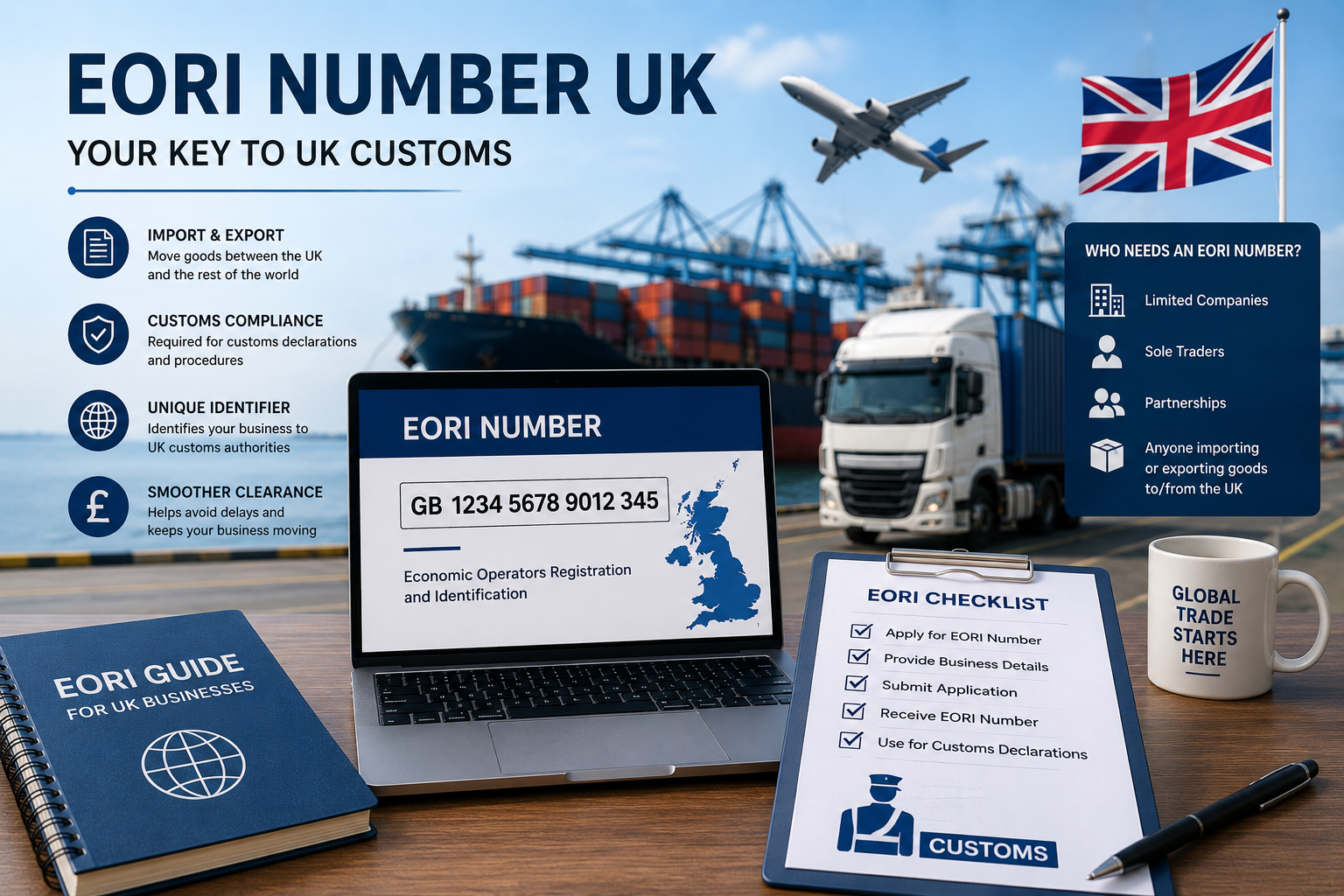
Businesses involved in importing goods will commonly need the appropriate Economic Operators Registration and Identification (EORI) number for customs activities.
The exact requirements depend on where the business is established and how the goods are being moved.
Importers should check their EORI requirements before arranging their first shipment.
Yes.
Many UK businesses use a customs agent, freight forwarder or courier to handle customs declarations.
A customs representative may assist with areas such as:
However, businesses should still maintain accurate product, supplier and import records.
There are legitimate circumstances where a business may qualify for reduced or zero Customs Duty.
These can include:
Eligibility depends on the goods, their origin and how they will be used.
Businesses should not change commodity codes or customs values simply to reduce duty. Customs declarations must accurately reflect the imported goods and applicable valuation rules.
Some of the most common mistakes UK importers should avoid include:
HMRC notes that although commodity classification systems are internationally recognised, product-specific treatment can vary. UK importers should therefore verify the appropriate UK classification rather than automatically relying on a code supplied overseas.
Before placing an international order, a UK importer should ideally know:
Product → Commodity Code → Origin → Customs Value → Duty Rate → Import VAT → Clearance Costs → Total Landed Cost
This makes it much easier to determine whether importing the product is commercially viable.
The UK government provides an online Trade Tariff where businesses can search commodity codes and check applicable Customs Duty, VAT and other tariff measures.
Search the UK Trade Tariff on GOV.UK
Import duty generally refers to Customs Duty charged on certain goods entering the UK. The amount depends on factors including the product classification, customs value and origin.
No. Some goods have a zero Customs Duty rate or may qualify for preferential treatment or relief.
No. Customs Duty and import VAT are separate charges and are calculated according to different rules.
Find the correct commodity code and use the UK Trade Tariff to check the applicable Customs Duty rate and other measures.
It can, particularly where preferential tariff treatment is available. However, the relevant country of origin may be different from the country from which the goods are shipped.
Freight forwarders and customs agents can often assist with customs declarations and calculations, although the importer should ensure the information supplied is accurate.
Understanding how import duty works in the UK is essential for businesses buying products internationally.
The amount of Customs Duty payable can depend on the commodity code, customs value, country of origin and applicable tariff measures. Import VAT and other charges may also need to be considered.
Before importing goods, businesses should therefore calculate the complete landed cost rather than focusing solely on the supplier's selling price.
For current commodity codes, Customs Duty rates, VAT rates and applicable tariff measures, always check the official UK Trade Tariff.
Check the official UK Trade Tariff on GOV.UK
This article provides general information and should not be treated as tax, customs, accounting or legal advice. Customs rules can depend on the goods, origin and circumstances of a particular import.