By

August 8, 2026
EORI Number UK: Complete Guide for Importers and Exporters
If your business imports or exports goods to or from the United Kingdom, you may need an EORI number to deal with customs authorities and complete customs procedures.
An EORI number is an important part of international trade and is commonly required when businesses move goods between Great Britain and other countries.
Whether you have recently registered a UK limited company, are planning to import goods from China or intend to export products overseas, understanding how to get an EORI number in the UK can help you avoid unnecessary customs delays.
This guide explains what an EORI number is, who needs one, how to apply and how it is used when importing and exporting goods.
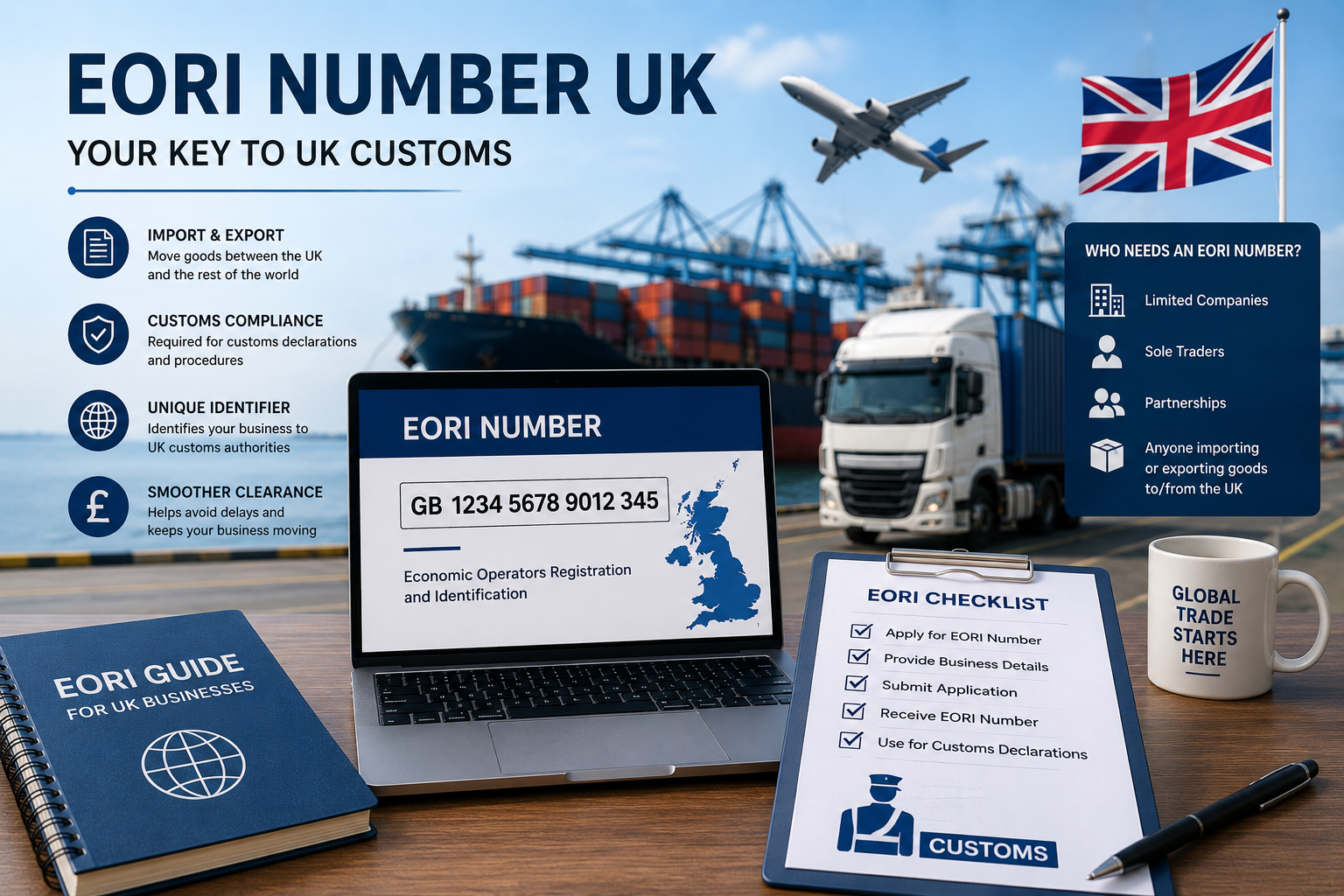
EORI stands for:
Economic Operators Registration and Identification
An EORI number is a unique identification number used by customs authorities to identify businesses and other economic operators involved in customs activities.
It allows customs authorities to connect customs declarations and other border procedures to the correct business.
An EORI number may be used when:
For many UK businesses involved in international trade, obtaining the appropriate EORI number is one of the first steps before importing or exporting.
For businesses operating in Great Britain, an EORI number will normally begin with:
GB
It is then followed by a series of numbers.
For VAT-registered businesses, the EORI number may be based on the company's VAT registration number, depending on the circumstances.
However, businesses should not simply assume they have an active EORI number because they are VAT registered.
It is important to check.
You may need an EORI number if you move goods:
Businesses importing products from countries such as China, the United States, India or other international markets will commonly need an appropriate EORI number.
An EORI number can also be required when exporting products from Great Britain.
Simply registering a limited company in the UK does not automatically mean the company needs an EORI number.
The requirement generally becomes relevant when the company becomes involved in customs activities.
For example, if your limited company:
then an EORI number may be required.
A UK company that operates entirely within the UK and does not move goods internationally may not need one.
Businesses importing commercial goods into Great Britain will commonly require a GB EORI number.
Your EORI number can be used on customs declarations and by customs agents acting on your behalf.
If the appropriate EORI number is missing, the shipment could potentially be delayed while the necessary customs information is obtained.
For this reason, new importers should arrange any required EORI registration before their first shipment leaves the supplier.
Businesses exporting goods from Great Britain may also require an EORI number.
The number helps identify the exporter when customs declarations and other export formalities are completed.
Exporters should also check whether the destination country requires additional registrations, licences or customs information.
Having a UK EORI number does not automatically satisfy the customs requirements of another country.
If your UK business is importing commercial goods from China into Great Britain, you will commonly need a GB EORI number.
This is particularly relevant for businesses importing:
Before ordering from a Chinese supplier, businesses should also check:
The EORI number is only one part of the import process.
Following Brexit, customs formalities generally apply when goods move between Great Britain and EU countries.
This means businesses importing goods from the EU into Great Britain may require an EORI number.
The same can apply when exporting goods from Great Britain to customers or businesses in the EU.
However, specific arrangements can vary depending on where the goods are moving and the customs procedure being used.
Northern Ireland has particular customs arrangements.
Depending on the movement of goods, businesses may require an EORI number beginning with:
XI
An XI EORI number can be relevant for certain movements involving Northern Ireland and the EU.
Businesses trading through Northern Ireland should check the specific requirements for their circumstances rather than assuming a GB EORI number is sufficient for every movement.
Businesses can apply for an EORI number through the UK government's official services.
The application process will normally require information about the business.
Depending on the circumstances, this can include:
Make sure the information provided matches official company and tax records.
Applying for an EORI number directly through the UK government's official service is generally free.
Businesses should therefore be cautious about third-party websites charging substantial fees simply to submit an EORI application.
Professional advisers can legitimately charge for customs or advisory services, but businesses can normally apply directly through the official government process.
Processing times can vary.
Businesses should avoid waiting until a shipment is already at the UK border before dealing with EORI registration.
If you know that your company will begin importing or exporting, arrange the appropriate registration in advance.
This gives you time to resolve any application issues before the goods are shipped.
Yes.
A newly incorporated UK limited company can potentially apply for an EORI number.
You do not necessarily need several years of trading history before registering.
This is important for new businesses planning to import their first inventory from overseas.
For example, a newly formed ecommerce company intending to import products from China can arrange its customs registrations as part of its initial business setup.
EORI requirements are not limited to limited companies.
Sole traders and partnerships involved in relevant customs activities may also need an EORI number.
The appropriate registration depends on the person or entity acting as the importer or exporter.
Not necessarily.
A business can potentially require an EORI number even if it is not VAT registered.
EORI registration and VAT registration serve different purposes.
EORI identifies businesses for customs purposes, while VAT registration relates to the VAT system.
Businesses should assess each requirement separately.
No.
An EORI number and VAT number are not the same thing, although they can be connected.
A VAT number identifies a business for VAT purposes.
An EORI number identifies an economic operator for customs purposes.
A VAT-registered business may have an EORI number based partly on its VAT number, but the two registrations have different functions.
No.
A Companies House registration number identifies a UK registered company.
An EORI number is used for customs purposes.
For example, a limited company involved in international trade could potentially have several identifiers:
Each serves a different purpose.
Businesses can use official online services to check the validity of certain EORI numbers.
This can be useful if:
When checking your own registration, make sure you use the correct legal entity.
A company and its director are not necessarily interchangeable for customs purposes.
If your business already has an EORI number, it may appear on:
If you cannot locate it, check using the appropriate official government service or contact HMRC where necessary.
An EORI number can appear throughout the customs process.
For example, imagine a UK company imports 2,000 products from a Chinese manufacturer.
The process might involve:
Without the appropriate customs registration, the clearance process can become more complicated.
Many businesses use customs brokers or freight forwarders to submit customs declarations.
Your customs agent may ask you for your:
Providing your EORI number does not necessarily transfer all responsibility to the customs agent.
Businesses should still ensure that information supplied for declarations is accurate.
An EORI number does not determine how much Customs Duty you pay.
Customs Duty depends on factors such as:
The EORI number simply helps identify the importer or exporter.
Businesses should therefore not confuse EORI registration with import-tax registration.
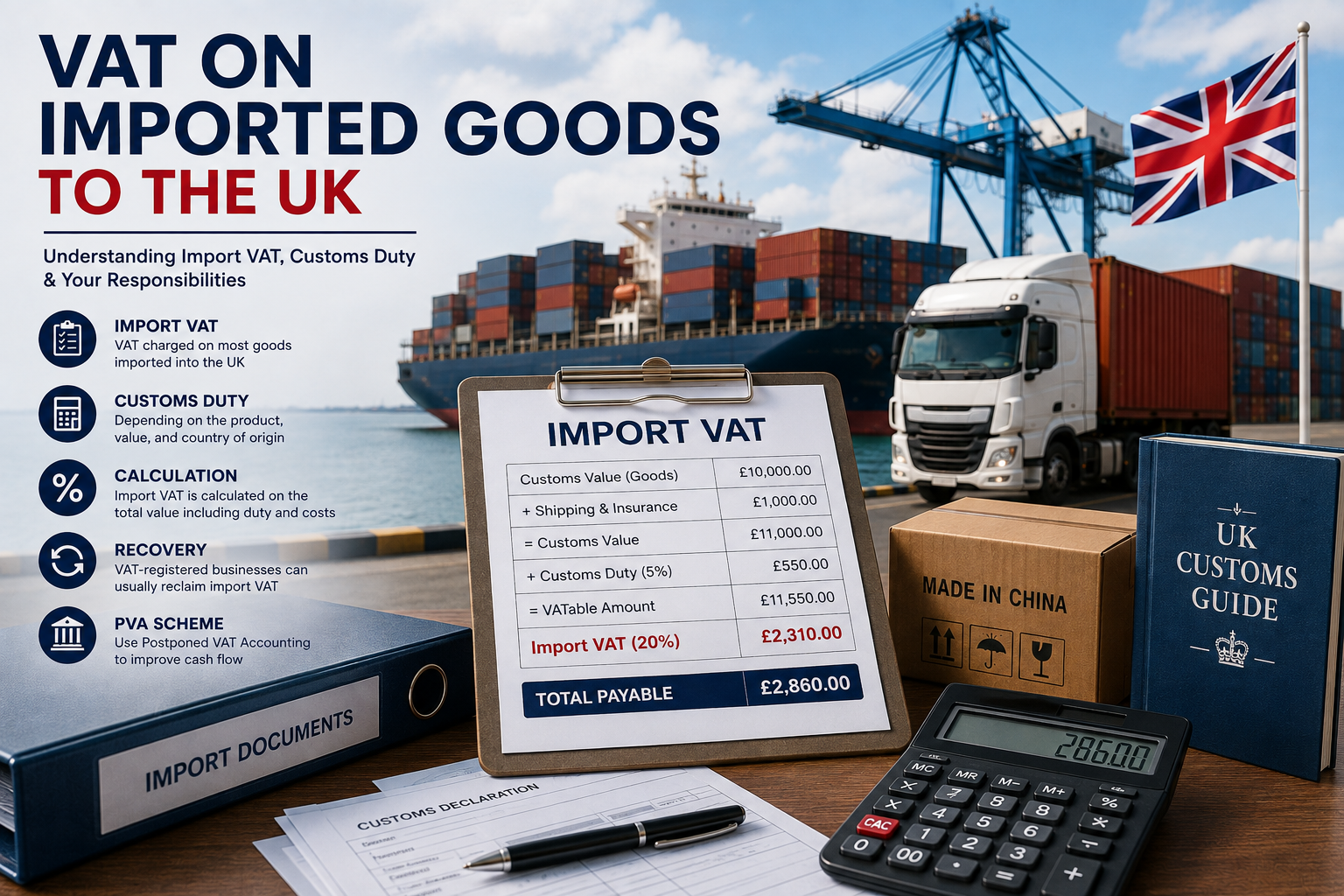
Similarly, obtaining an EORI number does not remove the requirement to account for import VAT where applicable.
VAT-registered businesses may be able to use Postponed VAT Accounting (PVA) for eligible imports.
This can allow import VAT to be accounted for through the VAT return rather than physically paid upfront and reclaimed later.
The appropriate customs and VAT information must be provided correctly.
If an EORI number is required but has not been obtained, your goods could be delayed during customs clearance.
Potential consequences can include:
For businesses relying on imported inventory, delays can also lead to lost sales.
It is therefore better to resolve EORI requirements before shipping.
Always check whether the appropriate EORI registration is active.
The importer shown on customs documentation should be correctly identified.
Do not wait until goods arrive at the border.
An EORI number identifies the business. A commodity code identifies the product.
They are related to different administrative systems.
Certain movements involving Northern Ireland may require an XI EORI number.
Before importing your first commercial shipment, check that you have considered:
An EORI number is important, but it is only one part of a successful import.
EORI stands for Economic Operators Registration and Identification.
Applying directly through the official UK government service is generally free.
No. A company that does not engage in relevant customs activities may not require one.
Yes. New companies can potentially apply where they need an EORI number for customs activities.
If an EORI number is required for your import, not having one can prevent or delay the appropriate customs procedures.
UK businesses importing commercial goods from China into Great Britain will commonly require a GB EORI number.
Businesses moving goods between Great Britain and EU countries may require an EORI number because customs formalities generally apply following Brexit.
No. EORI registration is used for customs identification, while VAT registration relates to VAT.
An EORI number is generally intended to remain associated with the relevant economic operator, although businesses should ensure their registration remains appropriate when company circumstances change.
An EORI number in the UK is an important requirement for many businesses involved in international trade.
If your company plans to import goods from China, Europe, the United States or other overseas markets, determine whether you need a GB EORI number before arranging your first shipment.
The same applies to businesses exporting products from Great Britain.
Obtaining an EORI number is only one part of preparing for international trade. Businesses should also consider commodity codes, Customs Duty, import VAT, product compliance, customs declarations and shipping arrangements.
Preparing these requirements before your goods are shipped can help reduce customs delays, unexpected costs and disruption to your supply chain.
For the latest requirements and applications, always use current official UK government guidance.
This article is for general information only and does not constitute customs, tax, legal or financial advice.