By

August 10, 2026
How Do I Start Importing Products From China to the UK?
Importing products from China to the UK can give businesses access to a huge range of manufacturers, competitive production costs and opportunities to develop private-label or custom products.
However, importing is more involved than simply finding a supplier and arranging delivery. UK businesses need to consider suppliers, product compliance, commodity codes, EORI requirements, shipping, customs declarations, import duty, import VAT and total landed costs.
This guide explains how to start importing products from China to the UK, from finding a supplier through to clearing your first shipment through UK customs.
Yes. UK businesses can import products manufactured or supplied from China, provided the goods comply with applicable UK laws and customs requirements.
The exact requirements depend heavily on the product.
For example, some products may require:
Before purchasing stock, check whether the product can legally be placed on the UK market.
A typical importing process looks like this:
Find a product → Find a Chinese supplier → Check compliance → Confirm the commodity code → Check EORI requirements → Calculate landed cost → Agree shipping terms → Arrange freight → Complete customs clearance → Receive your goods
Understanding each stage before placing your first large order can significantly reduce the risk of unexpected costs or delays.
Start by identifying the products you intend to sell.
Do not choose products based solely on the supplier's purchase price. Consider whether the product can remain profitable after all import-related expenses.
Research factors such as:
The figure that matters most is your total landed cost.
Finding the right supplier is one of the most important parts of importing from China.
Chinese suppliers can be found through sourcing platforms, trade exhibitions, sourcing agents, referrals and direct manufacturer relationships.
Before committing to a supplier, investigate the business carefully.
Consider checking:
For larger orders, consider arranging an independent factory inspection or supplier verification.
Avoid committing to a substantial order without seeing the product first.
Request samples from shortlisted suppliers.
Samples allow you to assess:
A sample can also help identify differences between the product advertised by the supplier and the product actually manufactured.
If you plan to create a private-label product, request a final pre-production sample showing your intended branding and packaging.
Product compliance should be investigated before you place the order, not when the shipment reaches the UK.
Different products are subject to different UK regulations.
Depending on what you import, requirements may relate to:
Do not automatically assume that a product compliant with Chinese requirements can legally be sold in the UK.
Likewise, a supplier saying that a product is "UK compliant" should not automatically be treated as sufficient evidence.
Ask for the relevant documentation and verify whether it applies to the exact product you are purchasing.
When importing goods into the UK, your business may take on legal responsibilities as an importer.
These responsibilities can extend beyond paying customs charges.
Depending on the product and applicable regulations, you may need to ensure that:
This is particularly important for businesses developing private-label products in China.
Putting your own brand on a product does not remove your compliance responsibilities.
Goods imported into the UK must be classified for customs purposes.
The commodity code identifies the type of goods being imported.
Your commodity code can determine:
Choosing the wrong commodity code can result in incorrect duty calculations or customs declarations.
Do not rely automatically on the classification supplied by your Chinese supplier. The classification used for export from China may not necessarily be the correct classification for your UK import declaration.
Use the official UK Trade Tariff to research the appropriate UK commodity code.
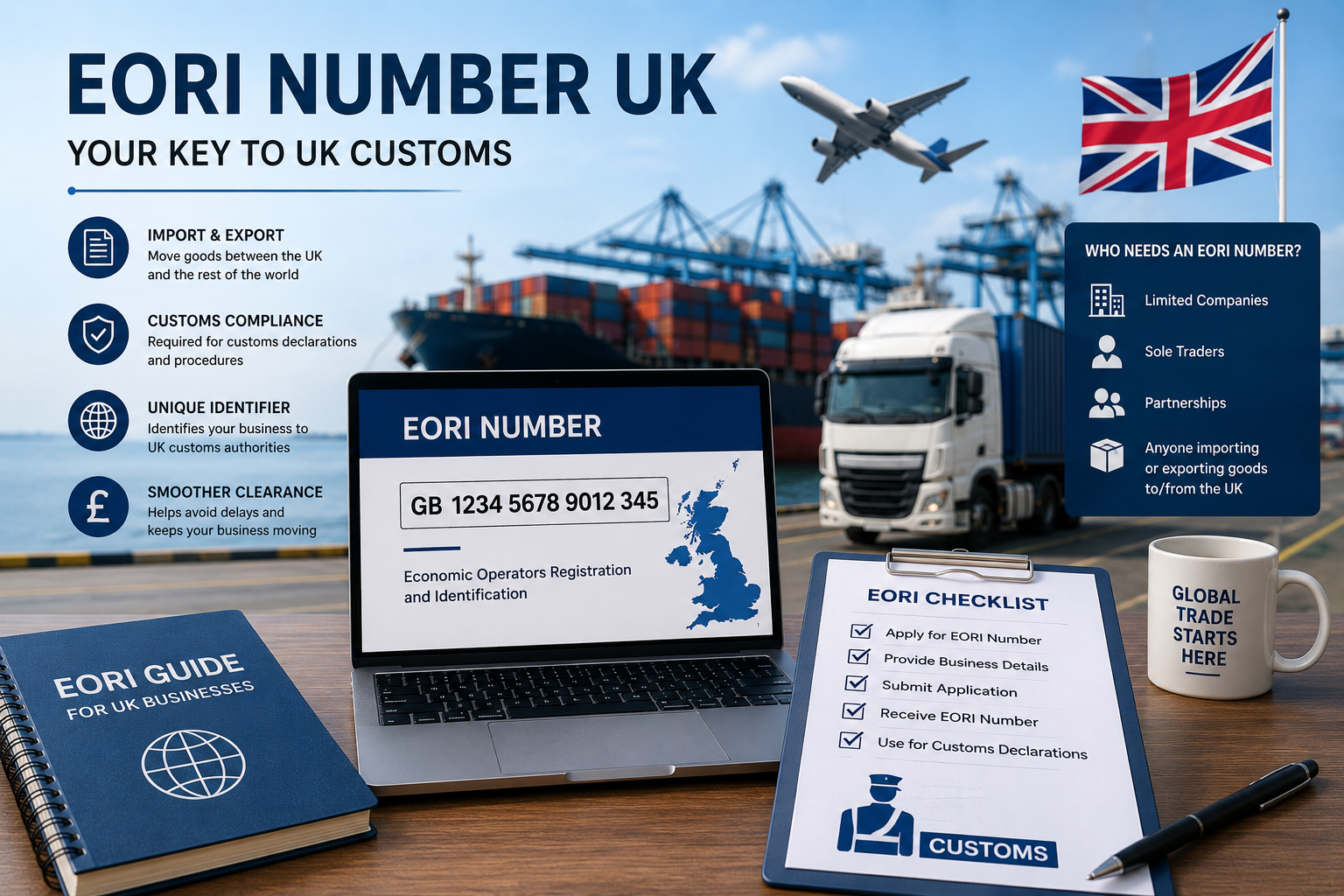
Businesses carrying out customs activities will commonly need an Economic Operators Registration and Identification (EORI) number.
An EORI number is used to identify businesses dealing with customs authorities.
Before your first shipment leaves China, establish whether your business requires an EORI number and make sure the appropriate registration is in place.
This can help avoid unnecessary delays when the goods reach the UK.
Goods imported from China may be subject to Customs Duty.
There is no universal import duty percentage for products coming from China.
The amount can depend on factors including:
Some products may have no Customs Duty, while others can attract significant charges.
Certain goods may also be affected by additional trade measures.
Always check the current UK Trade Tariff for the particular product before ordering.
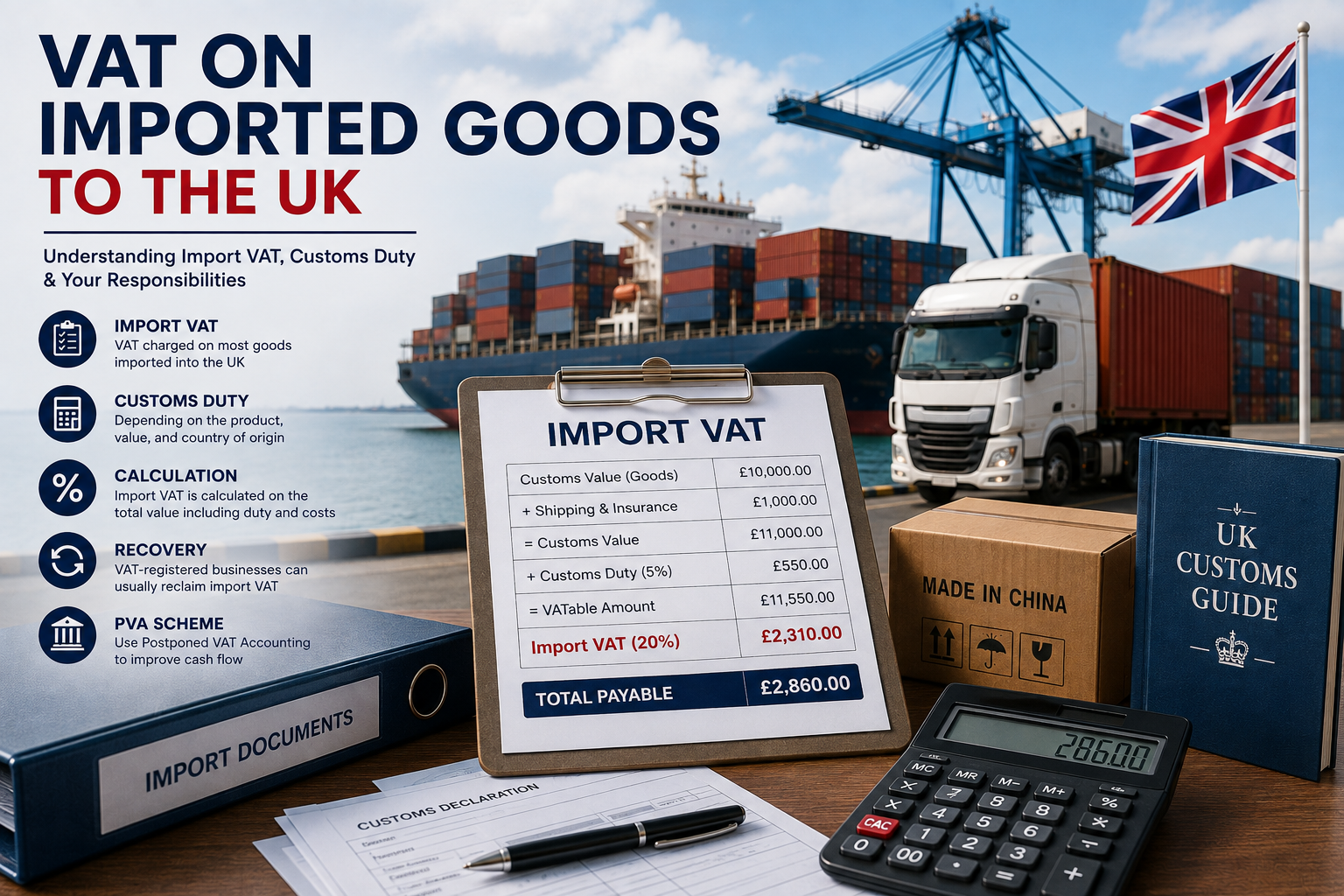
Import VAT is separate from Customs Duty.
When goods are imported into the UK, import VAT may become due.
The amount is generally based on the relevant VAT value, which can include the customs value together with certain additional costs and applicable duties.
VAT-registered businesses may be able to recover eligible import VAT subject to the normal VAT rules and appropriate documentation.
Because Customs Duty and import VAT operate differently, businesses should account for them separately when calculating import costs.
One of the biggest mistakes new importers make is comparing the Chinese factory price directly with the UK selling price.
The factory price is only part of the cost.
A simplified landed-cost calculation might include:
Product cost + packaging + inland transport in China + international freight + insurance + Customs Duty + customs clearance + handling + UK delivery + other applicable charges
Import VAT may also have an important cash-flow impact, even where the business is ultimately entitled to recover it.
Imagine you buy a product from a Chinese supplier for £10 per unit.
Once you include freight, insurance, Customs Duty, customs clearance, warehousing and local delivery, the actual cost of getting the product into your warehouse might be considerably higher.
That final figure should be used when calculating:
Always calculate the expected landed cost before confirming a large purchase order.
When requesting quotations from Chinese suppliers, you will frequently encounter Incoterms.
Incoterms establish certain responsibilities between the buyer and seller relating to transportation, costs and risk.
Common terms encountered by importers include:
The buyer takes responsibility relatively early in the shipping process, typically from the supplier's premises.
This can give experienced importers greater control but may require more logistics management.
FOB is commonly used for sea freight.
The supplier handles specified responsibilities up to the agreed port and loading point, after which the buyer assumes the responsibilities defined by the applicable FOB term.
The seller arranges specified freight and insurance to the named destination port, although the allocation of risk and additional destination costs needs to be understood carefully.
The seller assumes extensive responsibility for delivering the goods to the agreed destination, including specified import formalities and duties.
DDP can appear convenient, but businesses should understand exactly who is acting as importer and how customs and VAT documentation will be handled.
Never choose an Incoterm simply because the quotation appears cheapest.
There are several ways to transport products from China to the UK.
Air freight can be suitable for:
It is generally faster than sea freight but can be more expensive.
Sea freight is widely used for larger commercial shipments.
Businesses may choose between:
FCL — Full Container Load
You effectively use a full container for your shipment.
LCL — Less than Container Load
Your goods share container space with shipments belonging to other importers.
Sea freight can be economical for larger quantities, although transit times are longer.
International couriers can be practical for samples and relatively small shipments.
They may also handle much of the customs-clearance process on behalf of the importer.
New importers often benefit from working with an experienced freight forwarder.
A freight forwarder can coordinate transportation between China and the UK.
Depending on the service, they may help arrange:
When comparing freight quotations, ask what is included and excluded.
A cheap headline freight rate can become expensive if numerous destination charges are added later.
The documents required depend on the shipment and product, but commonly encountered documentation includes:
Ensure the information provided by the supplier matches the actual shipment.
Incorrect descriptions, values or quantities can cause customs problems.
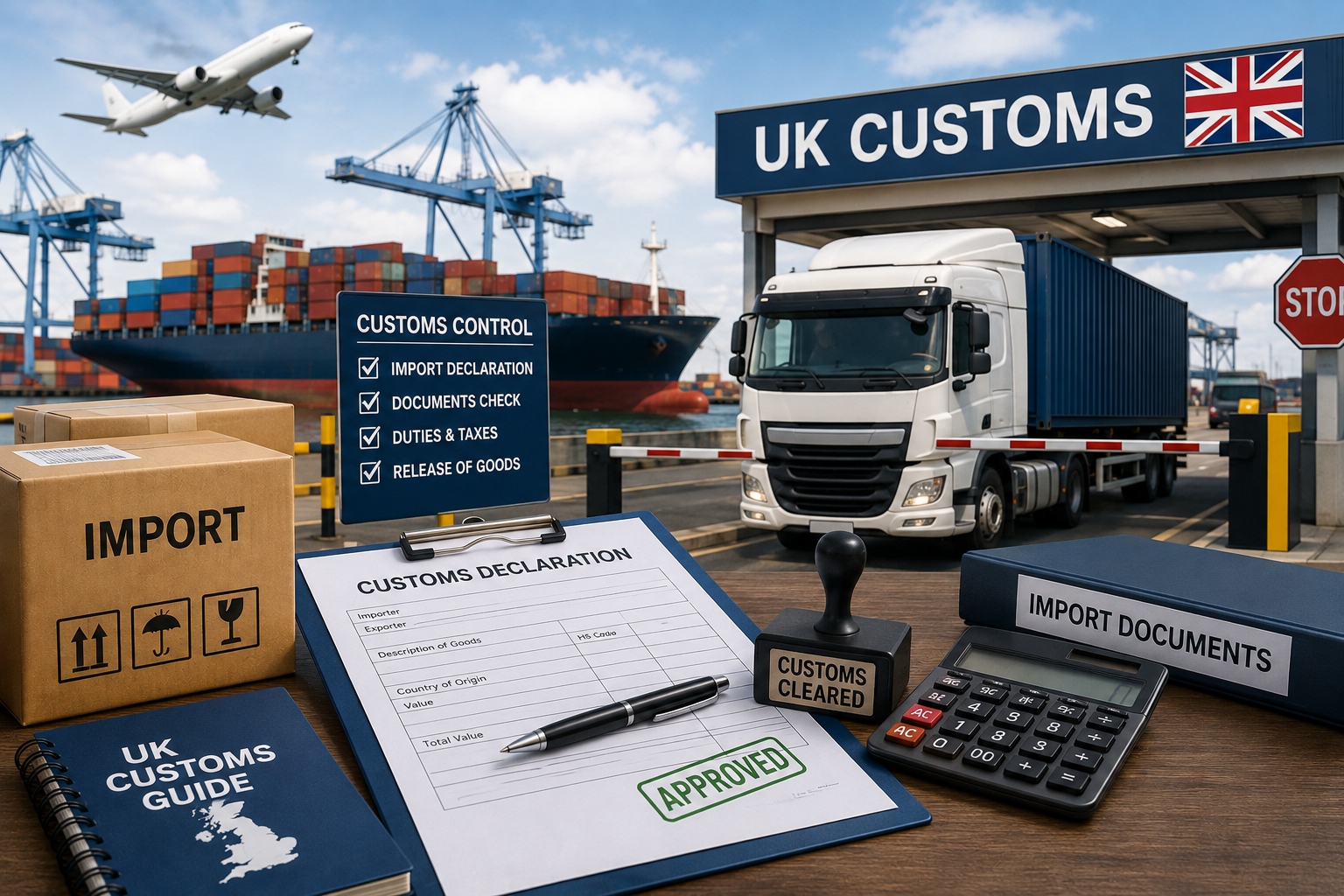
When your shipment arrives in the UK, the goods need to complete the appropriate customs procedures before they can be released.
Many businesses appoint a customs agent, freight forwarder or courier to submit customs declarations.
You will typically need to provide accurate information regarding the:
Customs charges may need to be accounted for before the goods are released, depending on the arrangements being used.
International shipping involves risk.
Goods can potentially be:
Do not automatically assume the freight company's standard liability provides sufficient protection.
Consider appropriate cargo insurance based on the value and nature of your shipment.
For larger orders, consider arranging a pre-shipment inspection.
An independent inspection company can inspect the goods before the final balance is paid and before the shipment leaves China.
Inspections can check areas such as:
Discovering a manufacturing problem while the products are still at the factory is usually easier than discovering it after the goods arrive in the UK.
Payment arrangements vary between suppliers.
Before sending significant amounts of money:
A common arrangement involves paying a deposit before production and the balance after production, but commercial terms vary considerably.
For larger transactions, businesses may wish to consider additional payment protections.
Your first import does not necessarily need to be your largest possible order.
A smaller commercial shipment can help you test the complete supply chain.
You can learn:
Once the supply chain has been proven, you can consider increasing order quantities.
New UK importers should watch out for common mistakes such as:
Good preparation can prevent many of these problems.
It can be.
However, profitability depends on much more than obtaining a low factory price.
A successful importer needs to consider the entire commercial equation:
Supplier price → Shipping → Customs → Landed cost → Selling price → Operating costs → Profit
The best importing opportunities are generally products where there is sufficient margin after all costs have been considered.
There is no single delivery time.
The total lead time can depend on:
Rather than building a business around an exact shipping-time assumption, allow sufficient inventory and scheduling buffers.
This makes the article's advice useful even when international freight conditions change.
You can potentially handle certain customs processes yourself, but many businesses use a customs agent, courier or freight forwarder.
This can be particularly useful when importing commercially for the first time.
However, using an agent does not remove the need to provide accurate information about your products.
The appropriate setup depends on who is importing the goods and where the business is established.
Businesses should establish the correct importer arrangements, EORI requirements, VAT position and customs responsibilities before shipping goods.
This is particularly important for overseas businesses intending to import products into the UK and sell directly to UK customers.
Start by researching the product, finding and verifying suppliers, ordering samples, checking UK product requirements, identifying the commodity code, establishing EORI requirements, calculating landed costs and arranging freight and customs clearance.
Customs Duty may apply. The applicable treatment depends on factors including the type of product, its commodity code, customs value, origin and relevant tariff measures.
Import VAT may apply when goods enter the UK. VAT-registered businesses may be able to recover eligible import VAT subject to the applicable rules and documentation.
For larger shipments, sea freight can often provide a lower transportation cost per unit than air freight. However, businesses should compare the total landed cost, not simply the headline freight price.
A sourcing agent can be useful for finding factories, negotiating prices, monitoring production and arranging inspections. However, the agent should also be independently verified.
Buying directly from a manufacturer can provide advantages such as better pricing, product customisation and greater control over production. Trading companies can also be useful, particularly where smaller quantities or multiple product types are required.
Before your goods leave China, make sure you have considered:
Importing products from China to the UK can create significant opportunities for retailers, wholesalers, ecommerce businesses and private-label brands.
The key is to treat importing as a complete supply chain rather than simply purchasing cheap products overseas.
Before placing an order, understand your supplier, product compliance requirements, commodity code, customs obligations, import duty, import VAT, shipping arrangements and total landed cost.
A simple framework to remember is:
Find → Verify → Sample → Comply → Classify → Calculate → Ship → Clear → Sell
Taking these steps can help make importing from China to the UK more predictable, scalable and commercially sustainable.
For current requirements, importers should always check the latest official guidance from HMRC and GOV.UK, including the UK Trade Tariff, EORI requirements, customs procedures and product-specific regulations.
This article provides general information and is not intended as customs, tax, legal or product-compliance advice. Requirements vary depending on the goods, business and circumstances.