By

October 16, 2026
What Is Estonia e-Residency and How Does It Work? A Complete Guide for International Entrepreneurs
Estonia has established itself as one of Europe's leading digital business environments, attracting entrepreneurs who want to establish and manage companies remotely.
One of the country's most recognised initiatives is the Estonia e-Residency programme, which allows eligible individuals from around the world to obtain a government-issued digital identity and access certain Estonian online services.
For international entrepreneurs, freelancers, consultants and digital business owners, e-Residency can provide a practical way to establish and administer an Estonian company without permanently relocating to Estonia.
However, e-Residency is frequently misunderstood. It is not citizenship, a residence permit, a travel document or an automatic entitlement to an Estonian business bank account.
Understanding what the programme actually provides is essential before deciding whether it is suitable for your business.
This guide explains how Estonia e-Residency works, who can apply, how to establish an Estonian company, what costs and obligations to consider, and how e-residents can manage international business operations.
Estonia e-Residency is a government programme that provides eligible foreign nationals with a secure digital identity for accessing certain Estonian electronic services.
The programme is designed to make it easier for international entrepreneurs to interact with Estonia's digital business infrastructure.
An approved applicant receives a digital identity card that can be used for electronic authentication and legally recognised digital signatures within supported systems.
Depending on the service and eligibility requirements, e-residents can use their digital identity to:
E-Residency provides digital access to services rather than physical residence in Estonia.
The programme works by issuing an eligible applicant a secure digital identity that can be used to authenticate themselves and sign documents electronically.
After approval, the applicant collects a physical digital identity card from an authorised pickup location.
The card works with compatible software and supported digital services.
Applicants submit an online application through the official Estonian government process.
The application generally requires personal information, identification details, a photograph and an explanation of the applicant's reasons for seeking e-Residency.
The relevant Estonian authorities assess the application and carry out appropriate checks.
Approval is discretionary and is not guaranteed.
If approved, the applicant must collect the card from the selected pickup location and complete the required identity verification.
This usually involves attending an appointment in person.
Once the card is available for use, the holder can access supported Estonian online services using the required software and authentication credentials.
Eligible e-residents may use their digital identity to establish and administer an Estonian company through the relevant online systems.
E-Residency does not automatically create a company. Business registration is a separate process.
Estonia e-Residency is designed for eligible individuals from outside Estonia who want access to the country's digital services.
Potential applicants include:
Applicants do not generally need to live in Estonia to apply.
However, applications are subject to identity verification, background checks and applicable eligibility restrictions.
E-Residency is not automatically available to every applicant, and approval depends on the relevant authorities.
Estonia e-Residency offers several potential advantages for entrepreneurs who want to operate through a digitally administered European company.
Eligible entrepreneurs can complete many company administration tasks through online systems.
E-residents can use supported digital signature services to sign documents electronically.
The programme provides access to certain online government services, including business registration and administration systems.
Entrepreneurs may establish an Estonian company while continuing to live and work in another country.
Many company administration activities can be performed remotely, reducing the need for physical visits.
An Estonian company is incorporated under the laws of an EU member state, although this does not automatically provide unrestricted access to every financial service or regulated market.
The actual benefits depend on the entrepreneur's business activities, country of residence and administrative requirements.
Yes. One of the main uses of e-Residency is enabling eligible individuals to register and administer Estonian companies electronically.
A common business structure is the Estonian private limited company, known as an OÜ.
An OÜ is a separate legal entity that can conduct commercial activities, enter into contracts and own business assets.
The process generally involves:
The company must continue to meet its ongoing legal and reporting obligations after incorporation.
No. An individual does not generally need to live in Estonia to own an Estonian company.
Estonian companies can have non-resident shareholders and management board members.
This is one reason the e-Residency programme appeals to international entrepreneurs.
However, the location where a business is managed and operated can affect its legal and tax obligations.
For example, an Estonian company managed from another country may have tax obligations in that country, depending on local laws, applicable tax treaties and the company's activities.
Entrepreneurs should distinguish between the country where a company is incorporated and the countries where it may have tax obligations.
No. Estonia e-Residency does not grant immigration status.
It does not provide:
The word "residency" refers to digital access to certain electronic services, not immigration or physical residence.
Anyone wishing to live or work in Estonia must satisfy the relevant immigration requirements separately.
No. Obtaining e-Residency does not automatically make an individual an Estonian tax resident.
Personal tax residency depends on applicable tax legislation and the individual's circumstances.
Similarly, establishing an Estonian company does not automatically remove tax obligations in another country.
For example, a person living in the United Kingdom who manages an Estonian company from the UK may need to consider UK tax rules concerning corporate management, permanent establishments and personal income.
The tax position depends on the facts and applicable domestic laws and tax treaties.
Professional cross-border tax advice is particularly important before establishing a company that will be managed from another jurisdiction.
Estonia has a distinctive corporate tax system under which retained company profits are generally not subject to the usual corporate income tax charge at the point they are earned.
Instead, Estonian corporate income tax generally applies when profits are distributed or certain other taxable payments or expenses arise.
This approach can allow qualifying companies to retain and reinvest earnings without an immediate Estonian corporate income tax charge on ordinary retained profits.
However, it does not mean that an Estonian company is automatically tax-free.
Businesses may still have obligations relating to:
Tax rates, thresholds and reporting rules can change, so companies should consult current official guidance when calculating their obligations.
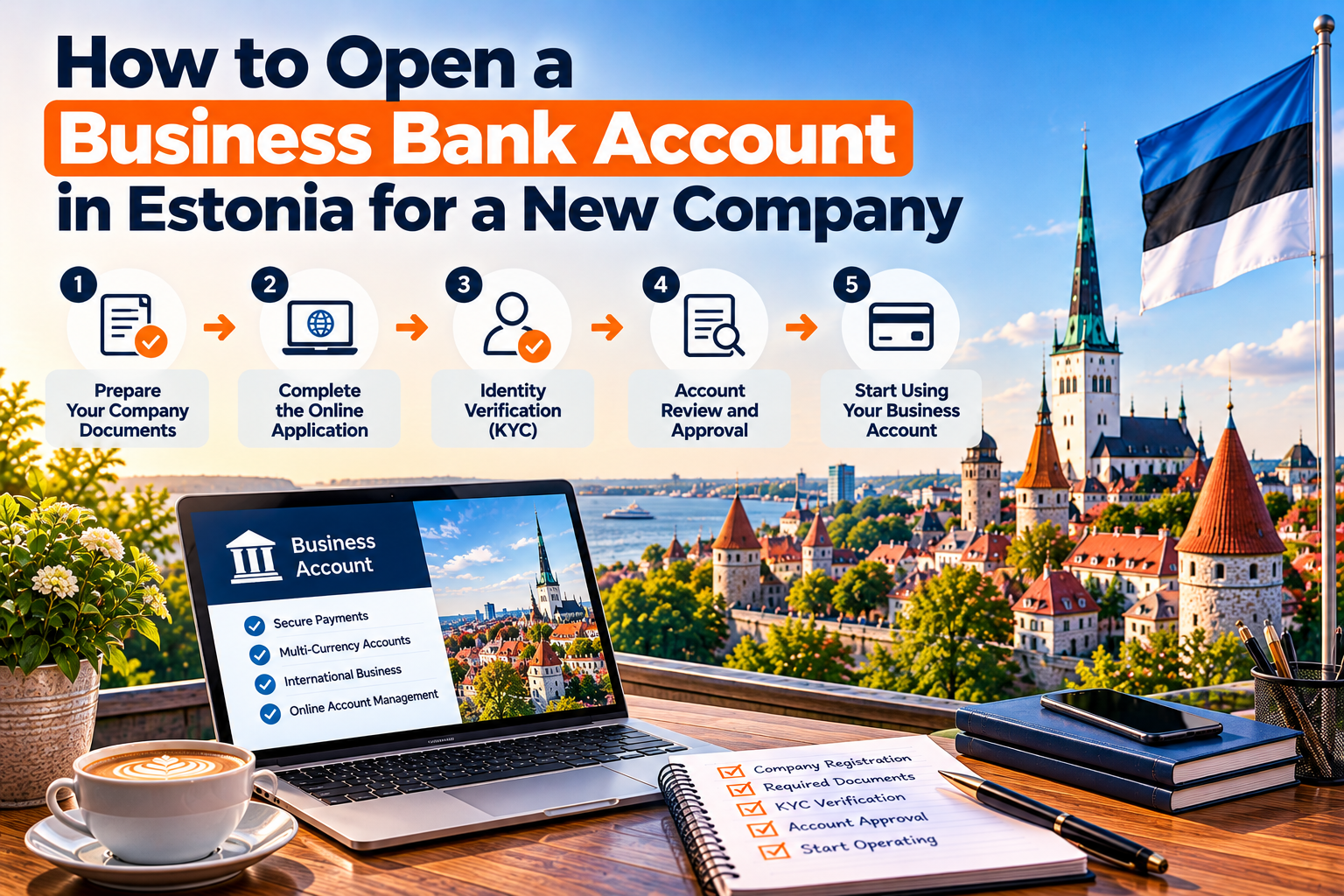
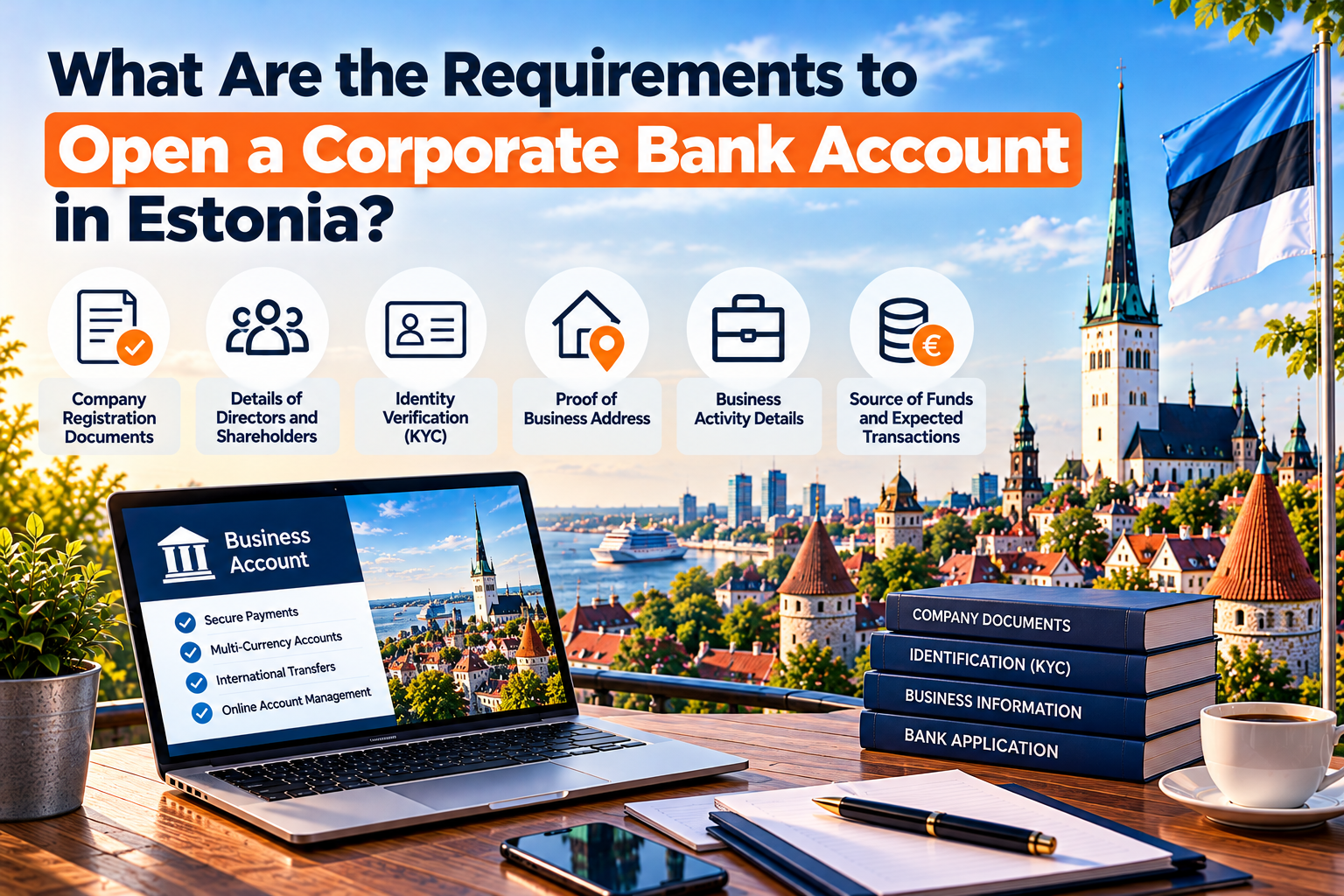
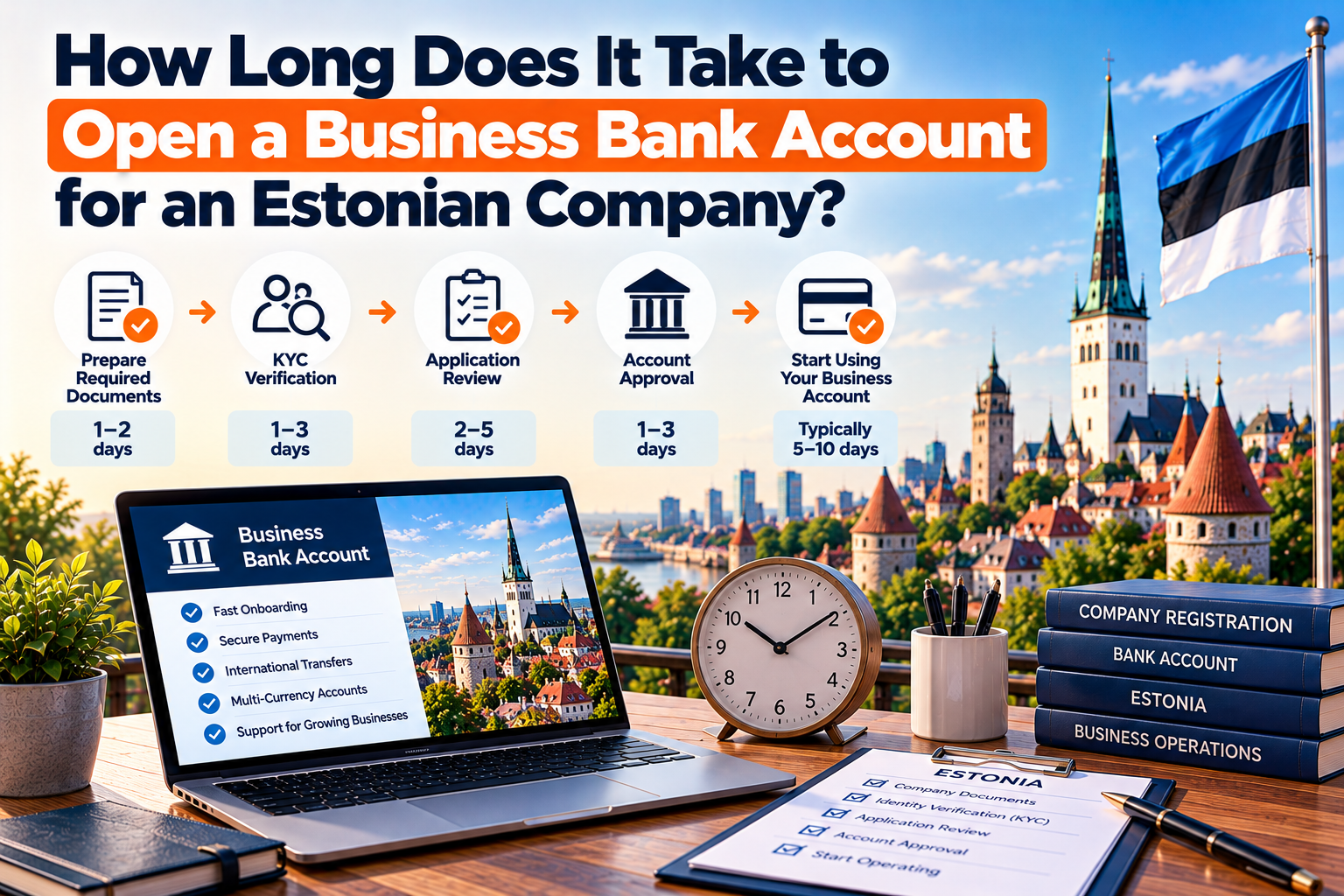
No. E-Residency does not automatically include a business bank account or guarantee approval for one.
Opening a business account is a separate process involving the financial institution's eligibility requirements and due diligence procedures.
Traditional banks may require evidence of a meaningful connection to Estonia, additional verification or an in-person appointment.
Some regulated payment and electronic money institutions offer remote onboarding to eligible Estonian companies.
Depending on the arrangement, these accounts may support:
Electronic money accounts are not traditional bank deposit accounts and have different regulatory protections.
Entrepreneurs should assess their payment needs and account eligibility before establishing a company.
Yes. An Estonian company can receive international payments through suitable financial arrangements.
Depending on its account capabilities, a company may receive payments in EUR, GBP, USD or other supported currencies.
For example, an Estonian consultancy may invoice European clients in euros and international customers in US dollars.
The ability to receive and retain those currencies depends on the business account's features.
Estonia participates in the Single Euro Payments Area, which supports standardised euro payment schemes across participating European countries and territories.
Suitable payment arrangements may also support transfers to destinations outside SEPA.
Businesses should confirm the supported countries, currencies, receiving details and transaction charges.
The e-Residency application process generally requires applicants to provide identity and personal information.
Common requirements include:
Additional information may be requested during the application review.
Applicants must also complete the required identity verification when collecting the digital identity card.
The documents required to apply for e-Residency are separate from those required to register a company or open a business account.
There are several potential costs associated with becoming an e-resident and operating an Estonian company.
Applicants must pay the applicable government fee when submitting their application.
Registering an Estonian company involves a separate government registration fee.
Companies may need a qualifying legal address and, in certain circumstances, a designated contact person.
These services can involve recurring charges.
Estonian companies generally have bookkeeping and reporting obligations.
Professional accounting services may involve monthly or annual fees.
Business payment or bank accounts may involve onboarding, maintenance, transaction or currency conversion charges.
Depending on the company's activities, additional costs may arise from tax registrations, filings, professional advice and other regulatory requirements.
Entrepreneurs should calculate both initial and ongoing expenses rather than focusing only on the e-Residency application fee.
Registering an Estonian company creates ongoing legal and administrative obligations.
These may include:
The company must maintain appropriate financial records.
Estonian companies generally need to prepare and submit annual reports in accordance with applicable requirements.
The company must meet relevant Estonian tax obligations and consider possible obligations in other countries.
Relevant company and beneficial ownership information must be maintained and updated where required.
The company must maintain the registered information required under Estonian law.
Certain regulated business activities may require additional authorisations or licences.
E-Residency makes access to digital administration easier but does not remove these responsibilities.
Although e-Residency can be useful, it is not suitable for every entrepreneur or business.
Important limitations include:
E-Residency does not allow the holder to live or work in Estonia.
Account applications remain subject to financial institution approval.
The tax position depends on the company's activities, management location and applicable laws.
Registered address services, accounting, reporting and other compliance costs may apply.
Certain industries require additional licences or regulatory approvals.
The initial digital identity card normally must be collected in person at an authorised pickup location.
Entrepreneurs should evaluate these limitations before applying.
Estonia e-Residency may be useful for UK-based entrepreneurs who want to establish an Estonian company and use its digital administration infrastructure.
Potential users include:
However, a UK resident who manages an Estonian company from the UK should consider the potential UK tax and regulatory implications.
Estonian incorporation does not automatically mean that all company profits are taxable only in Estonia.
The suitability of e-Residency depends on the business model, management arrangements, tax position and ongoing administrative requirements.
Estonia e-Residency is a government programme that provides eligible foreign nationals with a secure digital identity for accessing certain Estonian online services.
Individuals from many countries may apply, but applications are subject to eligibility rules, background checks and approval by the relevant authorities.
Yes. Eligible entrepreneurs can establish and manage an Estonian company remotely through supported digital services.
No. E-Residency does not provide citizenship, a passport or immigration rights.
No. Digital residency and tax residency are separate legal concepts.
You may apply for a suitable business account, but e-Residency does not guarantee approval.
Eligible e-residents can complete many company registration steps online, although obtaining and collecting the initial digital identity card involves separate procedures.
Yes. Eligible Estonian companies may obtain suitable IBAN payment details through supported financial arrangements.
Estonian companies may have tax obligations depending on their activities, distributions and other taxable events. Additional obligations may arise in other jurisdictions.
It can be useful for entrepreneurs who benefit from remote company administration and Estonia's digital services. However, costs, tax obligations, account access and business requirements should be evaluated before applying.
Estonia e-Residency provides international entrepreneurs with access to a secure digital identity and a range of Estonian online business services.
For eligible individuals, it can simplify company registration, electronic document signing and ongoing business administration without requiring permanent relocation to Estonia.
However, e-Residency should not be confused with physical residency, citizenship, tax residency or guaranteed access to business banking services.
Entrepreneurs must still consider company registration requirements, financial account eligibility, accounting obligations and cross-border taxation.
Estonia e-Residency can be a practical solution for entrepreneurs seeking to establish and manage an Estonian company remotely, provided they understand its benefits, limitations and ongoing responsibilities.
By evaluating these factors carefully, business owners can determine whether the programme supports their long-term commercial objectives.
Disclaimer: This article is intended for general educational purposes only and does not constitute legal, tax, financial or immigration advice. Application requirements, government fees, tax rules and business regulations may change. Applicants should consult official Estonian guidance and qualified professionals where appropriate.