By

October 16, 2026
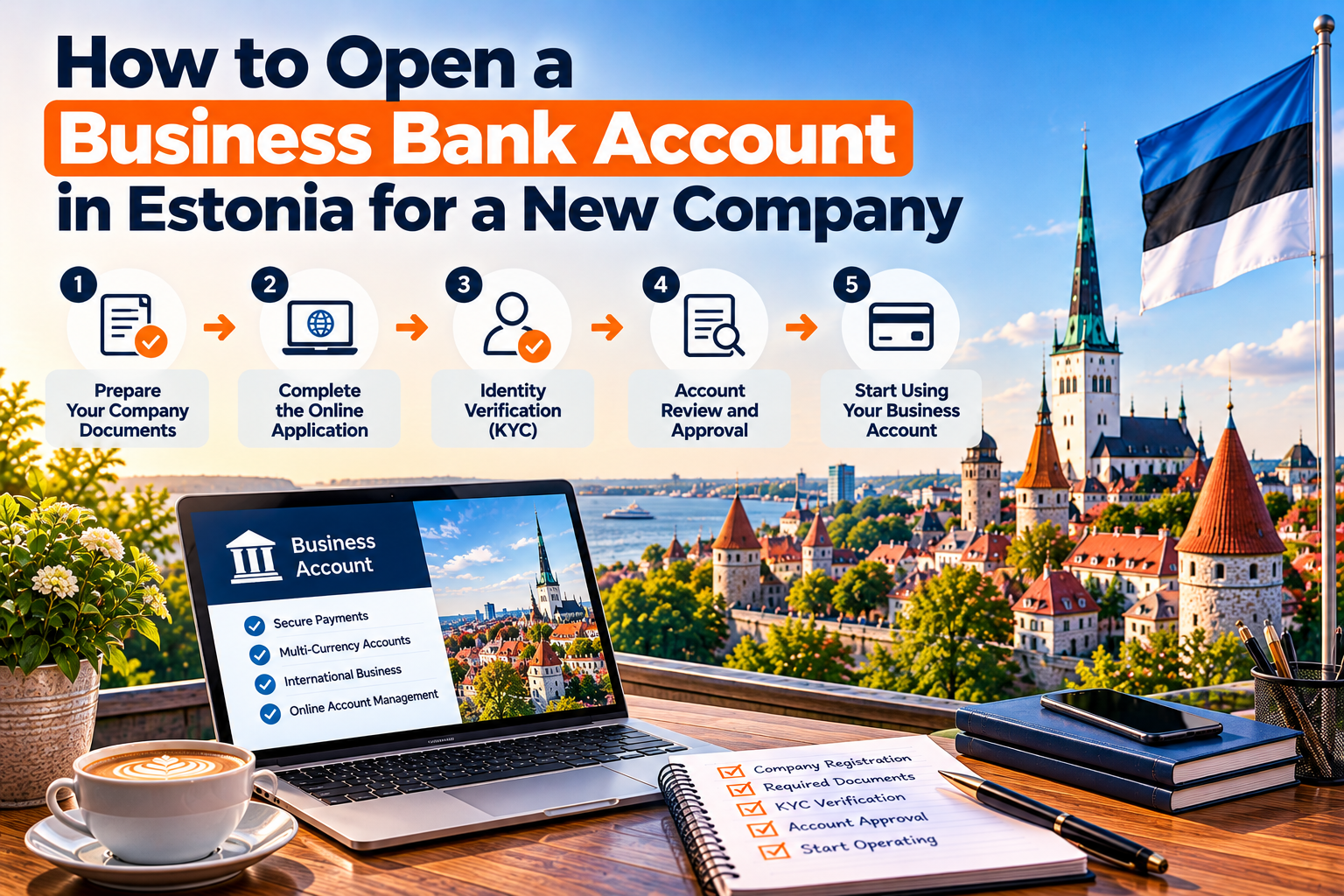
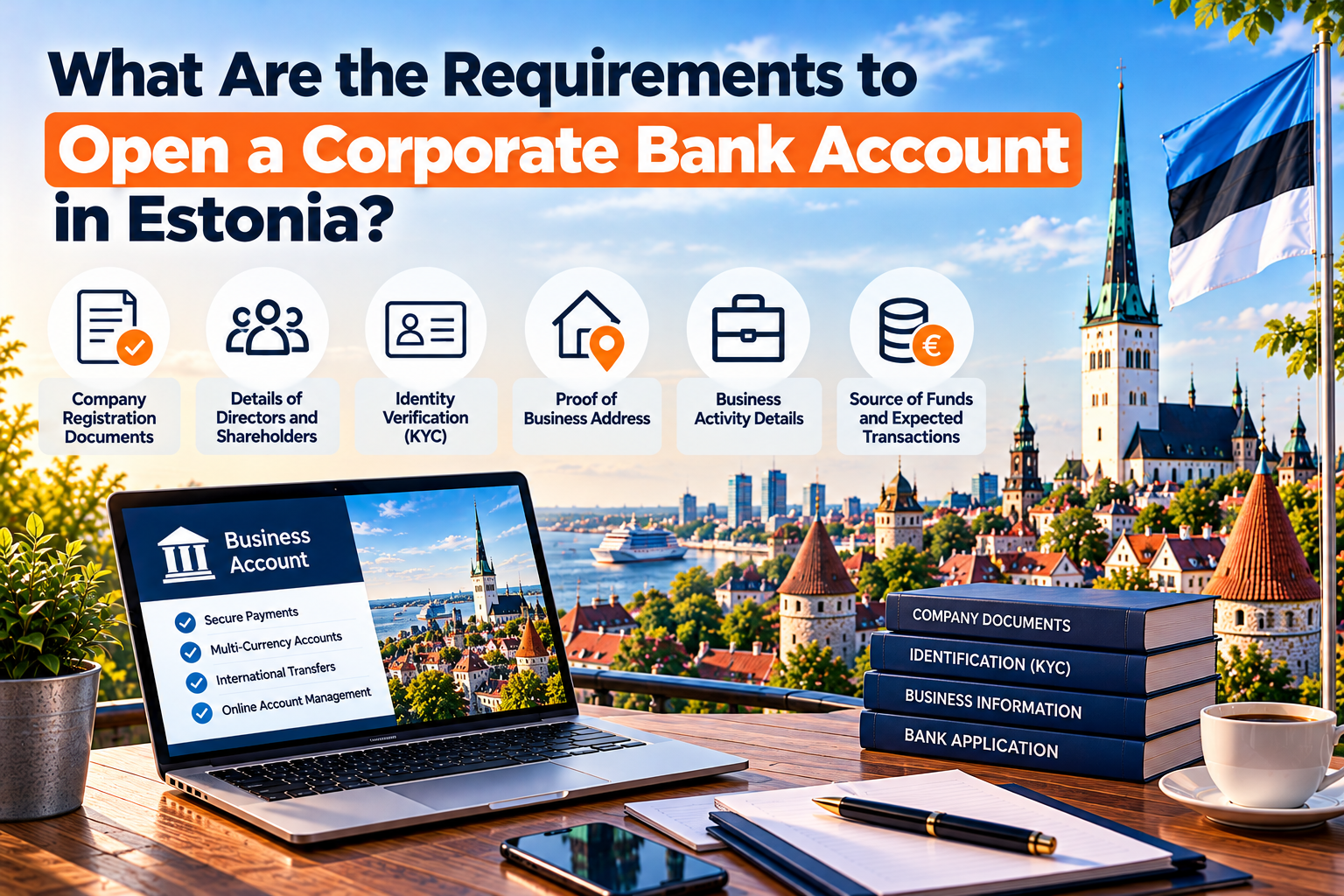
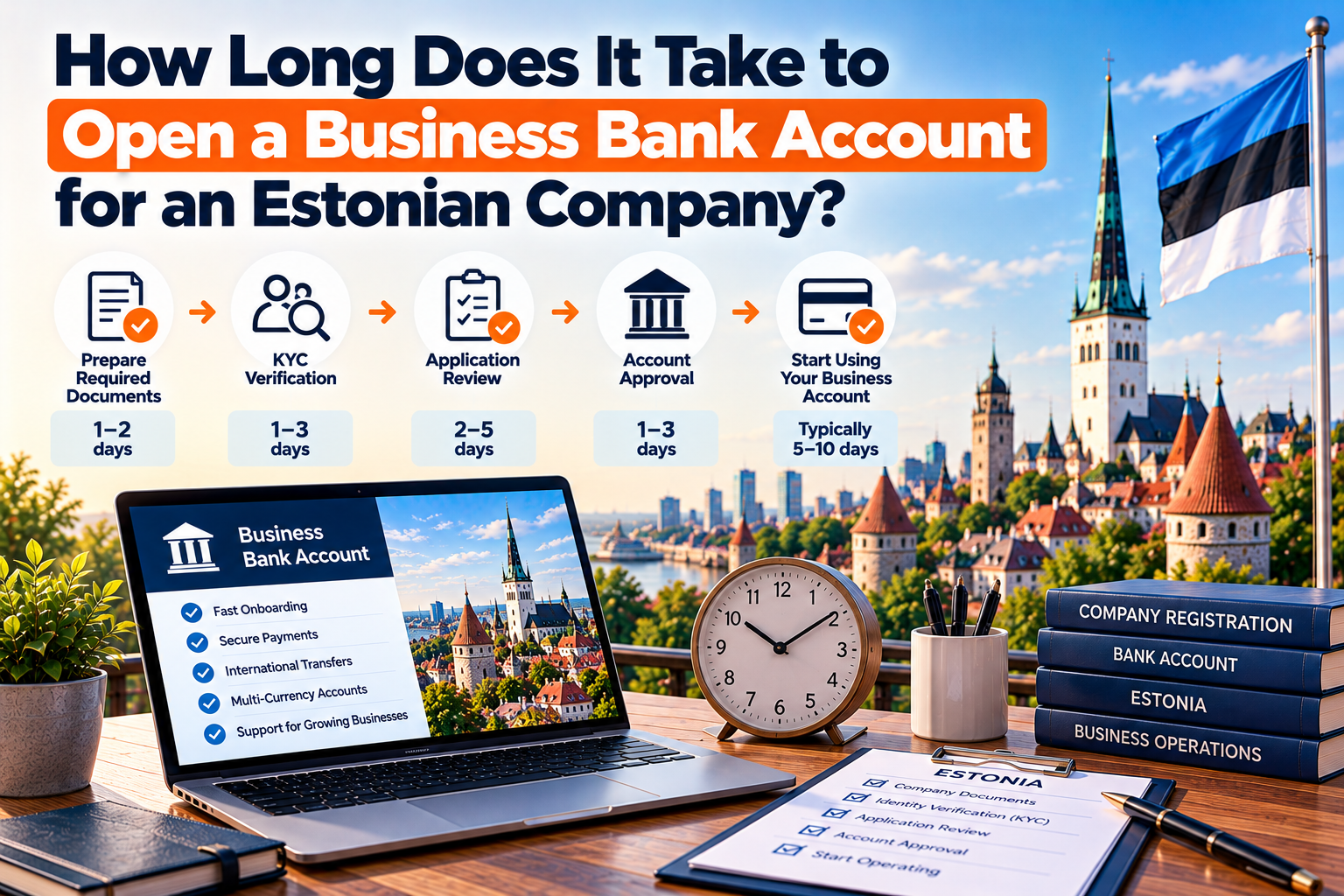
What Documents Are Required to Open a Business Bank Account in Estonia?
Opening a business bank account in Estonia is an important step for entrepreneurs establishing or operating a company in the country. Whether you own an Estonian private limited company (OÜ), manage an international business or operate through Estonia's e-Residency programme, preparing the correct documentation can help make the application process more efficient.
Estonia is recognised for its digital business infrastructure, which enables entrepreneurs to register companies and manage many administrative activities online.
However, opening a business bank account is a separate process from registering a company.
Financial institutions must verify the company's legal identity, ownership structure, business activities and source of funds before deciding whether to provide an account.
The documents required depend on the financial institution, company structure, residency of the directors and shareholders, and intended account activity.
This guide explains the main documents required to open an Estonian business bank account, the additional requirements for non-resident entrepreneurs and how to prepare for the application process.
Businesses applying for an account in Estonia generally need to provide sufficient information to establish their legal identity and demonstrate the legitimacy of their commercial activities.
Financial institutions typically assess:
These checks form part of customer due diligence and anti-money laundering procedures.
The exact documentation requirements vary depending on the account type and the financial institution's risk assessment.
One of the first requirements is evidence that the company is legally registered.
For an Estonian private limited company, commonly known as an OÜ, this information is generally available through the Estonian Commercial Register.
A commercial register extract provides official information about the company.
It may include:
The institution may obtain this information directly from official records or request a recent extract.
Where applicable, the applicant may be asked to provide evidence confirming the company's incorporation.
The company's articles of association may be requested to verify its governance structure and relevant corporate provisions.
Depending on the application, other documents may be required, particularly for companies with complex ownership arrangements.
These may include shareholder resolutions, corporate ownership records or authorisation documents.
Financial institutions must verify the identities of relevant individuals connected with the company.
This typically includes management board members and individuals authorised to operate the account.
Commonly requested documents include:
Additional information may be requested depending on the applicant's nationality, residence and identification method.
An Estonian e-Residency card can support digital identification and access to certain online services.
However, it does not automatically replace all identification documents required for financial account onboarding.
An institution may still request a passport, additional identity verification or other supporting documentation.
E-Residency does not guarantee that a business account application will be approved.
Financial institutions generally need to understand who owns and controls the company.
This involves identifying relevant shareholders and ultimate beneficial owners, commonly referred to as UBOs.
A beneficial owner is generally a natural person who ultimately owns or controls the business under the applicable legal definition.
Where the company is owned by another legal entity, additional corporate documentation may be required.
If an Estonian company is owned through several corporate entities, the institution may request an ownership chart showing the complete structure.
This helps identify the individuals who ultimately own or control the company.
Businesses should ensure that ownership information is accurate and consistent with official company records.
An applicant may need to provide information about the company's registered address and actual place of business.
For an Estonian company, the registered office address is recorded in the Commercial Register.
However, the registered address and the location where business activities are carried out may be different.
Depending on the circumstances, evidence may include:
A company using a registered office or virtual address service may be asked to explain where its actual commercial activities are managed.
Financial institutions may also consider whether the business has a meaningful connection to Estonia.
One of the most important parts of an Estonian business account application is explaining what the company actually does.
A general statement such as "consultancy", "trading" or "online services" may not provide enough information for due diligence purposes.
Businesses should be prepared to describe:
An Estonian software consultancy may explain that it provides backend development, system architecture and application maintenance services to corporate clients.
It may also identify the countries where its clients are located and the currencies in which it expects to receive payments.
An international trading company may describe the products it imports or exports, its supplier locations, customer markets and expected payment volumes.
A clear and specific explanation helps the institution understand the company's expected financial activity.
Financial institutions may request documents demonstrating that the company conducts genuine commercial activities.
The documentation depends on whether the business is newly incorporated or already trading.
Existing businesses may be asked to provide:
New companies may not yet have completed transactions or issued invoices.
In these circumstances, alternative evidence may be requested, such as:
The objective is to understand the business model and whether the expected transactions are consistent with the company's activities.
Financial institutions may request information explaining where the money entering the business account originates.
This is an important part of financial crime prevention procedures.
Source of funds refers to the origin of money involved in a particular transaction or account funding arrangement.
Examples may include:
Supporting evidence may include financial statements, contracts, transaction records or other documents relevant to the funding source.
Source of wealth refers to how an individual or entity accumulated its overall financial resources.
Additional source-of-wealth information may be requested in higher-risk circumstances.
Businesses should ensure that explanations are accurate and supported by appropriate documentation.
Financial institutions commonly request information about how the business intends to use the account.
This helps establish an expected transaction profile.
Applicants may need to provide:
For example, an Estonian consultancy might expect to receive €20,000 per month from European corporate clients and make payments to international contractors.
These figures should reflect realistic commercial expectations.
Significant differences between declared activity and actual transactions may result in additional enquiries.
Estonian companies frequently have international ownership structures.
A company may be registered in Estonia while its directors or shareholders live in another country.
In such cases, additional verification may be necessary.
Potential requirements include:
Some traditional Estonian banks may require a stronger connection to Estonia before accepting an application.
An institution may also require an in-person meeting or another form of identity verification.
Non-resident ownership does not automatically prevent account opening, but approval depends on the institution's eligibility and risk assessment.
Estonian e-residents generally need to satisfy the same core financial due diligence requirements as other applicants.
The e-Residency digital identity can facilitate access to online company administration services, but it does not remove the obligation to verify the business and relevant individuals.
An e-resident applying for a business account may need to provide:
Additional documentation may be required depending on the account arrangement.
Importantly, obtaining e-Residency does not automatically establish an entrepreneur's tax residence in Estonia.
Some business account arrangements support fully remote onboarding.
However, this does not mean that every traditional Estonian bank allows business accounts to be opened without an in-person appointment.
Depending on the institution and the company's circumstances, the application may involve:
Some regulated payment and electronic money institutions offer remote onboarding for eligible Estonian companies.
Depending on the arrangement, they may support:
An electronic money account is not a traditional bank deposit account, and its regulatory protections differ.
Businesses should verify both the account type and the onboarding requirements before applying.
Understanding the distinction is important when comparing business account options.
A business bank account is a deposit account provided by an authorised bank.
Depending on the product, it may support deposits, payment services and additional banking facilities.
Eligible deposits may be covered by the applicable deposit guarantee scheme, subject to its rules and limits.
An electronic money account is a regulated payment arrangement that may allow businesses to hold electronic money and make supported transactions.
Depending on the service, it may provide EUR balances, IBAN details and international payment functionality.
Electronic money accounts are not bank deposit accounts.
Relevant customer funds are generally subject to safeguarding requirements rather than traditional deposit guarantee protection.
The applicable protections depend on the institution's regulatory jurisdiction and legal structure.
Preparing the correct documentation can help avoid common onboarding problems.
Missing registration details or inconsistent company records may delay verification.
Insufficient descriptions of products, services or customer relationships can result in additional questions.
Incomplete ownership records can prevent the institution from identifying the individuals who ultimately control the business.
Applicants may be asked to provide additional evidence explaining the origin of business funds.
Some institutions restrict particular industries or transaction types.
Certain traditional banking arrangements may require evidence of genuine business activity or commercial links to Estonia.
Unrealistic or unexplained expected payment volumes may require clarification.
Cross-border ownership or operations may require further due diligence.
Businesses can improve their application readiness by organising documentation before beginning the onboarding process.
Ensure that the company's information in the Estonian Commercial Register is accurate and up to date.
Collect valid identification documents for directors, authorised representatives and relevant beneficial owners.
Prepare a clear explanation of the company's shareholders and ultimate beneficial owners.
Explain the company's actual commercial activities, products, services and customer markets.
Gather relevant contracts, invoices, financial statements or business plans.
Prepare supporting documentation showing how the company is funded.
Provide realistic information about monthly payment volumes, currencies and trading countries.
Confirm whether the institution accepts the company's structure, industry and director residency arrangements.
Determine whether the business needs a traditional deposit account or a regulated payment account supporting services such as EUR payments and SEPA transfers.
A well-prepared application does not guarantee approval, but it can reduce avoidable delays.
Common requirements include company registration information, identification documents, shareholder and beneficial owner details, business activity information, source-of-funds evidence and expected transaction details.
Not necessarily. Identification requirements depend on the institution and onboarding method. An e-Residency card may support certain digital processes but does not guarantee account approval.
Potentially, yes. Some institutions accept non-resident applicants, although additional documentation or evidence of a connection to Estonia may be required.
Not always. However, a business plan may be requested for newly established companies or businesses without an established transaction history.
Not in every case, but institutions may request commercial evidence to understand the company's activities and expected payments.
It may be. Institutions can request evidence of the company's operating address or the residential addresses of relevant individuals.
No. E-Residency does not guarantee approval for a business bank account or another financial account.
You may be able to apply after registration, but approval depends on the institution's requirements and successful due diligence.
Some arrangements support remote onboarding, while traditional banks may require in-person verification or additional local connection checks.
Not generally. An Estonian company may use suitable payment account details issued elsewhere, provided they meet its operational and applicable legal requirements.
Opening a business bank account in Estonia involves more than providing a company registration certificate.
Financial institutions must understand the company's legal structure, ownership, commercial activities, funding sources and expected payment behaviour.
For Estonian companies with non-resident directors or international shareholders, additional verification may be required.
Although Estonia offers advanced digital company administration services, traditional bank account opening and online payment account onboarding are separate processes with different requirements.
The most effective preparation is to provide accurate company documents, clear ownership information, a detailed explanation of business activities and appropriate evidence of the source of funds.
By organising these documents in advance and selecting an account arrangement suited to the company's operations, entrepreneurs can make the application process more efficient and reduce unnecessary delays.
Disclaimer: This article is intended for general educational purposes only and does not constitute legal, financial, tax or regulatory advice. Documentation requirements, account eligibility, verification procedures and regulatory protections vary according to the institution and applicable laws.