By

October 8, 2026
What Are the Requirements to Start a Business in Estonia?
Estonia is one of Europe's most attractive destinations for entrepreneurs looking to establish a business. Its digital infrastructure, straightforward company registration process, and access to the European Union make it a popular choice for local and international business owners.
What are the requirements to start a business in Estonia? Entrepreneurs generally need to choose a legal structure, register their company, provide shareholder and director information, arrange a legal address, and comply with applicable tax and accounting obligations.
Foreign nationals can also establish and own Estonian companies without necessarily living in Estonia.
This guide explains the main requirements for starting a business in Estonia, including company registration, share capital, documentation, taxation, and business banking.
Both Estonian residents and foreign nationals can establish businesses in Estonia.
Entrepreneurs from EU and non-EU countries can generally register and own an Estonian company, subject to applicable legal requirements.
There is no general requirement for foreign entrepreneurs to appoint an Estonian shareholder or business partner.
Foreign individuals can also serve as company directors and manage certain business activities remotely.
However, establishing a company does not automatically provide Estonian residency or the right to work in the country.
The most common business structure is the private limited company (OÜ).
An OÜ is a separate legal entity that generally provides limited liability protection to its shareholders.
It is suitable for startups, consulting businesses, e-commerce companies, software developers, and international service providers.
Other available structures include public limited companies, sole proprietorships, and branches of foreign businesses.
For many entrepreneurs, an OÜ offers a practical combination of flexibility, limited liability, and straightforward administration.
Entrepreneurs registering an Estonian company generally need to prepare the following information:
Additional documents may be necessary depending on the ownership structure and registration method.
An Estonian private limited company can generally be established with nominal share capital starting from €0.01 per shareholder.
However, the appropriate share capital depends on the company's intended activities and financial requirements.
Businesses should ensure that their capital structure is suitable for their commercial operations.
Certain regulated industries or other company structures may have additional capital requirements.
No. Estonian e-Residency is not universally mandatory for company formation.
However, it can simplify the process for foreign entrepreneurs.
E-Residency provides a government-issued digital identity that allows eligible individuals to access supported Estonian electronic services.
It can be used to register an eligible company online, sign documents digitally, and manage certain administrative procedures remotely.
Entrepreneurs who do not use e-Residency may need to complete company registration through another available procedure, such as a notarial process.
E-Residency does not provide citizenship, physical residency, or automatic business banking access.
An Estonian company must provide a legal address that satisfies the applicable registration requirements.
Depending on the company's management arrangements, it may also need to appoint a qualifying contact person.
A contact person is generally responsible for receiving and forwarding official communications.
Foreign entrepreneurs should ensure that the company's address and contact details remain accurate and comply with Estonian company law.
No. Foreign entrepreneurs can generally own 100% of an Estonian private limited company.
An Estonian shareholder or business partner is not ordinarily required.
Foreign nationals may also serve as management board members.
However, companies managed from outside Estonia may be subject to additional contact-person requirements.
The location of company management can also affect taxation in other countries.
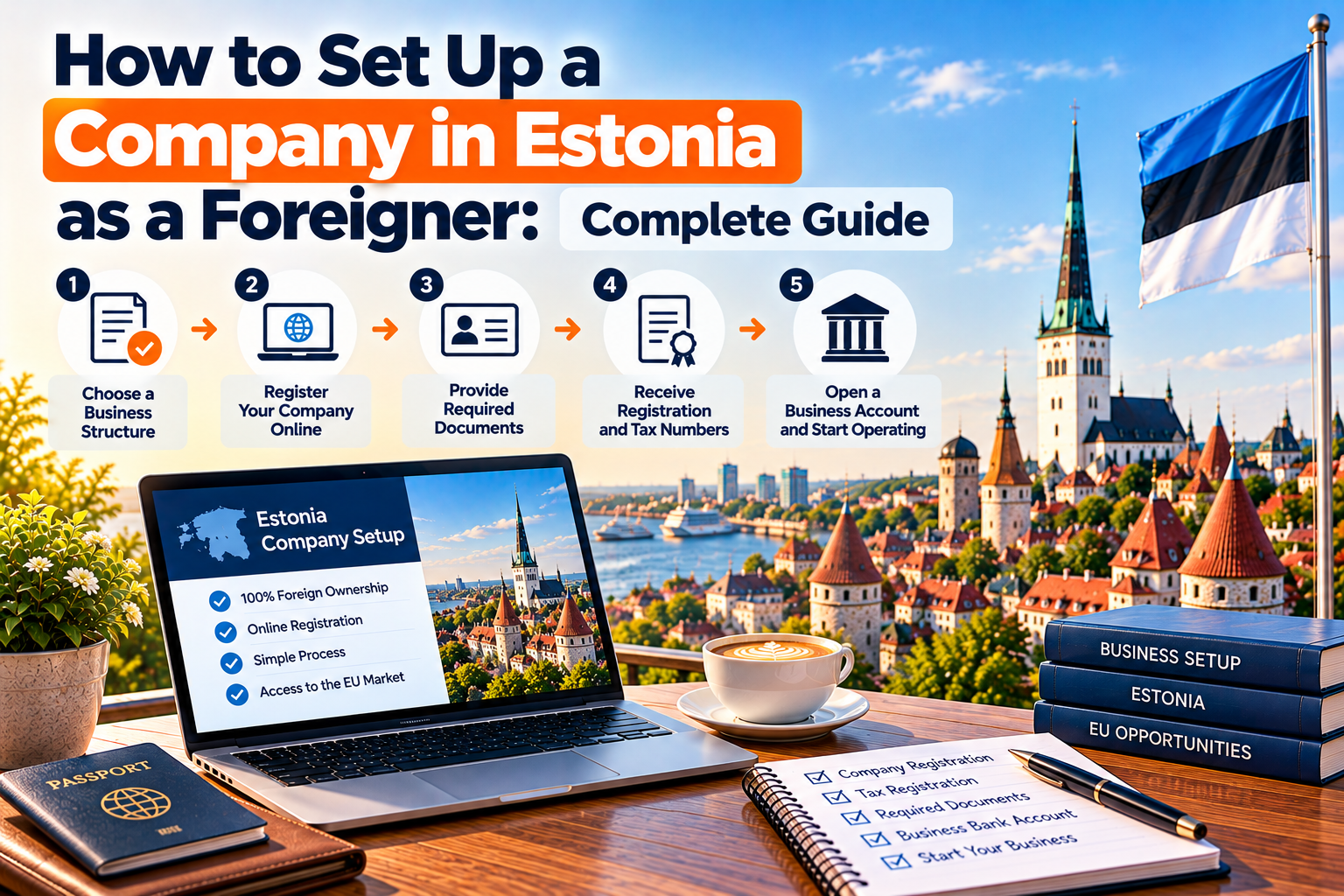
Select the legal structure most suitable for your commercial activities. For many entrepreneurs, an OÜ is the preferred option.
Select a unique business name and check that it meets Estonian registration requirements.
Gather shareholder details, management board information, articles of association, and share capital details.
Provide the required company address and appoint a contact person where necessary.
Submit the registration application electronically, if eligible, or through another legally available procedure.
Once approved, the company is entered into the Estonian Commercial Register and receives an official registration number.
Apply for a suitable business bank account or regulated payment account to manage company transactions.
Establish appropriate bookkeeping procedures and complete any required tax registrations.
The cost depends on the registration method and the services required.
The electronic registration state fee for an Estonian OÜ is €265, while an e-Residency application costs €150. These fees are subject to change.
Other potential expenses include registered address services, contact-person services, accounting, and professional assistance.
Entrepreneurs should also consider ongoing company maintenance costs, including annual reporting and financial account charges.
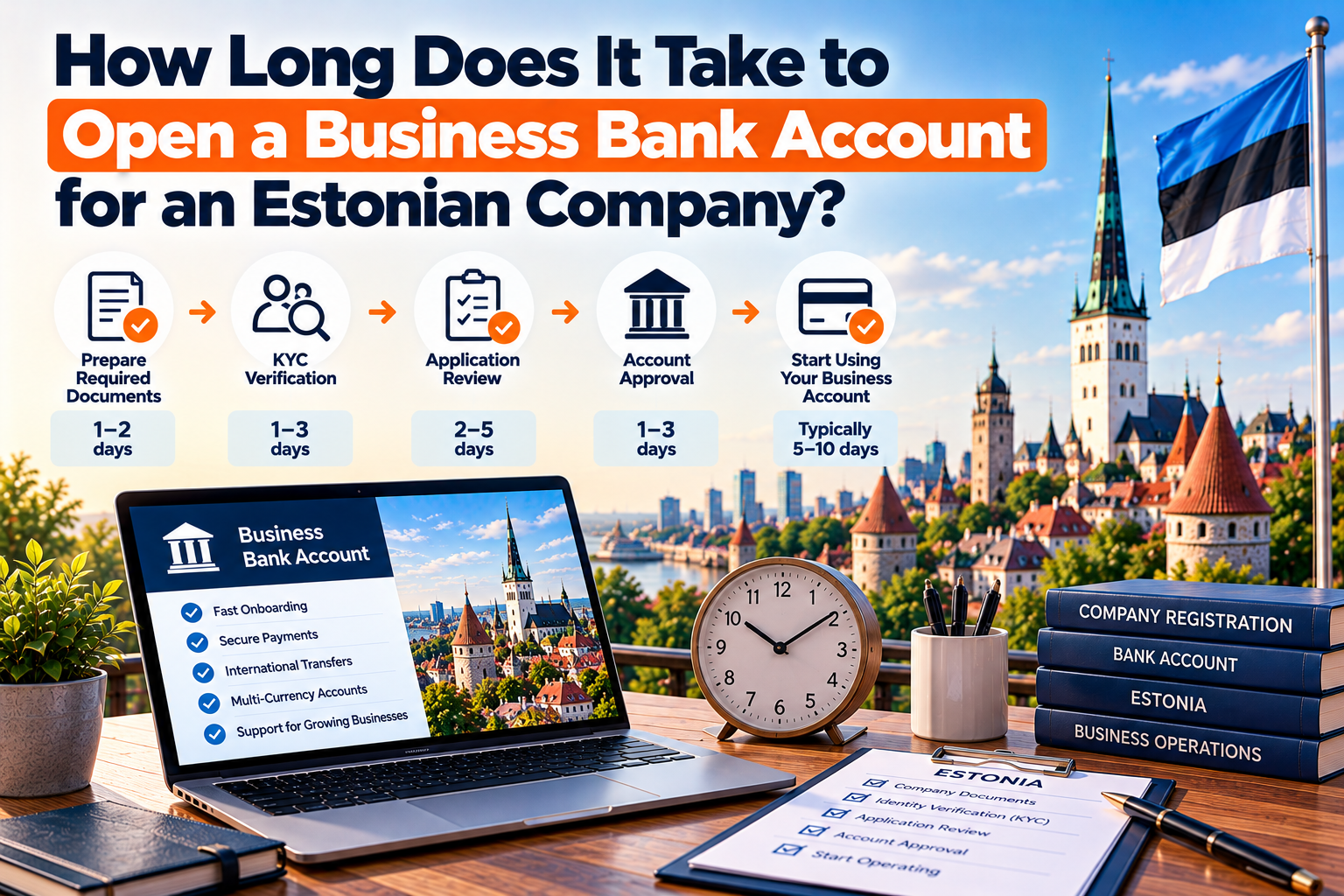
Eligible electronic registration applications may be processed within a few working days when all documents are complete.
However, entrepreneurs who need to obtain e-Residency first must allow additional time for application processing and collection of their digital identity card.
More complex ownership structures or notarial procedures may take longer.
Estonia has a distinctive corporate tax system.
Ordinary corporate profits are generally taxed when distributed rather than when earned and retained.
The standard corporate income tax rate on distributed profits is 22/78 of the net distribution.
Companies may also have VAT, payroll, and other tax obligations depending on their activities.
Foreign entrepreneurs should consider whether managing their company from another country creates additional tax obligations there.
Not every newly registered Estonian company must register for VAT immediately.
VAT registration generally depends on taxable turnover, the nature of transactions, and applicable place-of-supply rules.
Certain cross-border activities may create VAT obligations even before the domestic registration threshold is reached.
Businesses should assess their expected activities to determine whether registration is required.
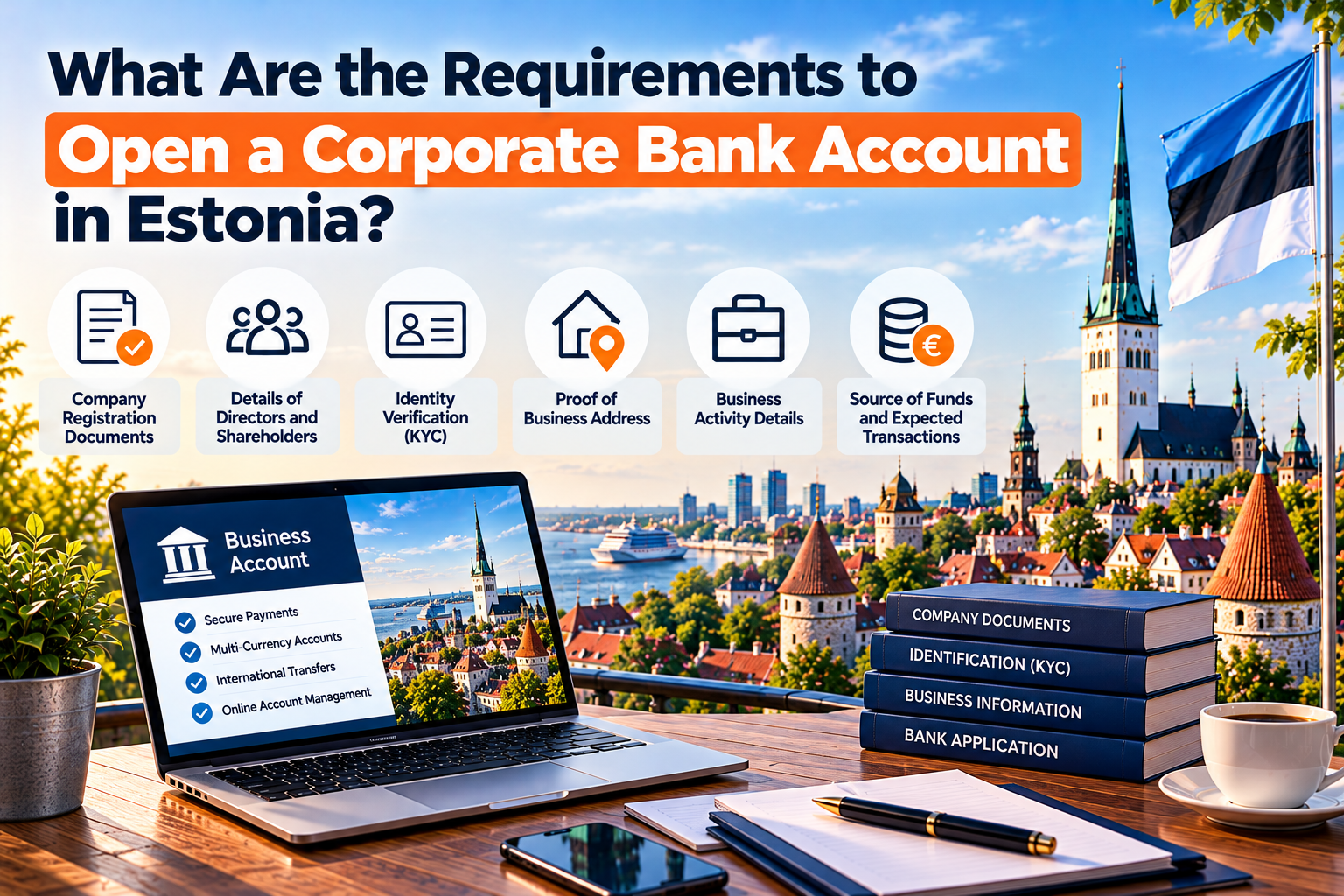
Yes. A newly registered Estonian company can apply for a corporate bank account without necessarily having an established trading history.
Financial institutions typically require company registration information, identification documents, beneficial ownership details, and information about expected transactions.
Some traditional banks may require evidence of economic connections to Estonia.
Alternatively, eligible businesses may consider regulated payment or e-money accounts offering EU IBAN facilities.
These accounts may support SEPA transfers, international payments, and currency conversion, depending on the provider.
E-money accounts are legally different from traditional bank accounts and are subject to different regulatory protections.
After incorporation, companies must comply with ongoing administrative obligations.
These generally include maintaining accounting records, submitting annual reports, keeping registration details updated, and filing applicable tax declarations.
Annual reports are normally due within six months after the end of the financial year.
These requirements may apply even when the company has limited or no commercial activity.
Yes. Foreign nationals can generally establish and own Estonian companies, subject to applicable registration requirements.
Yes, in many cases. Eligible entrepreneurs can complete registration through Estonia's digital company registration system.
No. E-Residency is not mandatory in every case, although it can simplify remote company registration and administration.
Yes. Foreign entrepreneurs can generally own all the shares in an Estonian private limited company.
Not necessarily. However, the company must meet the applicable legal address and contact-person requirements.
Yes. An Estonian private limited company can generally operate without employees, provided it meets its legal and administrative obligations.
Yes. Eligible businesses may obtain EU IBAN payment facilities through suitable regulated financial institutions.
No. Company registration and e-Residency do not automatically provide immigration or residence rights.
Starting a business in Estonia is generally straightforward for both local and foreign entrepreneurs.
The main requirements include selecting a suitable legal structure, preparing company registration information, arranging a legal address, appointing a management board, and completing the registration process.
Estonia's digital infrastructure, foreign ownership opportunities, and corporate taxation system make it an attractive destination for international businesses.
However, entrepreneurs should also consider accounting, taxation, financial services, and ongoing compliance obligations before establishing their company.
With appropriate preparation, Estonia offers a practical environment for starting and operating a business within the European Union.