By

October 15, 2026
What Are the Legal Requirements for Foreign Shareholders in Estonia?
Estonia has become an attractive destination for international entrepreneurs seeking to establish a business within the European Union. Its digital company registration system, flexible foreign ownership rules, and internationally accessible corporate framework make it possible for individuals and businesses from many countries to invest in Estonian companies.
One of the most important questions for foreign investors is whether they must satisfy special legal requirements to become shareholders in an Estonian company.
Foreign individuals and legal entities can generally own shares in Estonian companies without being Estonian citizens or residents. Estonia permits 100% foreign ownership of private limited companies, subject to applicable company law, identification, registration, beneficial ownership, and regulatory requirements.
Foreign shareholders do not generally need an Estonian business partner, local shareholder, or residence permit simply to own shares.
However, they must comply with the legal requirements governing company formation, shareholder identification, capital contributions, corporate governance, and ongoing reporting.
This guide explains the legal requirements for foreign shareholders in Estonia, including ownership rights, required documentation, beneficial ownership disclosure, taxation, and compliance obligations.
Yes. Estonian company law generally permits foreign individuals and legal entities to own shares in Estonian companies.
Foreign ownership is not generally restricted to European Union citizens.
An entrepreneur living outside Estonia may establish a company as its sole shareholder or invest in an existing Estonian business.
These rights are subject to the company's articles of association, applicable legislation, and any relevant shareholder agreements.
There is no general requirement for shareholders of an Estonian private limited company to hold Estonian or European Union citizenship.
Individuals from both EU and non-EU countries can generally become shareholders.
However, nationality, residence, and other circumstances may affect compliance checks or eligibility in particular situations.
Identity verification: Shareholders must provide appropriate identification information.
International sanctions: Applicable sanctions may restrict transactions or ownership arrangements involving certain individuals or entities.
Regulated industries: Particular business activities may require additional approvals or satisfy sector-specific ownership requirements.
Foreign corporate shareholders: Additional documentation may be necessary where shares are owned by another company.
Beneficial ownership: The company must identify and disclose the natural persons who ultimately own or control it, as required by law.
Foreign ownership is therefore broadly permitted, but it is not exempt from regulatory oversight.
Yes. A foreign individual or legal entity can generally own all shares in an Estonian private limited company.
An Estonian private limited company, known as an OÜ, may have a single shareholder.
There is no general requirement to allocate shares to an Estonian resident.
Although one individual may own all shares, the company remains a separate legal entity with its own legal obligations.
No. Foreign shareholders do not generally need an Estonian residence permit simply to own shares in an Estonian company.
Company ownership and immigration status are separate legal matters.
A foreign shareholder can generally live abroad while owning an Estonian company.
However, an individual who wishes to relocate to Estonia or perform activities requiring immigration authorisation must satisfy the relevant immigration requirements.
Shareholder status: Provides ownership rights in the company.
E-Residency: Provides eligible individuals with access to selected Estonian digital services.
Physical residency: Concerns the legal right to reside in Estonia.
Tax residency: Determines an individual's tax position under applicable domestic and international tax rules.
Owning shares does not automatically grant citizenship, immigration rights, or personal tax residency.
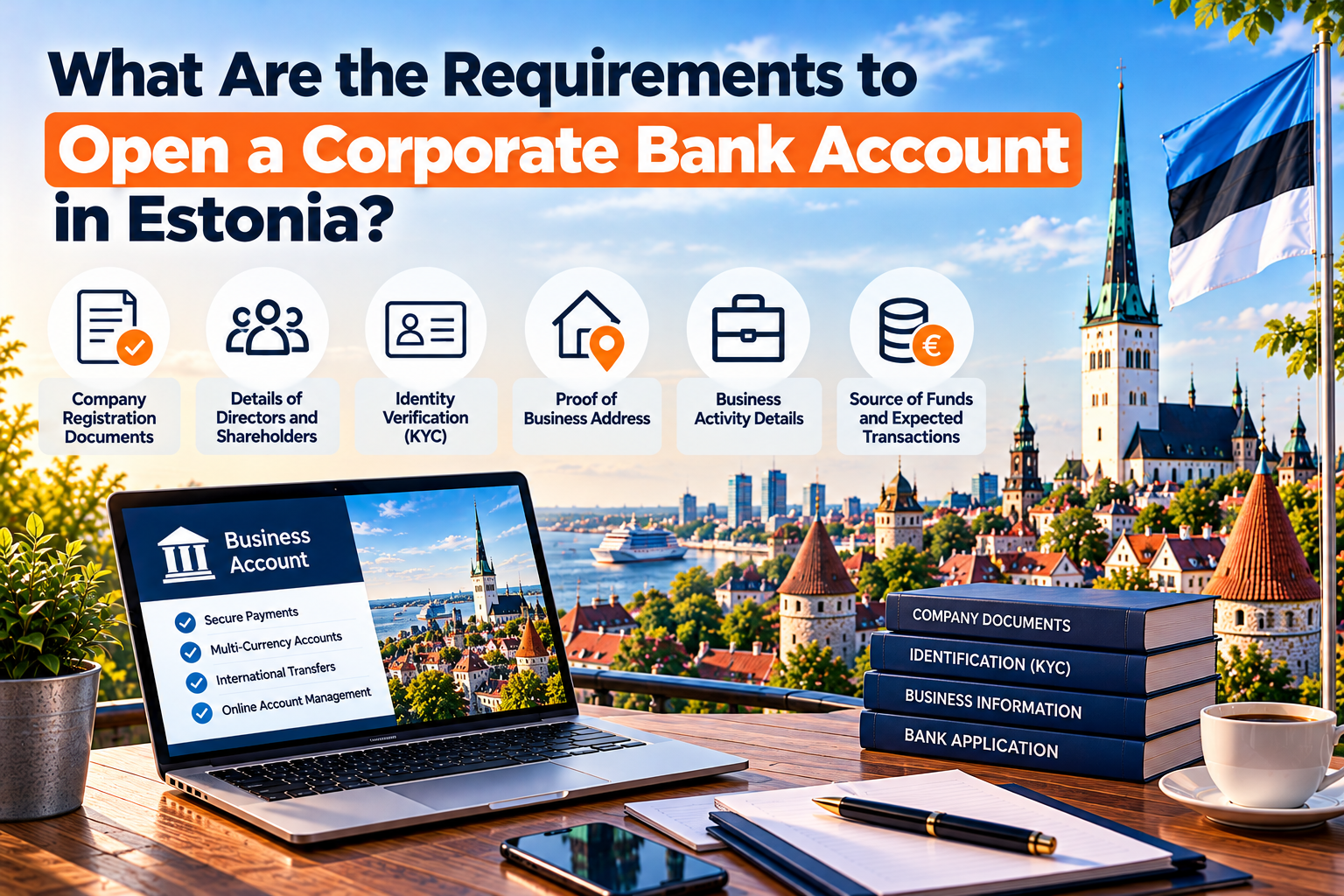
Foreign shareholders must provide sufficient identification information for company registration and other applicable compliance procedures.
The exact requirements depend on whether the shareholder is an individual or legal entity and whether the company is being registered electronically or through an alternative procedure.
Common requirements include:
Additional information may include:
Certain foreign documents may need translation, certification, apostille, or legalisation, depending on the applicable procedure.
Foreign shareholders must provide the identification and contact information required by the Estonian Commercial Register.
For shareholders who are not recorded in the Estonian population register, additional contact information may be required.
This can include a foreign address and email address.
Foreign shareholders must also ensure that relevant registered information remains accurate.
Changes in information that must be reported should be communicated through the appropriate procedures.
Providing a foreign address does not, by itself, prevent an individual from becoming a shareholder.
A shareholder and a management board member have different legal roles.
A shareholder owns an interest in the company.
Shareholders generally exercise rights relating to ownership, voting, corporate decisions, and lawful profit distributions.
A management board member is responsible for managing and representing the company.
Their responsibilities generally include overseeing operations, ensuring compliance, and maintaining proper corporate administration.
Yes. A foreign individual can generally be both the sole shareholder and sole management board member of an Estonian private limited company.
However, the individual must fulfil the legal obligations associated with each role.
No. An Estonian private limited company does not generally require a locally resident management board member solely because it is registered in Estonia.
Foreign individuals can generally serve as management board members.
However, if the company's management board is located outside Estonia, the company must comply with the applicable authorised contact person requirements.
The location of management may also affect the company's international tax obligations.
An Estonian company must maintain a registered address that complies with applicable law.
The registered address is part of the company's official registration information.
Foreign shareholders do not necessarily need to own or rent a conventional office in Estonia.
An appropriate registered address arrangement may be available through a suitable service provider.
However, the company's registered address must be genuine, accurate, and maintained in accordance with legal requirements.
Where an Estonian company's management board is located outside Estonia, the company is generally required to appoint an authorised contact person in Estonia.
The contact person receives certain official documents and legal communications on behalf of the company.
Only persons or entities meeting the applicable legal eligibility requirements may serve in this capacity.
This requirement allows foreign shareholders to retain complete ownership while satisfying the company's legal communication obligations.
Foreign shareholders must comply with the share capital rules applicable to the selected company structure.
For an Estonian private limited company, the minimum nominal value of a share can be as low as €0.01.
However, the appropriate share capital amount depends on the company's financial and operational requirements.
Special shareholder liability considerations may apply where the share capital is below €2,500.
Foreign shareholders should ensure that agreed contributions are properly documented and paid in accordance with the applicable rules.
Capital contributions may be made in accordance with the rules applicable to the company's legal structure.
Depending on the circumstances, contributions may involve money or eligible non-monetary assets.
A monetary contribution involves providing funds as share capital.
The contribution must comply with the applicable payment and documentation requirements.
Certain assets may qualify as non-monetary contributions where permitted by law.
Such contributions may require appropriate valuation and supporting documentation.
The procedures depend on the nature of the contribution and the relevant company law requirements.
Foreign shareholders should ensure that all capital contributions are properly recorded.
Yes. Estonian companies are generally required to identify and maintain information about their ultimate beneficial owners.
Beneficial ownership requirements are intended to establish which natural persons ultimately own or control a legal entity.
A beneficial owner is generally a natural person who ultimately owns or exercises control over a company, directly or indirectly, under the applicable legal criteria.
A shareholder may also be a beneficial owner, but the concepts are not always identical.
For example, a company may be legally owned by another corporation while ultimate control rests with one or more individuals.
Companies must maintain accurate beneficial ownership information and report relevant changes.
The precise identification criteria and reporting requirements depend on applicable legislation.
Yes. A foreign legal entity can generally own shares in an Estonian company.
This allows international businesses to establish wholly owned Estonian subsidiaries or participate in joint ventures.
Foreign corporate shareholders may need to provide additional documents verifying their legal existence and authority to participate in the ownership arrangement.
The company must also identify its ultimate beneficial owners in accordance with applicable law.
Although Estonia generally permits foreign ownership, some business sectors are subject to additional regulatory requirements.
These may include activities involving financial services, regulated professional services, security-sensitive industries, or other specially controlled activities.
The requirements depend on the business activity and applicable legislation.
Foreign shareholders should assess industry-specific rules before investing in a regulated company.
Eligible foreign shareholders can participate in electronic company registration using accepted digital identification and signing methods.
Estonia's electronic registration system allows many incorporation procedures to be completed remotely.
Where electronic incorporation is unavailable for a particular ownership structure, an alternative registration procedure may be necessary.
No. E-Residency is not a legal requirement for owning shares in an Estonian company.
It is a digital identity programme that allows eligible non-residents to access selected Estonian electronic services.
However, foreign shareholders may also use other accepted identification methods or appropriate alternative procedures.
E-Residency does not grant citizenship, physical residency, immigration rights, or automatic tax residency.
Foreign shareholders generally have the rights attached to their shares under Estonian company law and the company's governing documents.
Voting rights: Participating in shareholder decisions in accordance with the applicable voting arrangements.
Dividend rights: Receiving lawful profit distributions when approved.
Information rights: Accessing company information to the extent provided by law.
Management appointments: Participating in the appointment and removal of management board members.
Share transfer rights: Transferring shares subject to applicable legal and contractual requirements.
Participation in major decisions: Voting on matters requiring shareholder approval.
The precise rights depend on the company's legal structure, share classes, articles of association, and any relevant agreements.
Foreign shareholders must comply with the obligations associated with their ownership interests.
Shareholders are not automatically responsible for every company debt merely because they own shares.
However, liability may arise under specific legal circumstances.
An Estonian private limited company generally provides limited liability protection to shareholders.
This means that the company is normally responsible for its own obligations.
However, limited liability is not absolute.
Foreign shareholders should understand the distinction between their rights as owners and any personal obligations they undertake.
Yes. Foreign shareholders can generally receive dividends from Estonian companies when distributions comply with applicable company law and tax requirements.
Dividends should not be confused with salaries, management remuneration, or repayment of shareholder loans.
Each payment type may have different legal and tax consequences.
Estonia has a distinctive corporate income tax framework.
Ordinary profits retained within an Estonian company are generally not subject to immediate Estonian corporate income tax.
Corporate income tax generally applies when profits are distributed or certain taxable payments and expenses arise.
However, the tax position of a foreign shareholder depends on the nature of the income and the applicable laws.
Lawful dividend distributions are generally subject to Estonia's corporate-level distribution taxation rules.
The foreign shareholder may also have tax obligations in their country of residence.
Payments for employment or management duties may be subject to separate tax and social security rules.
Selling shares may create capital gains tax obligations depending on the shareholder's tax residence, the nature of the company, and applicable tax treaties.
A company managed or operated from another country may have tax obligations outside Estonia.
Foreign shareholders should assess their tax position before receiving distributions or undertaking major ownership transactions.
No. Simply owning shares in an Estonian company does not automatically make a foreign investor personally tax resident in Estonia.
Personal tax residence generally depends on the relevant domestic tax laws and international agreements.
A shareholder may remain tax resident in another country while owning an Estonian company.
However, the shareholder's income from the company may still have tax consequences in Estonia or abroad.
Yes. Foreign shareholders can generally transfer or sell shares in Estonian companies, subject to applicable company law and the articles of association.
The required procedure depends on the company's circumstances.
Certain Estonian private limited companies may qualify for simplified share transfer arrangements when the relevant statutory conditions are satisfied.
Foreign shareholders should verify the applicable procedure before completing a transfer.
Estonian companies must comply with ongoing corporate and financial obligations.
Although these responsibilities generally belong to the company and its management, shareholders may need to participate in certain corporate decisions and provide required information.
Accounting records: The company must maintain appropriate financial records.
Annual reports: Companies generally must prepare and submit annual financial reports, including when business activity is limited.
Beneficial ownership: Relevant ownership and control information must be maintained and updated.
Registered information: Required company and shareholder information must remain accurate.
Tax declarations: Applicable corporate, payroll, and VAT obligations must be fulfilled.
Corporate decisions: Shareholder resolutions and other required records must be properly documented.
Regulatory compliance: Companies operating in regulated sectors must maintain the necessary approvals.
Failure to comply may result in penalties or other legal consequences.
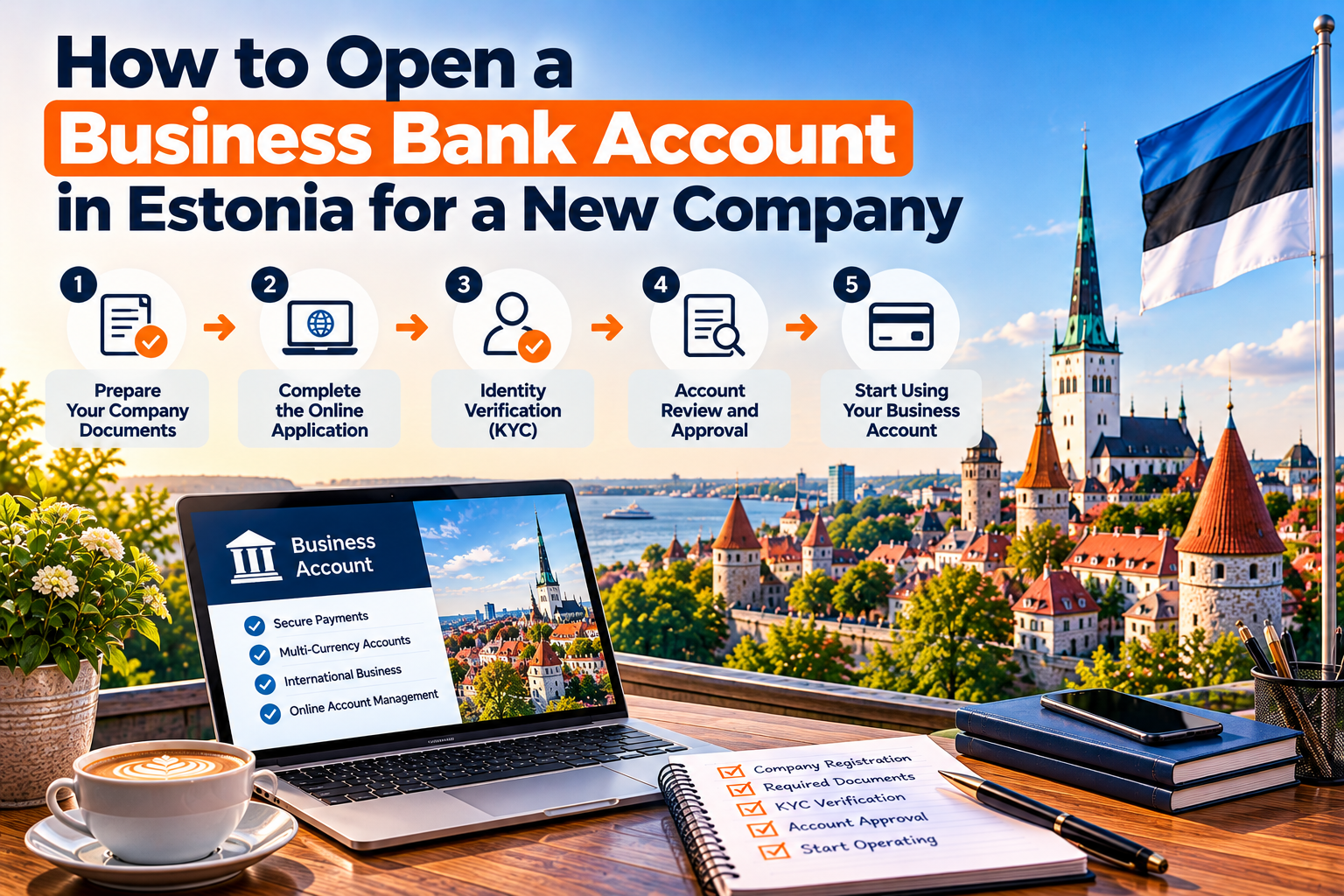
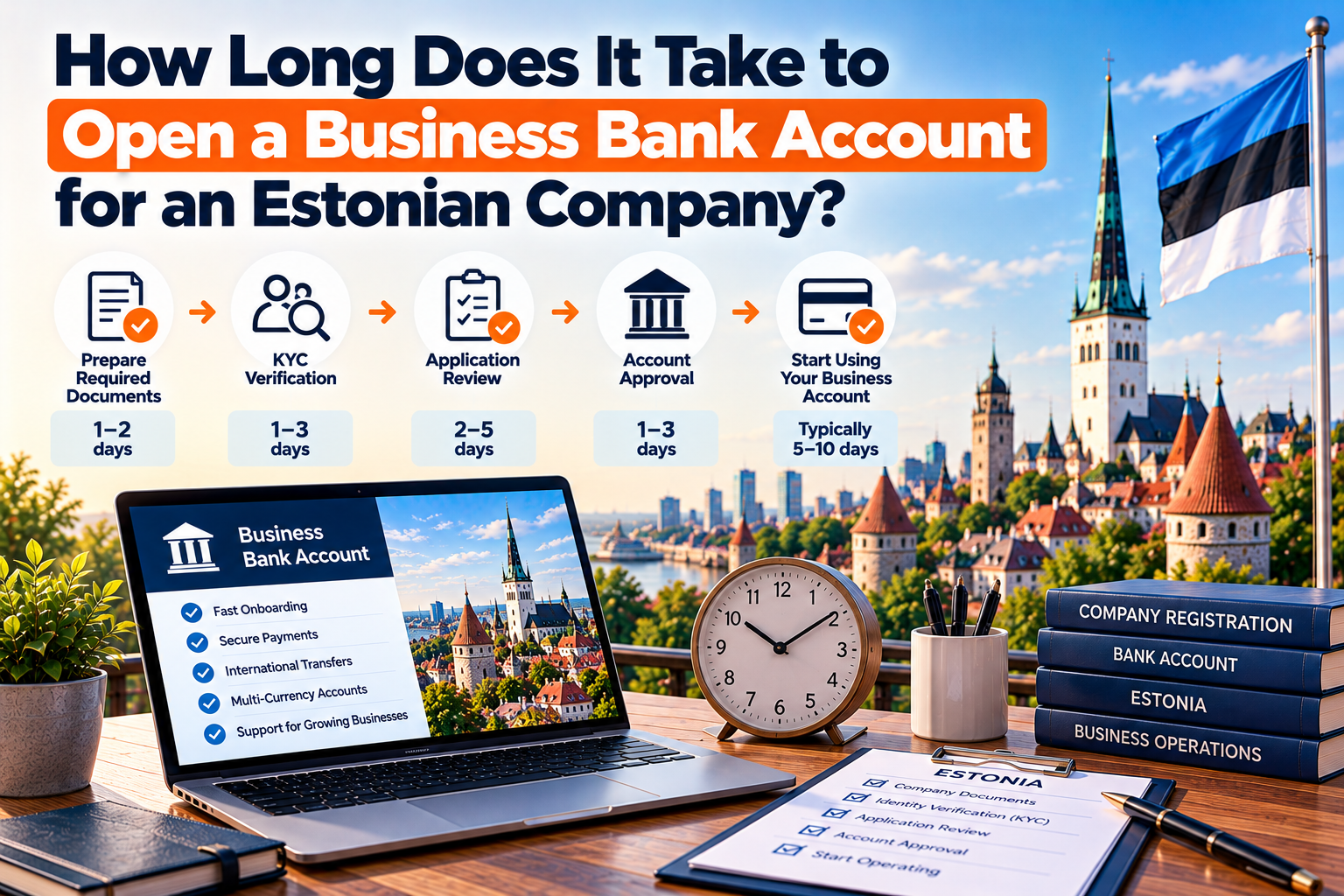
A foreign-owned Estonian company may apply for business banking or payment services.
However, the company's registration does not automatically guarantee account approval.
Financial institutions generally conduct identity verification and compliance assessments.
Additional verification may apply depending on the shareholder's country of residence and the company's activities.
Estonia offers several potential advantages to international investors.
Foreign individuals and legal entities can generally own 100% of private limited companies.
Foreign shareholders do not generally need an Estonian equity partner.
Eligible entrepreneurs can establish companies electronically.
An Estonian company provides a legal entity registered within an EU member state.
Many corporate procedures can be completed online.
Foreign individuals can generally serve as management board members.
Private limited companies can be established with relatively low share capital.
Foreign-owned companies can develop commercial relationships with European and international customers.
These advantages can make Estonia attractive for entrepreneurs seeking an internationally accessible corporate structure.
Foreign investors should pay particular attention to several common compliance risks.
Shareholder and beneficial ownership details must be accurate and appropriately maintained.
E-Residency does not grant immigration rights or automatically determine tax residence.
Managing an Estonian company from another country may create additional corporate or personal tax obligations.
Companies required to appoint an authorised contact person must maintain compliant arrangements.
Transfers must comply with applicable company law and the company's governing documents.
Estonian companies generally have annual reporting obligations even when they conduct little or no business.
Financial institutions independently assess account applications.
Avoiding these mistakes can help foreign shareholders maintain a compliant and sustainable ownership structure.
Yes. Foreign individuals and legal entities can generally own shares in Estonian companies.
Yes. Non-EU citizens can generally become shareholders, subject to applicable legal and regulatory requirements.
Yes. Full foreign ownership of an Estonian private limited company is generally permitted.
No. An Estonian shareholder is not generally required.
No. A residence permit is not generally required simply to own shares.
Yes. A foreign individual can generally serve as both a shareholder and management board member.
No. E-Residency is not mandatory for share ownership, although it may be useful for electronic company administration.
Yes. Required shareholder identification information must be provided, and applicable beneficial ownership rules must be followed.
Yes. Foreign legal entities can generally become shareholders in Estonian companies.
Yes. Foreign shareholders may receive lawful dividend distributions, subject to applicable tax requirements.
Yes. Share transfers are generally permitted, subject to applicable legal and contractual procedures.
Shareholders of private limited companies generally benefit from limited liability, although specific exceptions and obligations may apply.
Tax obligations depend on the type of income, the shareholder's residence, and applicable tax rules and treaties.
Yes. Estonian companies generally must submit annual reports, regardless of whether their shareholders live abroad.
Estonia generally permits foreign individuals and legal entities to become shareholders in Estonian companies without requiring Estonian citizenship, residency, or a local business partner.
Foreign investors can generally own 100% of an Estonian private limited company, participate in shareholder decisions, appoint management board members, and receive lawful profit distributions.
However, foreign shareholders must comply with identification, company registration, beneficial ownership, capital contribution, and other applicable legal requirements.
The company must also maintain appropriate corporate records, comply with annual reporting obligations, and satisfy any relevant regulatory requirements.
International entrepreneurs should pay particular attention to cross-border taxation, especially when the company is managed or operated outside Estonia.
For foreign investors seeking a European corporate structure, Estonia offers a flexible ownership framework that supports international participation while requiring transparent ownership, proper administration, and ongoing legal compliance.
With appropriate planning and a clear understanding of shareholder rights and responsibilities, foreign investors can establish and maintain compliant ownership interests in Estonian companies.