By

October 15, 2026
Is Estonia a Good Country to Start an International Business?
Estonia has become an increasingly attractive destination for entrepreneurs, startups, freelancers, and international companies seeking to establish a business within the European Union. Known for its advanced digital infrastructure, efficient company registration system, and distinctive corporate taxation framework, Estonia offers several advantages for businesses operating across international markets.
For entrepreneurs planning to serve customers in multiple countries, Estonia provides a modern business environment that supports remote administration, digital services, and international commercial activities.
But is Estonia really a good country to start an international business?
Yes, Estonia can be an excellent choice for establishing an international business, particularly for companies providing digital services, technology solutions, consulting, e-commerce, and other location-independent activities.
However, the suitability of Estonia depends on the business model, the owner's country of residence, international tax obligations, banking requirements, and long-term commercial objectives.
This guide explores the main advantages and potential disadvantages of starting an international business in Estonia and explains what entrepreneurs should consider before incorporating.
One of the biggest advantages of establishing a company in Estonia is its membership in the European Union.
An Estonian company operates within the EU's legal and commercial framework, providing opportunities to develop business relationships with customers, suppliers, and partners throughout Europe.
For international entrepreneurs, this can be particularly valuable when entering European markets.
An Estonian company can also conduct business with customers outside the European Union, subject to applicable international trade and regulatory requirements.
However, EU incorporation does not automatically remove the need for VAT registration, local licensing, or other obligations in countries where the business operates.
Estonia's corporate taxation system is one of its most distinctive advantages.
Unlike jurisdictions that generally tax corporate profits as they are earned, Estonia typically taxes profits when they are distributed.
This means that ordinary profits retained within an Estonian company can generally be reinvested without immediate Estonian corporate income tax.
Greater reinvestment opportunities: Companies can use retained earnings to finance expansion, develop products, hire employees, or enter new markets.
Improved cash flow: Deferring corporate income tax on retained profits can allow businesses to preserve more working capital.
Support for long-term growth: Companies planning to reinvest substantial portions of their earnings may benefit from this taxation framework.
Flexible financial planning: Business owners can plan profit distributions according to commercial needs, subject to applicable tax rules.
However, Estonia is not a tax-free jurisdiction.
Corporate income tax generally applies when profits are distributed, and certain other payments or expenses may also trigger taxation.
International entrepreneurs must also consider whether their company is subject to taxation in other countries where management or business activities take place.
Estonia is recognised for its advanced digital government services.
Eligible entrepreneurs can establish an Estonian company electronically using accepted digital identification and signing methods.
This makes Estonia particularly attractive to individuals who want to operate internationally without relocating.
For foreign entrepreneurs, Estonia's e-Residency programme can provide access to the digital identity needed for supported online business services.
Although company incorporation may be completed remotely, obtaining an e-Residency card generally requires an in-person collection appointment at an approved location.
Estonia's digital infrastructure makes it particularly attractive for companies that deliver services electronically or operate across multiple countries.
International businesses do not always require physical offices, warehouses, or permanent employees in the country where they are incorporated.
For certain business models, remote administration can provide substantial operational flexibility.
These businesses may benefit from Estonia's electronic administration, European corporate framework, and opportunities for international expansion.
However, regulated activities may require additional licences or authorisations.
Entrepreneurs who operate in several countries often require flexible corporate administration.
Estonia allows many company-related responsibilities to be handled digitally, making it easier to manage operations from abroad.
This can be particularly useful for entrepreneurs working with international teams, customers, and suppliers.
However, remote administration does not automatically determine where a company is considered tax resident.
If the company's effective management or business operations are located in another country, additional tax obligations may arise.
Establishing a company in Estonia allows entrepreneurs to operate through a legal entity registered within the European Union.
This can provide a useful framework for entering commercial agreements, developing partnerships, and conducting international transactions.
For international entrepreneurs, operating through a formally registered European company can help support professional commercial relationships.
Nevertheless, business credibility ultimately depends on factors such as financial stability, compliance, operational history, and the quality of products or services.
International businesses require reliable financial services to receive customer payments, pay suppliers, and manage operating expenses.
Estonian companies may be eligible to apply for business accounts with banks and regulated payment institutions serving European businesses.
Because Estonia uses the euro, businesses dealing primarily with euro-area customers may benefit from reduced currency conversion requirements.
However, incorporating in Estonia does not guarantee approval for a bank or payment account.
Financial institutions generally assess the company's ownership, business activities, transaction patterns, and relevant compliance risks.
International entrepreneurs should evaluate their banking options before establishing the company.
Estonia has developed a supportive environment for entrepreneurship and technology innovation.
The country is particularly appealing to businesses developing software, digital products, and technology-driven services.
Its digital infrastructure and startup ecosystem can provide opportunities for collaboration, investment, and international business development.
For startups planning to operate internationally from the beginning, Estonia may provide a practical corporate foundation.
However, the availability of investment, grants, and other support depends on eligibility and the company's specific circumstances.
Foreign individuals and legal entities can generally establish and own companies in Estonia, subject to applicable legal requirements.
Entrepreneurs do not necessarily need to be Estonian citizens or residents.
This makes Estonia an option for individuals seeking to establish a European company while continuing to live elsewhere.
Depending on the company's registered address and management arrangements, an authorised contact person in Estonia may be required.
Foreign entrepreneurs must also comply with relevant identification, beneficial ownership, and registration requirements.
An Estonian private limited company can be established with relatively low share capital.
This can be attractive to entrepreneurs launching international service businesses that do not require substantial initial investment.
However, entrepreneurs should not confuse minimum legal share capital with the amount needed to operate a successful company.
Business owners should ensure that the company has adequate financial resources to cover operating expenses, liabilities, and commercial commitments.
Special shareholder liability considerations may also apply to companies with very low share capital.
Transparency and clear administrative procedures are important considerations when establishing an international company.
Estonia provides structured corporate registration and reporting systems that support access to company information and digital administration.
A transparent corporate environment can be valuable when dealing with international customers, financial institutions, and business partners.
Companies must nevertheless maintain accurate records and meet all applicable reporting obligations.
For entrepreneurs planning to expand beyond their domestic market, Estonia can provide a European base for international commercial activities.
An Estonian company may serve customers across different jurisdictions and establish relationships with overseas suppliers, distributors, and service providers.
The benefits are particularly relevant to companies whose products or services can be delivered across borders without extensive physical infrastructure.
However, expansion into additional markets may create local tax, consumer protection, employment, and regulatory obligations.
Although Estonia offers many advantages, it is not necessarily the best jurisdiction for every international business.
Entrepreneurs should carefully consider the potential challenges before incorporation.
An Estonian company may have tax obligations in another country if its management, employees, permanent establishment, or commercial operations are located there.
This can create additional reporting requirements and potentially more complex tax arrangements.
Some international companies may encounter difficulties opening business accounts, particularly where they lack a clear commercial connection to Estonia or the European market.
Estonian companies must maintain proper accounting records and submit required reports.
These obligations can create recurring administrative expenses.
Depending on the company's circumstances, entrepreneurs may need to arrange an appropriate registered address and appoint an authorised contact person.
Certain international business activities require additional licences, registrations, or regulatory approvals.
Companies with substantial physical operations, employees, warehouses, or management located entirely in another country may find that incorporation in Estonia provides fewer practical advantages.
These considerations should be evaluated alongside the benefits of the Estonian business environment.
Estonia can accommodate both digital and traditional businesses, but its advantages may be particularly relevant to online and location-independent companies.
Digital companies often benefit from remote administration, electronic document signing, and the ability to serve customers internationally.
Examples include software development, consulting, digital marketing, and online education.
Businesses involving physical retail, manufacturing, hospitality, or local services may require additional operational infrastructure.
These companies may need premises, employees, licences, local suppliers, and physical management arrangements.
For businesses whose activities are concentrated in another country, incorporation in Estonia may not eliminate the legal and tax requirements of that country.
The most suitable jurisdiction therefore depends on where the business creates value and conducts its actual operations.
When choosing a country for international company formation, entrepreneurs should evaluate several important factors.
Estonia's taxation of distributed profits can be attractive for businesses planning to retain and reinvest earnings.
However, businesses that distribute most of their profits may find other tax systems more suitable depending on their circumstances.
Estonia's digital registration infrastructure offers advantages for eligible entrepreneurs seeking remote incorporation.
Access to suitable financial services depends on the company's activities, ownership, and compliance profile rather than incorporation alone.
A company incorporated in Estonia may still face taxation in countries where it is effectively managed or operates.
Entrepreneurs should compare registration expenses, accounting fees, administrative requirements, and ongoing compliance costs.
The most suitable jurisdiction depends on whether the company provides digital services, sells physical products, employs staff, or operates in a regulated industry.
There is no single country that is automatically the best choice for every international business.
Estonia may be particularly suitable for entrepreneurs who:
However, entrepreneurs should evaluate whether the benefits of Estonia align with their operational needs and personal tax circumstances.
Establishing an international business in Estonia generally involves several important steps.
Determine whether the intended business activities are suitable for an Estonian company and identify any international tax or regulatory considerations.
Select the most appropriate company structure, such as a private limited company.
Obtain an accepted digital identification method if planning to register the company electronically.
Choose a name that complies with Estonian registration requirements.
Provide the required company address and appoint a contact person where necessary.
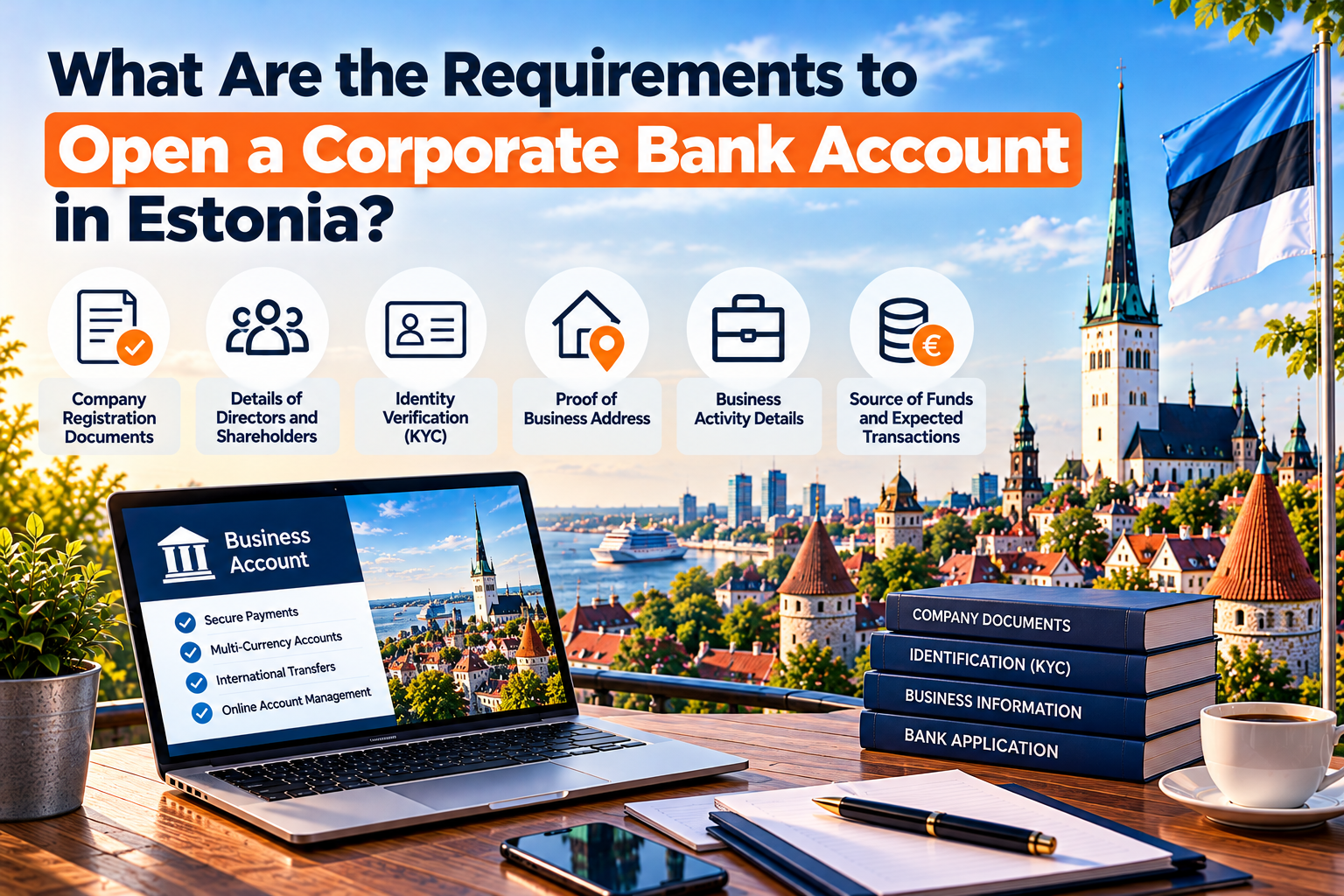
Compile shareholder information, management details, articles of association, and other required documentation.
Submit the incorporation application through the appropriate registration procedure and pay the applicable fee.
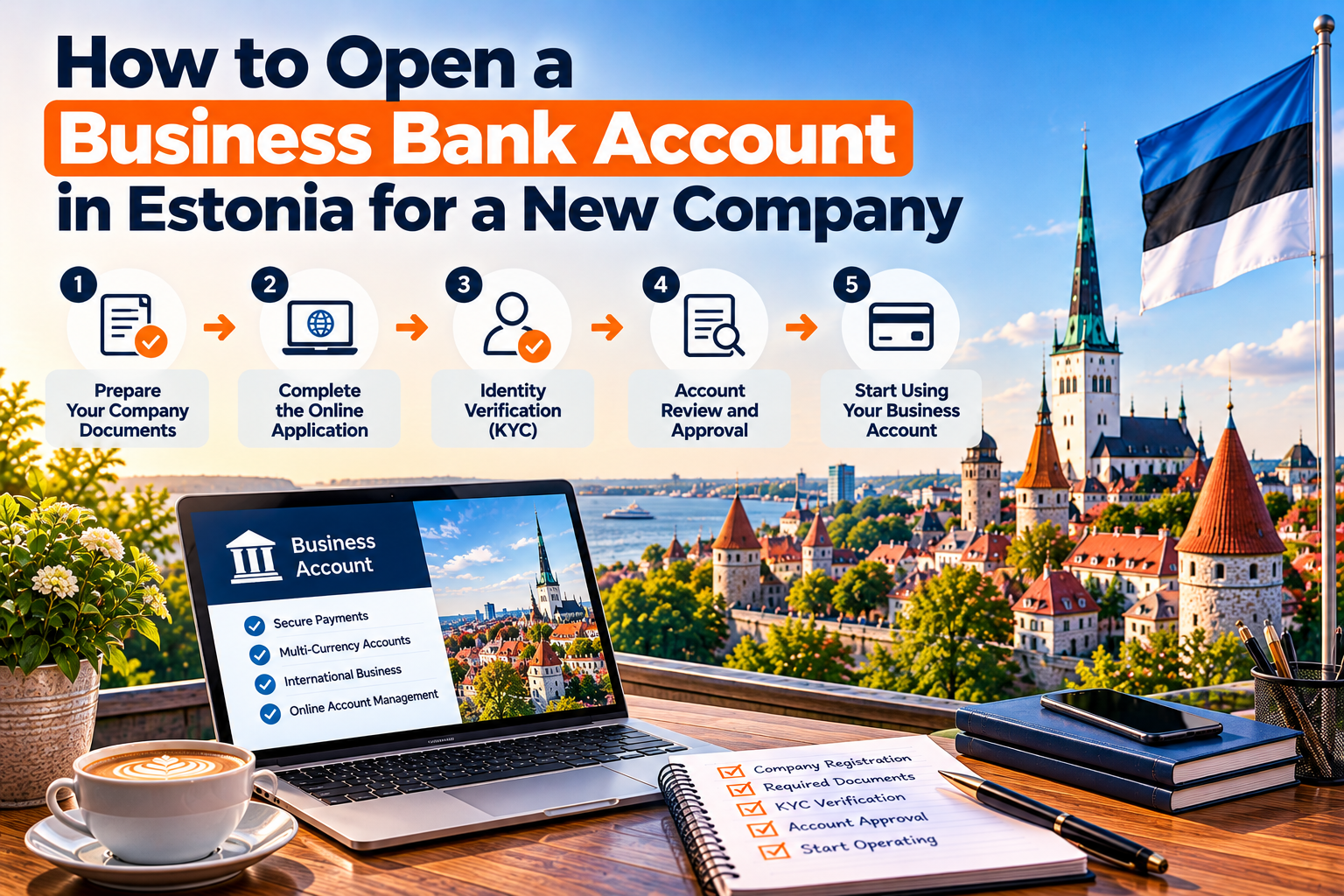
Apply for a suitable business bank or payment account.
Determine the company's corporate tax, VAT, employment, and international compliance requirements.
Implement appropriate bookkeeping, financial reporting, and ongoing compliance arrangements.
Following these steps can help entrepreneurs establish a stronger foundation for international business operations.
Yes. Estonia offers digital company administration, access to the European Union market, and a corporate tax system that can be attractive to international entrepreneurs. Its suitability depends on the business model and the owner's circumstances.
Yes. Foreign entrepreneurs can generally establish and own Estonian companies without residing in the country. However, operating or managing the company from another jurisdiction may create additional tax and regulatory obligations.
No. Estonia generally defers corporate income taxation on retained profits until distribution, but distributed profits and certain other payments may be taxable. International tax obligations may also apply.
Yes. Estonian companies can generally provide goods and services to customers internationally, subject to applicable trade, tax, consumer protection, and regulatory requirements.
An Estonian company may apply for suitable banking and payment services to receive international transactions. Account approval and available payment methods depend on the financial institution.
Estonia can be suitable for e-commerce companies, particularly those operating internationally. However, businesses must consider VAT, consumer protection, product regulations, customs, and other relevant obligations.
Yes. Non-EU citizens can generally establish Estonian companies, subject to applicable identification, registration, and legal requirements.
An Estonian private limited company does not generally need to employ local staff solely because it is incorporated in Estonia. However, its activities and management arrangements may create specific legal or regulatory requirements.
Yes. Many company administration procedures can be completed remotely. Nevertheless, managing the company from another country may create tax residence or permanent establishment obligations.
Estonia may be suitable for certain holding company structures, depending on the investment activities, ownership arrangements, tax treatment, and international compliance requirements. Specialist advice is important when establishing cross-border holding structures.
Yes. Estonian companies generally must prepare and submit annual reports, even when business activity is limited.
Estonia can be an excellent option for certain international businesses, especially digital companies and entrepreneurs who value remote administration and reinvestment opportunities. However, the best jurisdiction depends on the company's operational, financial, and regulatory needs.
Estonia offers a modern and internationally accessible business environment that can be particularly attractive to entrepreneurs seeking to establish a company within the European Union.
Its digital infrastructure, remote company administration capabilities, flexible corporate structures, and distinctive taxation of distributed profits provide several advantages for internationally focused businesses.
For software companies, consultants, digital service providers, e-commerce businesses, and technology startups, Estonia can offer a practical foundation for operating across international markets.
However, the decision to incorporate in Estonia should be based on more than administrative convenience or potential tax advantages.
Entrepreneurs must carefully consider where the company will be managed, where business activities will take place, which financial services are required, and what tax and regulatory obligations may arise in different countries.
Estonia can be a strong choice for starting an international business, but its greatest advantages are generally realised when the corporate structure aligns with the company's actual commercial operations and long-term growth strategy.
With appropriate planning, sound financial management, and ongoing compliance, an Estonian company can provide a flexible platform for developing and expanding an international business.