By

October 8, 2026
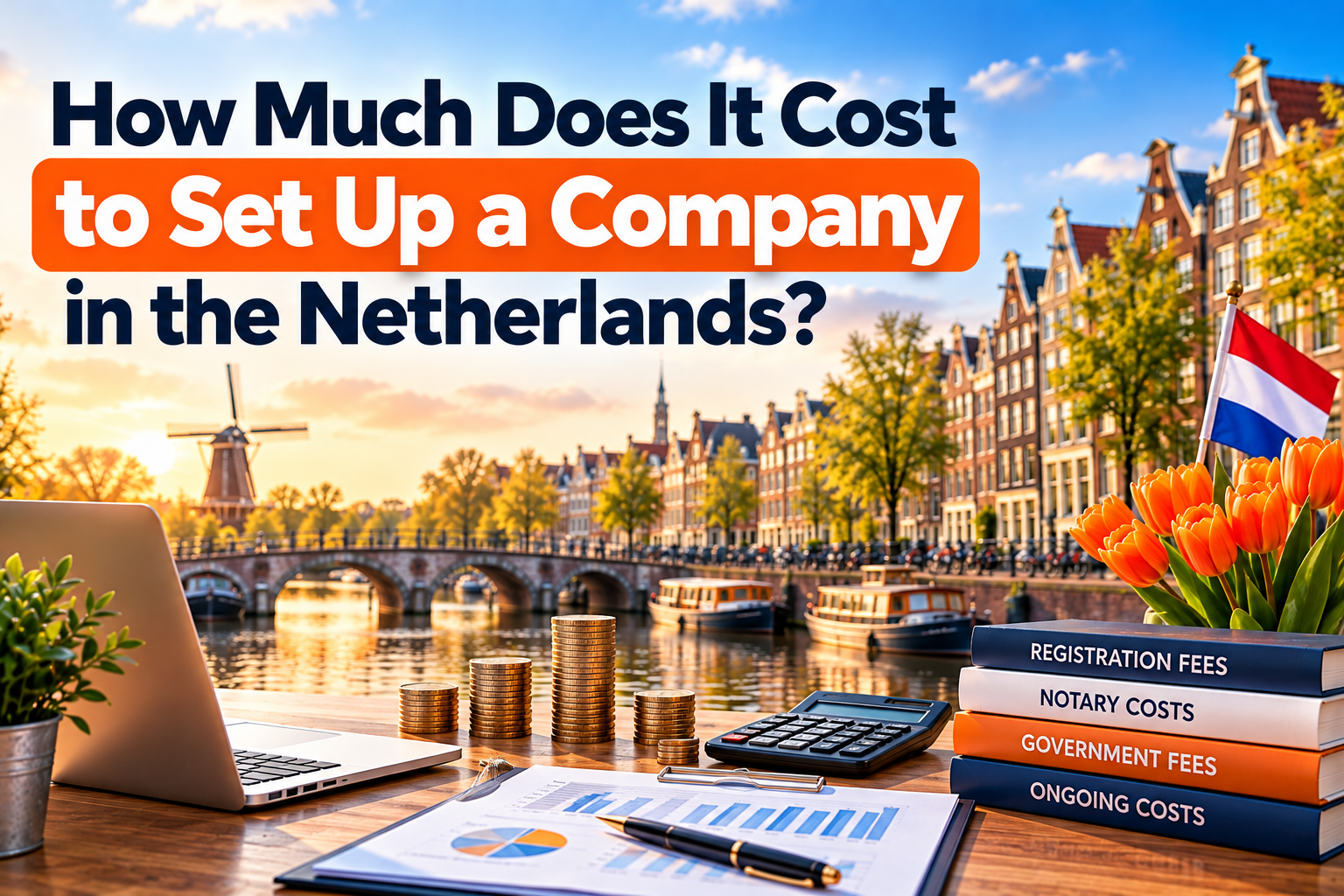
How Much Does It Cost to Set Up a Company in the Netherlands?
The Netherlands is an attractive destination for international entrepreneurs, foreign investors, and businesses looking to establish a presence in Europe. Its strategic location, stable economy, and access to the European Union market make it a popular choice for company formation.
But how much does it cost to set up a company in the Netherlands?
The total cost depends on the type of business, incorporation requirements, professional fees, registered address, and ongoing administrative expenses.
For foreign entrepreneurs, the Dutch private limited company (BV) is one of the most popular business structures because it offers flexible ownership and generally limited shareholder liability.
This guide explains the main costs involved in Netherlands company formation, including Dutch BV registration fees, notary expenses, business banking, taxation, and annual maintenance costs.
A Dutch BV, officially known as a Besloten Vennootschap, is a private limited liability company commonly used by local and international entrepreneurs.
The main incorporation expenses typically include:
The overall incorporation cost depends on the complexity of the ownership structure and the professional services selected.
One advantage of establishing a Dutch BV is its low minimum share capital requirement.
A Dutch BV can generally be incorporated with nominal share capital of just €0.01.
This makes the structure accessible to entrepreneurs who do not wish to commit substantial initial capital.
However, minimum share capital should not be confused with the actual cost of incorporation or the funds required to operate the business.
Companies should maintain sufficient working capital to meet their financial obligations.
Businesses registering in the Netherlands generally need to register with the Dutch Chamber of Commerce (Kamer van Koophandel or KVK).
A one-time registration fee applies.
For a Dutch BV, registration is normally arranged by the civil-law notary as part of the incorporation process.
The official fee may change over time, so entrepreneurs should confirm the current amount before proceeding.
A Dutch civil-law notary is required to establish a BV.
The notary prepares the incorporation deed, articles of association, and relevant corporate documentation.
Fees vary depending on the notary, company structure, number of shareholders, and complexity of the transaction.
Foreign-owned companies may incur additional costs for identification, document verification, translations, or international ownership arrangements.
A Dutch company generally needs a qualifying business address in the Netherlands.
Depending on its activities, the business may use commercial premises, an eligible serviced office, or another legally acceptable address arrangement.
Costs vary based on location, facilities, and services included.
Entrepreneurs should ensure that the selected address meets Dutch registration requirements rather than choosing a service solely based on price.
Opening a business account is another important consideration when setting up a company in the Netherlands.
Banks and financial institutions may charge account maintenance fees, transaction charges, international payment fees, or other service costs.
Foreign-owned companies may also undergo additional compliance checks.
The availability and cost of banking services depend on the financial institution, ownership structure, and expected business activities.
The cost of operating a Dutch company continues after incorporation.
Common annual expenses include:
The total annual maintenance cost depends on the size of the business, number of transactions, employees, and reporting requirements.
A Dutch BV is generally subject to Dutch corporate income tax on its taxable profits, subject to applicable tax rules and international agreements.
Other potential obligations include:
Foreign shareholders should also consider double taxation agreements and the tax implications of managing a Dutch company from another country.
Foreign entrepreneurs can generally establish and own Dutch companies without being residents of the Netherlands.
However, additional costs may arise where the incorporation involves overseas shareholders, foreign corporate documents, legalisation, translation, or remote identification procedures.
Non-resident entrepreneurs may also need assistance arranging a qualifying business address and coordinating the incorporation process.
Using professional company formation services can help simplify these requirements and reduce avoidable administrative delays.
In certain circumstances, a Dutch BV can be incorporated without the shareholder physically visiting the Netherlands.
Remote incorporation may be arranged through a Dutch civil-law notary, subject to applicable identification and legal requirements.
Additional verification or representation arrangements may affect the total incorporation cost.
The total cost varies depending on the legal structure, notary fees, registration charges, business address, and professional services required.
A sole proprietorship generally involves lower initial setup costs than a BV because it does not require notarial incorporation. However, it does not provide the same separation of personal and business liability.
Yes. Foreign individuals and companies can generally own 100% of a Dutch BV.
€0.01 can be sufficient as nominal share capital, but additional funds are needed for incorporation fees and business operations.
Yes. Dutch companies may incur recurring accounting, tax compliance, registered address, banking, and administrative costs.
Establishing a Dutch company involves more than paying registration fees.
Foreign entrepreneurs must consider legal documentation, notarial requirements, taxation, banking, and ongoing compliance.
Professional company formation assistance can help identify the relevant costs, coordinate the incorporation process, and avoid unexpected administrative complications.
Are you planning to set up a Dutch BV, register a company in the Netherlands as a foreigner, or establish a European subsidiary?
Our company formation services can help guide you through the incorporation process and explain the costs involved in establishing and maintaining a Dutch company.
Contact us today to request a personalised Netherlands company formation quotation.
Take the first step towards establishing your business in the Netherlands with a clear understanding of the costs and requirements.