By

October 16, 2026
How Can I Start a Company in Estonia Using e-Residency?
Estonia has become an attractive destination for international entrepreneurs who want to establish and manage a company remotely. Through its e-Residency programme, eligible individuals can access Estonia's digital business services, register a company online and manage many administrative tasks without relocating to the country.
Whether you are a freelancer, consultant, software developer, online business owner or international entrepreneur, Estonia offers a digital framework for establishing a business within the European Union.
But how exactly do you start a company in Estonia using e-Residency?
The process generally involves obtaining an Estonian digital identity, choosing a company structure, arranging a registered address, completing online company registration and setting up suitable business payment arrangements.
This guide explains each stage, the documents required, the costs involved, taxation considerations and the ongoing responsibilities of operating an Estonian company.
Estonia e-Residency is a government programme that provides eligible foreign nationals with a secure digital identity for accessing certain Estonian electronic services.
The programme enables entrepreneurs to interact with Estonia's digital business infrastructure without necessarily living in the country.
With an e-Residency digital identity, eligible individuals can:
However, e-Residency does not provide Estonian citizenship, an EU residence permit, immigration rights or automatic tax residency.
It also does not guarantee access to a business bank account.
Yes. Foreign entrepreneurs can establish companies in Estonia, subject to applicable registration and legal requirements.
You do not generally need to be an Estonian citizen or permanent resident to own an Estonian private limited company.
This makes Estonia an option for entrepreneurs who live in countries such as the United Kingdom, Ireland or elsewhere.
However, registering a company in Estonia does not automatically remove tax or regulatory obligations in the country where its owners or directors live and manage the business.
The company's activities, management location and operating arrangements should be considered before incorporation.
The first step is to apply for an Estonian e-Residency digital identity.
Applications are submitted through the official Estonian government process.
Applicants generally need:
The authorities assess applications and carry out background checks.
Approval is not automatic.
Once approved, applicants must collect their digital identity card at an authorised pickup location and complete the required identity verification.
Although the application is online, the initial card collection normally requires an in-person appointment.
The digital identity can then be used with compatible software to access supported Estonian electronic services.
One of the most common structures used by international entrepreneurs is the Estonian private limited company, known as an OÜ.
An OÜ is a separate legal entity that can enter into contracts, own assets and conduct commercial activities.
Potential advantages include:
An OÜ can have one or more shareholders.
Its management board is responsible for managing and representing the company.
The appropriate structure depends on the business model, ownership arrangements and legal requirements.
Before registering an Estonian company, you must select a suitable company name.
The proposed name must comply with Estonian registration rules and be sufficiently distinguishable from existing registered business names.
Applicants should also consider whether the name conflicts with relevant trademarks.
The Estonian e-Business Register provides tools for checking registered company names.
Before submitting an application, entrepreneurs should:
Choosing an appropriate name early can help avoid unnecessary registration delays.
Estonian company registration requires information about the company's intended business activities.
Businesses select an appropriate activity classification using Estonia's economic activity classification system, known as EMTAK.
For example, activities may include:
The selected activity should accurately reflect the company's principal intended source of revenue.
A company may carry out additional lawful activities, but some regulated sectors require specific licences or authorisations.
Entrepreneurs should confirm any sector-specific requirements before starting operations.
An Estonian company must maintain an appropriate registered address.
For international entrepreneurs, this is an important part of the company formation process.
A company may use a qualifying Estonian address, including an address provided through an appropriate business administration service.
Where the company's management board is located outside Estonia and the company uses the board's foreign address, a qualifying licensed contact person in Estonia is required.
A contact person receives and forwards official communications.
The contact person does not automatically become a shareholder, director or authorised signatory of the company.
Incorrect registered address or contact person arrangements can lead to compliance problems.
Entrepreneurs should confirm that their chosen arrangement meets current Estonian legal requirements.
Once the necessary information is prepared, eligible applicants can register an OÜ through the Estonian e-Business Register.
The application generally includes:
The relevant founders, management board members and other required parties must sign the registration application using accepted digital identification methods.
Where not all necessary parties have an eligible digital identity, an alternative registration procedure involving an Estonian notary may be required.
The applicable government registration fee must be paid before the registration process can be completed.
Once the application is approved, the company is entered into the Estonian Commercial Register.
The business receives an official registration code and becomes a registered Estonian legal entity.
An Estonian OÜ must have share capital in accordance with the applicable legal requirements.
Estonia no longer applies the former general €2,500 minimum share capital requirement to newly established OÜ companies.
The minimum nominal value of a share can be as low as €0.01, subject to the relevant rules.
However, choosing extremely low share capital does not remove the need to fund the business adequately.
The appropriate amount depends on the company's intended activities, initial expenses and commercial risks.
Entrepreneurs should also understand the applicable requirements for making and documenting share capital contributions.
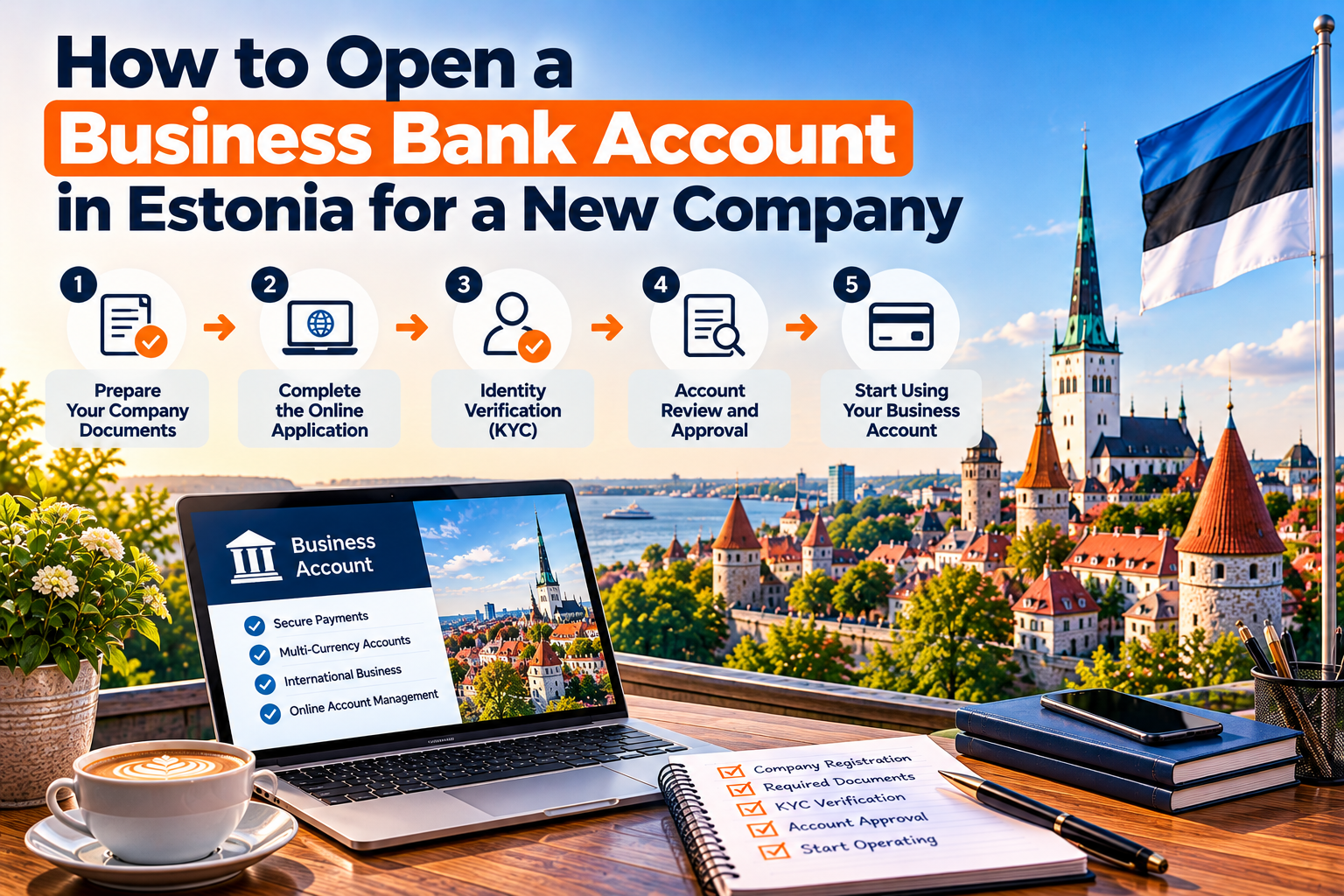
After registering the company, the next important step is arranging suitable business payment facilities.
A registered Estonian company does not automatically receive a bank account.
Business account approval is a separate process.
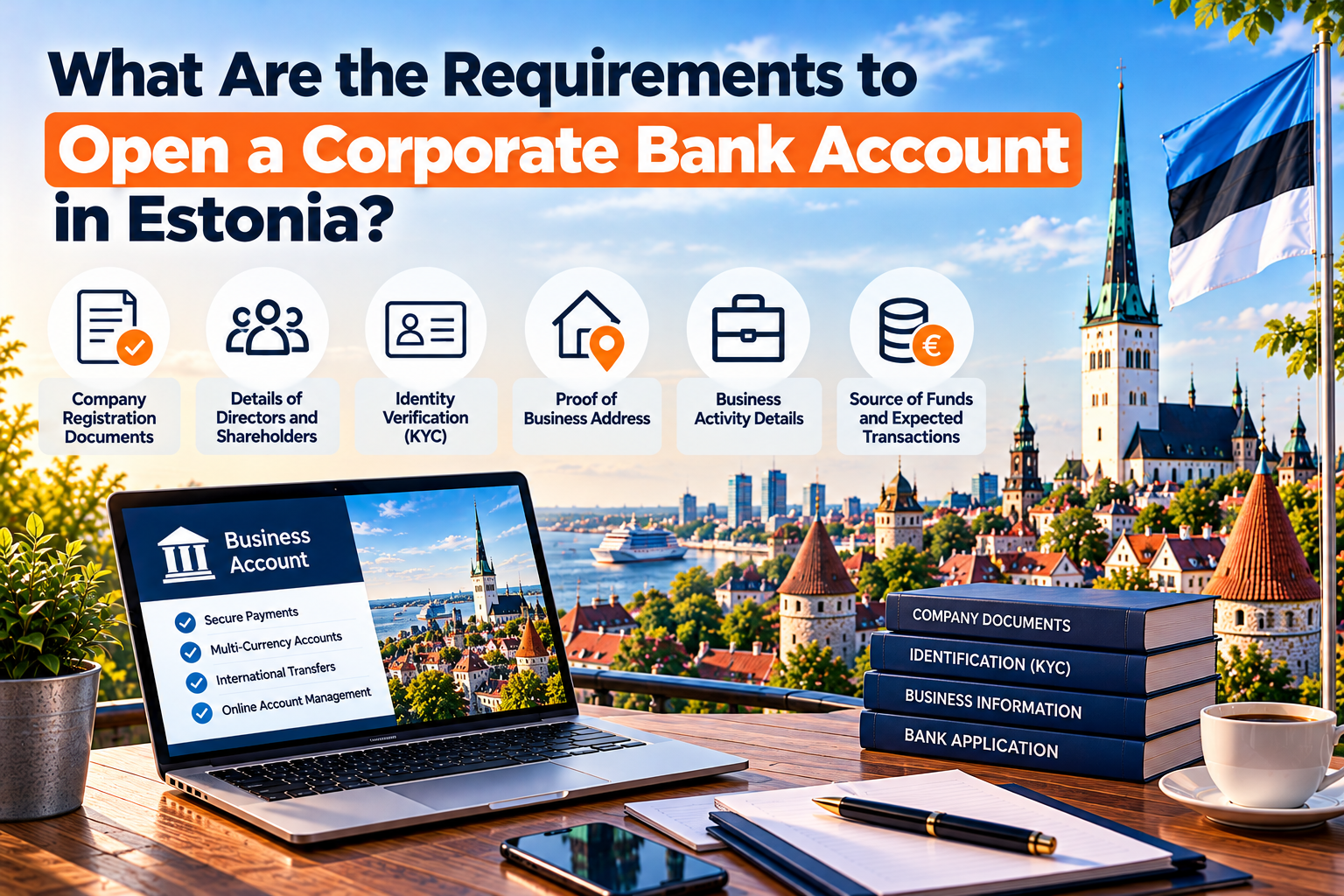
Traditional banks may require:
Some regulated payment and electronic money institutions offer remote onboarding for eligible Estonian companies.
Depending on the arrangement, these accounts may support:
An electronic money account is not a traditional bank deposit account.
The legal structure, regulatory protections and available services differ.
Not necessarily.
An Estonian company may be able to use suitable account details issued elsewhere in the European payment area.
The important considerations are the company's payment requirements, account eligibility and supported payment systems.
After incorporation, entrepreneurs must determine which Estonian tax registrations and reporting obligations apply to the company.
Not every company has the same tax requirements.
Relevant considerations may include:
Estonia generally taxes company profits when they are distributed rather than when ordinary profits are earned and retained.
For example, a company may retain qualifying profits for reinvestment without an immediate Estonian corporate income tax charge on those retained earnings.
However, taxable distributions and certain other payments can create tax liabilities.
The standard corporate income tax calculation for taxable net distributions in 2026 is 22/78.
No.
E-Residency does not exempt a company from taxation.
A company may have tax obligations in Estonia and potentially in other countries, depending on where it is managed and where its business activities take place.
International entrepreneurs should obtain appropriate tax advice before establishing a cross-border company.
Estonian companies must maintain appropriate accounting records.
Even businesses with limited transaction activity generally have ongoing bookkeeping and reporting obligations.
Many international entrepreneurs use accounting services familiar with Estonian company requirements.
Accounting costs depend on transaction volumes, complexity and the services required.
Entrepreneurs should consider both government fees and ongoing business administration costs.
The main published costs include:
The government application fee is €150.
The online company registration state fee is €265.
Where required, contact person services may cost approximately €200–€400 annually, depending on the arrangement.
Basic accounting services may start at approximately €50 per month, with higher fees for businesses requiring more extensive support.
Account opening, maintenance, payment and foreign exchange charges vary by arrangement.
Other expenses may include tax advice, licences, registered address services and administrative support.
The total cost depends on the company's structure and business activities.
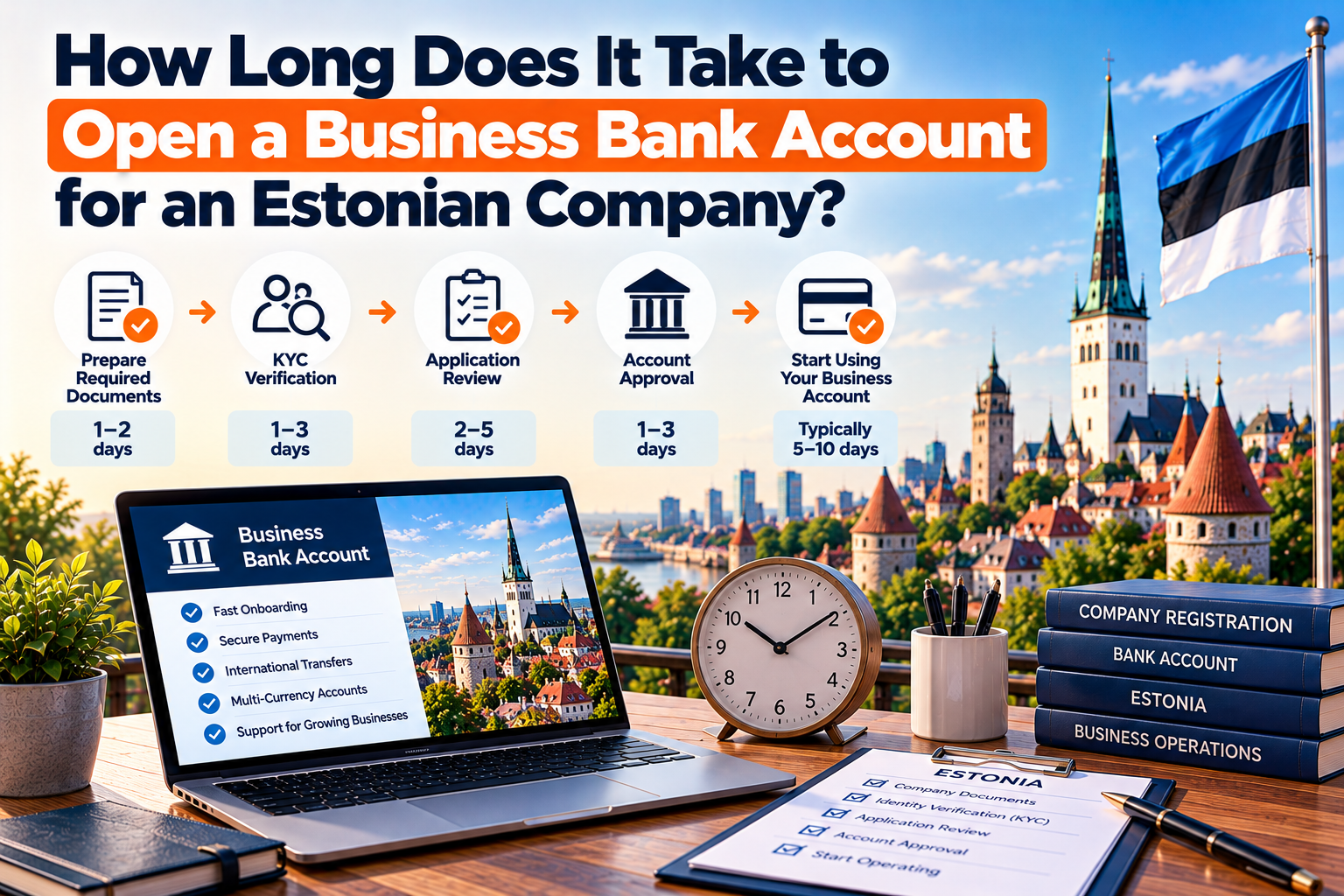
The overall timeframe depends on the entrepreneur's starting position and the complexity of the registration.
Obtaining the digital identity card can take several weeks, including processing, delivery and collection.
Once all required information and digital signatures are available, the online application itself may be completed relatively quickly.
The actual registration decision depends on the relevant authority's review.
Account onboarding may take additional time, particularly where enhanced verification or additional commercial documents are required.
Entrepreneurs should distinguish between the time needed to submit an application and the time needed to complete all company setup activities.
Yes. One of the main benefits of Estonia's digital business environment is the ability to manage many administrative tasks remotely.
For example, an entrepreneur living in the UK may establish an Estonian OÜ and use online systems for company administration.
However, operating from another country may create additional obligations.
The location of effective management may affect where a company is considered tax resident.
Business operations in another country may create a taxable presence under applicable law.
Directors and shareholders may have personal tax obligations in their countries of residence.
Hiring staff or paying directors across borders can create additional compliance requirements.
The treatment of goods and services depends on the nature and location of transactions.
Estonian incorporation should not be treated as a substitute for reviewing these obligations.
Estonia e-Residency may be particularly relevant to businesses that can operate digitally.
Examples include:
Businesses providing software engineering, backend development and technical services to international customers.
Consultants serving clients across different countries.
Agencies providing online advertising, branding and marketing services.
Independent professionals delivering services remotely.
Online retailers selling goods or digital products internationally.
Businesses providing professional or administrative services to clients in different jurisdictions.
However, suitability depends on licensing, tax obligations, operational requirements and the company's actual business model.
Entrepreneurs should be aware of several common misconceptions.
E-Residency is a digital identity programme, not an immigration status.
Company registration does not automatically provide access to business banking services.
Managing an Estonian company from another country may create tax liabilities outside Estonia.
Companies must comply with the relevant registered address and contact person requirements.
Accounting, reporting, account maintenance and administrative services can create recurring expenses.
Certain commercial activities require additional regulatory permissions.
Unclear ownership, insufficient commercial documentation or unsupported activities can delay financial account onboarding.
Preparing carefully before registration can reduce avoidable problems.
Yes. Eligible foreign entrepreneurs can establish an Estonian company without permanently residing in the country.
Not necessarily. Alternative registration procedures may be available, including notarial processes. However, e-Residency is a convenient option for eligible remote founders.
Yes, where all relevant parties have accepted digital identification and the registration meets the applicable requirements.
The published e-Residency application fee is €150, separate from company registration and ongoing business expenses.
The published online registration state fee is €265.
No. The former general €2,500 minimum share capital requirement has been removed.
Some regulated business payment arrangements offer remote onboarding. Traditional banks may require additional checks or an in-person appointment.
Yes, provided it has a suitable account supporting the relevant currencies, payment systems and destinations.
No. E-Residency does not grant citizenship, residence rights or immigration status.
Professional accounting support is not universally mandatory, but the company must meet its bookkeeping, tax and annual reporting obligations.
It may be suitable for certain international business models, but UK-based owners should assess UK tax, management and regulatory implications before incorporating.
Starting a company in Estonia using e-Residency can be a practical option for international entrepreneurs who want access to digital company registration and remote administration.
The process involves obtaining a digital identity, selecting an appropriate company structure, arranging a compliant legal address, registering the company and establishing suitable payment and accounting arrangements.
Estonia's digital infrastructure can simplify many administrative processes, but entrepreneurs must still comply with company law, financial verification requirements, taxation and ongoing reporting obligations.
For eligible international entrepreneurs, e-Residency provides a convenient route to establishing and managing an Estonian company online without requiring permanent relocation.
The key to a successful setup is understanding the complete process, preparing the necessary documentation and assessing both Estonian and international obligations before incorporation.
Disclaimer: This article is provided for general educational purposes only and does not constitute legal, financial, tax, immigration or accounting advice. Government fees, registration procedures, tax rules and regulatory requirements may change. Entrepreneurs should consult official Estonian guidance and qualified professionals where appropriate.