By

October 15, 2026
Do I Need a Residence Permit to Open a Company in Estonia?
Estonia has become an attractive destination for international entrepreneurs seeking to establish a business within the European Union. Its advanced digital infrastructure, efficient company registration procedures, and flexible foreign ownership rules make it possible for many entrepreneurs to establish companies without relocating.
One of the most common questions among foreign investors, freelancers, startups, and international business owners is whether they need an Estonian residence permit before registering a company.
No, you do not generally need a residence permit to open a company in Estonia. Foreign individuals, including non-European Union citizens, can generally establish and own Estonian companies without living in the country.
Estonia allows eligible entrepreneurs to register companies remotely using accepted digital identification and electronic signing methods. This means that business owners may be able to establish a European company while continuing to reside in another country.
However, company ownership, e-Residency, and physical residency are three different legal concepts. Registering a company does not automatically provide permission to live or work in Estonia.
This guide explains the residence permit requirements for company formation in Estonia, how foreign entrepreneurs can establish businesses remotely, and when immigration permission may become necessary.
A residence permit is not generally required simply to establish or own an Estonian company.
Estonian company law allows foreign individuals and legal entities to participate in company ownership, subject to applicable identification, registration, and regulatory requirements.
A foreign entrepreneur can generally:
These activities do not, by themselves, require the entrepreneur to become a physical resident of Estonia.
However, a residence permit or another appropriate immigration status may be required if a non-EU entrepreneur intends to relocate to Estonia or carry out work there.
Company ownership and immigration status are separate legal matters.
Establishing an Estonian company gives the entrepreneur ownership rights in a legal entity registered in Estonia.
It does not automatically provide the right to enter, live, or work in the country.
Company ownership generally allows an individual to hold shares, exercise shareholder rights, appoint management, and receive lawful profit distributions.
Foreign shareholders do not generally need to reside in Estonia.
Physical residency concerns an individual's legal right to live in Estonia.
Non-EU citizens who intend to stay in Estonia beyond the conditions of their permitted short-term entry or visa may need an appropriate residence permit.
Tax residency determines whether an individual is subject to taxation as a resident under applicable tax laws.
Owning an Estonian company does not automatically make the shareholder personally tax resident in Estonia.
Understanding these differences is important for international entrepreneurs planning to establish businesses remotely.
Yes. Non-EU citizens can generally establish and own Estonian companies without holding an Estonian residence permit.
Foreign ownership is not generally restricted to citizens of the European Union.
This makes Estonia an option for entrepreneurs who want to establish a European business while continuing to live in their home country.
However, applicants must comply with identification, company registration, beneficial ownership, and applicable regulatory requirements.
Specific restrictions may apply depending on nationality, residence, sanctions rules, and the nature of the intended business activities.
Yes. Eligible entrepreneurs can register an Estonian company without living in the country.
Many foreign entrepreneurs use Estonia's electronic company registration system to establish private limited companies remotely.
The process generally involves selecting a company name, preparing incorporation information, arranging the required address and contact person, digitally signing the application, and paying the registration fee.
Although the incorporation process can often be completed remotely, entrepreneurs may need to complete certain identification procedures in person outside Estonia.
E-Residency is a government-issued digital identity programme that provides eligible non-residents with access to selected Estonian electronic services.
It is designed to support digital identification, electronic document signing, and remote business administration.
E-Residency is not the same as physical residency.
Entrepreneurs should therefore view e-Residency as a digital business administration tool rather than an immigration solution.
No. E-Residency is not mandatory for every company formation arrangement.
Eligible entrepreneurs who already possess an electronic identification method accepted by Estonia's registration system may be able to establish a company online without applying for e-Residency.
Alternatively, incorporation through an appropriate notarial procedure may be possible.
The available options depend on the applicant's identification documents, the company's ownership structure, and the requirements of the registration process.
For many foreign entrepreneurs, e-Residency provides a convenient method of accessing Estonia's digital company services, but it is not a legal requirement for owning an Estonian company.
The process of establishing an Estonian company without a residence permit generally involves several steps.
Select the legal structure that best suits the intended business.
For many entrepreneurs, the private limited company, known as an OÜ, is a practical option.
Choose a name that complies with Estonian company registration requirements and is sufficiently distinguishable from existing registered businesses.
Obtain an accepted digital identification and signing method if planning to complete incorporation electronically.
Eligible foreign entrepreneurs may use e-Residency for this purpose.
Provide an appropriate registered address and appoint an authorised contact person in Estonia where legally required.
Identify the shareholders and management board members.
Foreign individuals can generally serve in these roles.
Establish the company's share capital and comply with the applicable contribution requirements.
Compile the required company information, articles of association, beneficial ownership details, and supporting documentation.
Complete the application through the appropriate electronic or alternative registration procedure.
Pay the applicable state registration fee.
Once the application is approved, the company is entered into the Estonian Commercial Register and receives its official registration number.
The company can then proceed with banking, taxation, accounting, and operational arrangements.
An Estonian private limited company does not generally require a locally resident management board member solely because it is registered in Estonia.
Foreign individuals can serve as management board members without holding an Estonian residence permit.
A single individual may generally be both the sole shareholder and sole management board member.
However, the company must comply with the applicable registered address and contact person requirements.
Entrepreneurs should also consider the tax implications of managing the company from another country.
The location where key management decisions are made may influence the company's tax obligations.
An Estonian company must provide a registered address that complies with applicable legal requirements.
Foreign entrepreneurs may be able to arrange a suitable address service without travelling to Estonia.
Depending on the company's registered location, an authorised contact person in Estonia may also be required.
A contact person receives and forwards certain official documents and legal communications on behalf of the company.
The contact person does not automatically become a director, shareholder, or manager.
These arrangements are administrative requirements and do not mean that the foreign entrepreneur must obtain a residence permit.
A residence permit may become necessary when a non-EU entrepreneur intends to live in Estonia for an extended period or undertake activities requiring immigration authorisation.
The exact requirements depend on the individual's nationality, intended activities, length of stay, and applicable immigration rules.
Relocating to Estonia: A non-EU entrepreneur planning to establish their main residence in Estonia may need an appropriate residence permit.
Working in Estonia: Certain employment or business activities carried out physically in Estonia may require work authorisation or another applicable immigration status.
Managing a Business From Estonia: A foreign entrepreneur intending to live in Estonia while actively managing a company may need to qualify under an appropriate immigration route.
Long-Term Business Operations: Entrepreneurs who plan to establish a sustained physical presence in Estonia should assess the relevant residency and work requirements.
Short-term visits may be governed by separate visa or visa-free entry rules, depending on nationality and circumstances.
Establishing an Estonian company may form part of a wider business immigration strategy, but incorporation alone does not guarantee a residence permit.
Entrepreneurs who want to relocate to Estonia must qualify under an applicable immigration category.
Depending on their circumstances, they may be eligible to apply for a residence permit associated with entrepreneurship or another recognised purpose.
Some immigration routes may impose investment, income, business activity, or other qualifying conditions.
Entrepreneurs should verify the applicable requirements before relying on company formation as part of a relocation plan.
A foreign shareholder or management board member may carry out certain company-related responsibilities while living abroad.
However, the legal treatment of work performed outside Estonia depends on the laws of the country where the individual is physically located.
For example, an entrepreneur managing an Estonian company from another country may have local tax, employment, social security, or business registration obligations.
Registering a company in Estonia does not automatically permit an entrepreneur to disregard the legal requirements of their country of residence.
Estonia has a distinctive corporate income tax system under which ordinary profits retained within the company are generally not subject to immediate Estonian corporate income tax.
Corporate income tax generally becomes payable when profits are distributed or certain taxable payments and expenses arise.
However, foreign entrepreneurs must consider both Estonian taxation and the tax rules of other relevant countries.
An Estonian-incorporated company is generally treated as resident for Estonian corporate tax purposes.
However, another country may also claim taxing rights based on the company's effective management, permanent establishment, or business activities.
The shareholder's personal tax residence is generally determined separately from the company's place of incorporation.
Dividends received from an Estonian company may be taxable in the shareholder's country of residence.
Salaries and management board remuneration may have specific tax and social security implications depending on where the work is performed and applicable international agreements.
Professional cross-border tax advice can help entrepreneurs avoid unexpected liabilities.
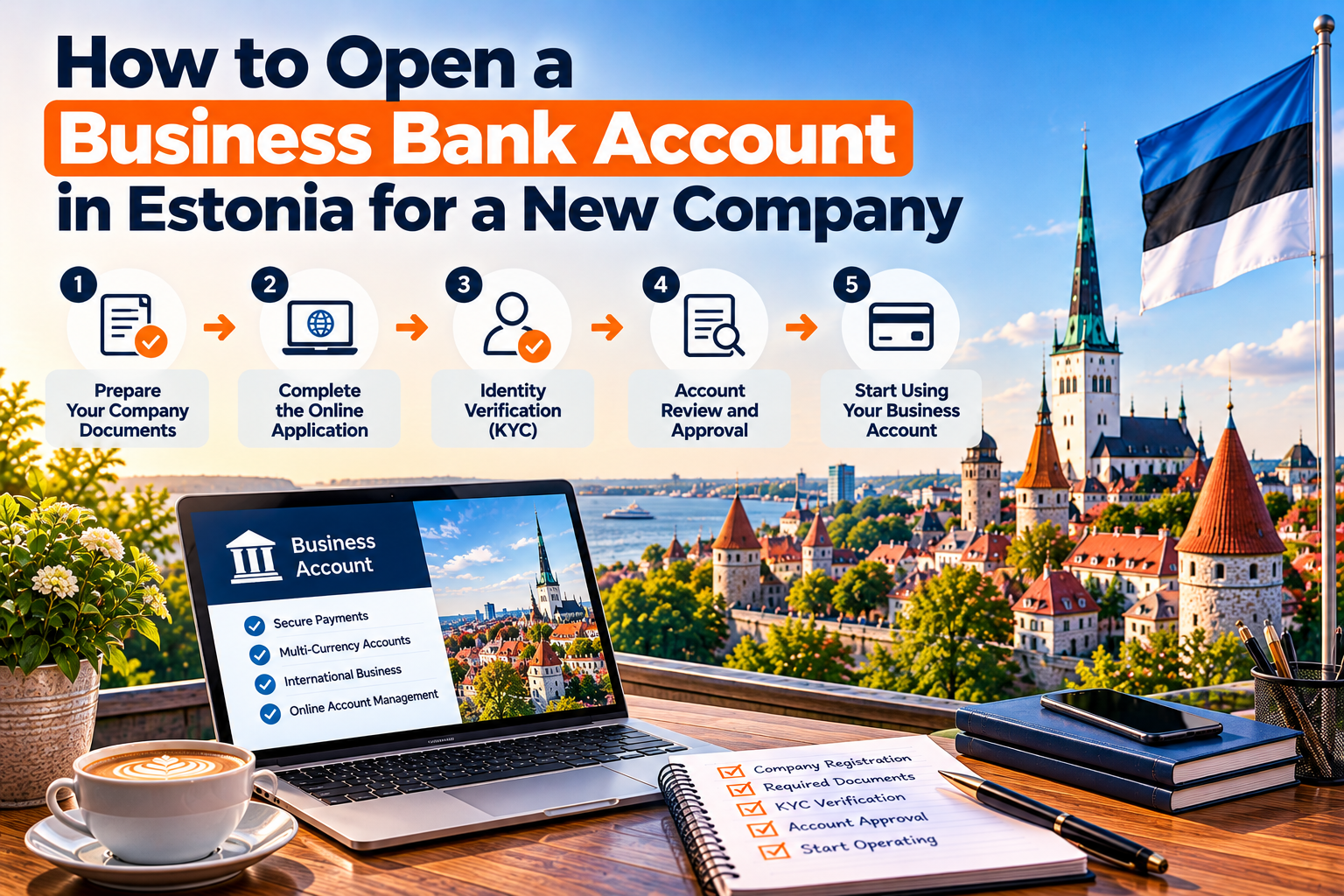
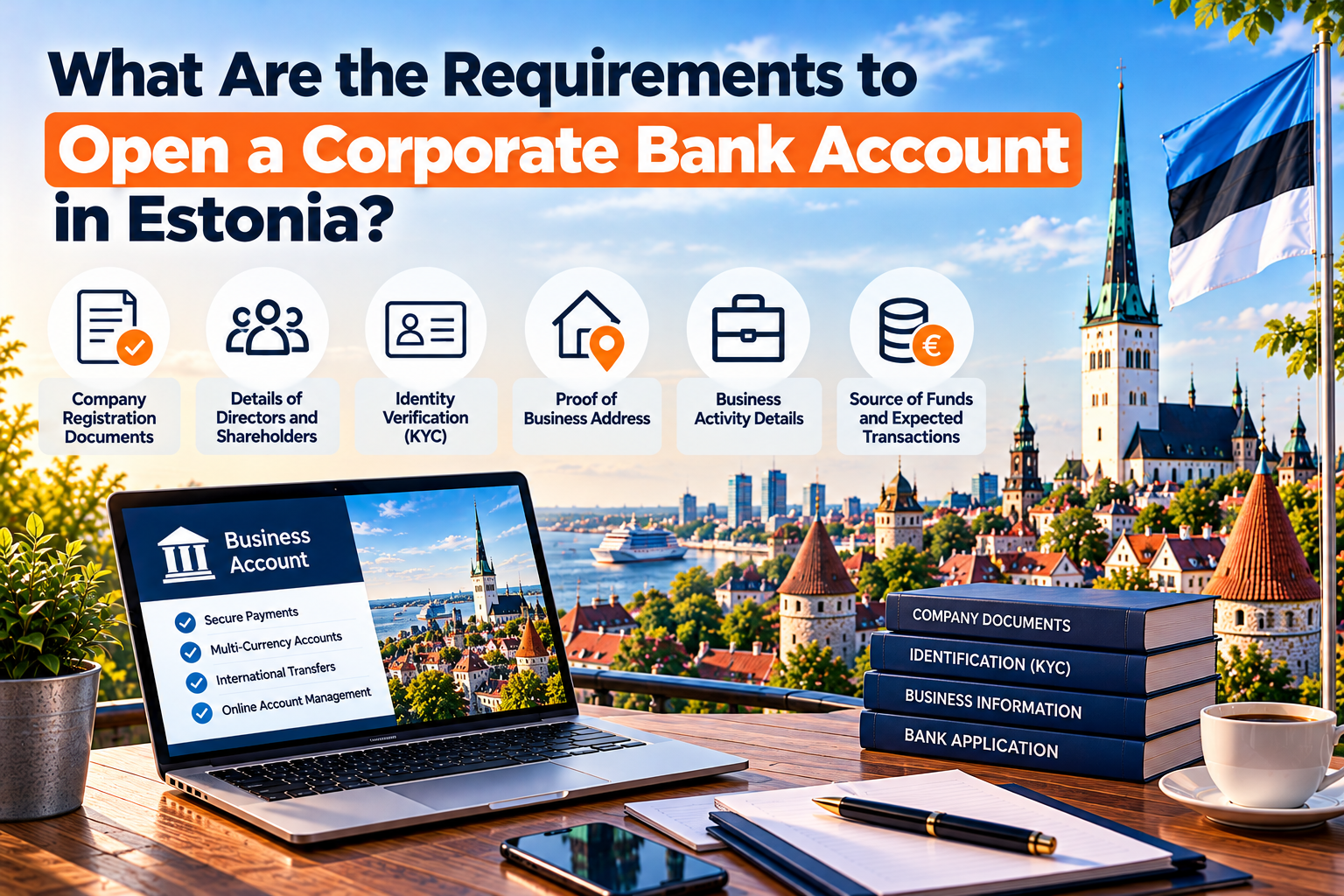
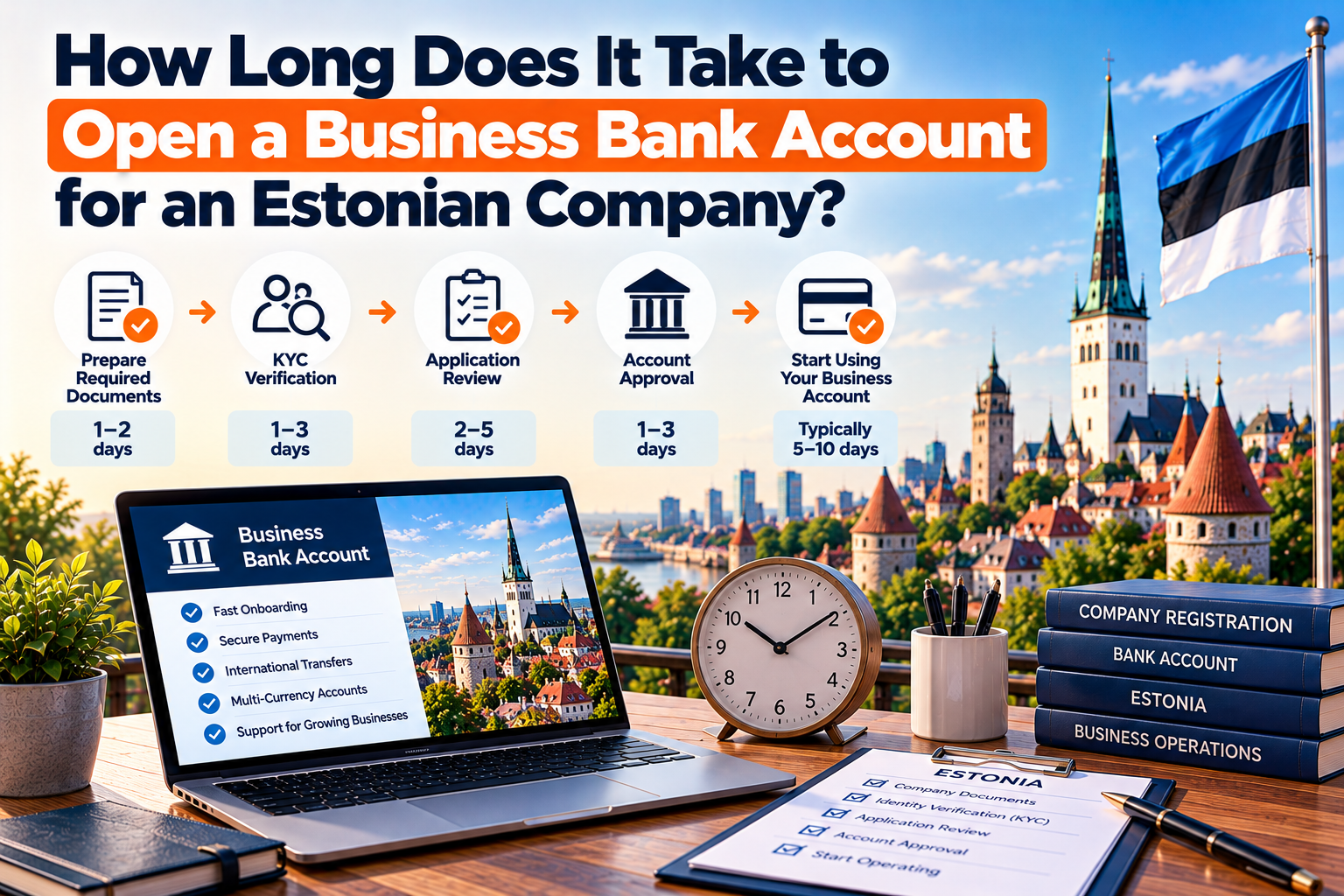
An Estonian company owned by a non-resident may apply for a business account with an eligible bank or regulated payment institution.
An Estonian residence permit is not necessarily required for every business account application.
However, financial institutions establish their own eligibility and compliance requirements.
Some financial institutions offer remote onboarding, while others may require additional verification or a physical meeting.
Company registration and e-Residency do not guarantee business account approval.
Foreign entrepreneurs can generally establish Estonian companies for a wide range of commercial activities.
Estonia can be particularly attractive to businesses that operate digitally or serve international customers.
Certain activities may require additional licences, registrations, or regulatory approvals.
The absence of a residence permit requirement for company ownership does not remove these business-specific obligations.
Establishing an Estonian company while living abroad can offer several advantages.
Foreign entrepreneurs can generally own Estonian companies without becoming residents.
Eligible applicants can complete company registration electronically.
An Estonian company provides a corporate structure registered within an EU member state.
Foreign individuals can generally serve as management board members.
Many corporate responsibilities can be managed online.
Private limited companies can be established with relatively low share capital.
Retained profits are generally not subject to immediate Estonian corporate income tax.
Companies can develop commercial relationships with customers and suppliers across different countries.
These benefits make Estonia an option for entrepreneurs who want a European company without establishing physical residency.
Although foreign entrepreneurs can generally establish Estonian companies without residence permits, several challenges should be considered.
Managing the company from another country may create additional tax liabilities.
Some financial institutions may impose additional requirements on non-resident-owned companies.
The company must maintain an appropriate registered address and contact person where required.
Estonian companies must maintain accounting records and submit required reports.
Company ownership does not automatically provide permission to live or work in Estonia.
Certain business activities require additional licences or authorisations.
Understanding these considerations can help entrepreneurs establish a compliant international business structure.
Yes. Foreign individuals can generally establish and own Estonian companies without holding an Estonian residence permit.
Yes. Non-EU citizens can generally establish Estonian companies, subject to applicable legal, identification, and regulatory requirements.
No. Foreign entrepreneurs can generally own Estonian companies while residing abroad.
Yes. A non-resident can generally own all shares in an Estonian private limited company without appointing a local shareholder.
No. E-Residency is a digital identity programme and does not provide physical residency or immigration rights.
Eligible entrepreneurs can complete electronic incorporation using accepted digital identification and signing methods. However, obtaining an e-Residency card normally requires an in-person collection appointment.
No. An Estonian private limited company does not generally require a locally resident management board member solely because it is incorporated in Estonia.
Not automatically. Entrepreneurs must separately qualify under an applicable immigration route.
Depending on nationality and circumstances, short business visits may be possible under applicable visa or visa-free entry rules. Activities involving work or longer stays may require additional authorisation.
Some financial institutions accept applications from non-resident-owned Estonian companies. Approval depends on the institution's compliance and eligibility requirements.
An Estonian company has obligations under Estonian tax law, while the shareholder may also have tax obligations in their country of residence. The overall treatment depends on the circumstances and applicable tax rules.
Yes. Estonian companies generally must prepare and submit annual reports, including when business activity is limited.
A residence permit is not generally required to open, own, or manage an Estonian company from abroad.
Estonia allows foreign entrepreneurs, including non-EU citizens, to establish private limited companies without becoming residents of the country.
Its electronic company registration infrastructure and digital administration services make remote incorporation particularly convenient for international entrepreneurs, consultants, technology businesses, and online service providers.
However, establishing a company and obtaining permission to live or work in Estonia are separate legal processes.
Entrepreneurs who intend to relocate must satisfy the relevant immigration requirements, while those managing their companies from abroad must consider international taxation, banking, and regulatory obligations.
For entrepreneurs who want to establish a European business without relocating, Estonia offers a flexible company formation framework that generally does not require an Estonian residence permit.
With proper planning and compliance, an Estonian company can provide a practical foundation for international business operations while allowing its owners to remain resident in another country.