By

October 8, 2026
Do I Need a Business Bank Account to Operate an Estonian OU?
Estonia is a popular destination for international entrepreneurs looking to establish a company in the European Union. Its digital company registration system makes it relatively straightforward to establish a private limited company, known as an OÜ.
However, many entrepreneurs ask an important question: Do I need a business bank account to operate an Estonian OÜ?
An Estonian OÜ does not generally need a traditional bank account simply to be registered. However, most businesses require suitable financial facilities to receive customer payments, pay suppliers, manage expenses, and meet their financial obligations.
This guide explains the banking requirements for Estonian companies and the alternatives available to foreign-owned businesses.
A traditional business bank account is not generally a mandatory condition for registering an Estonian private limited company.
An OÜ can be incorporated before establishing its banking arrangements.
However, once the company begins commercial activities, it will usually need a practical way to receive and make business payments.
This may involve a traditional corporate bank account or a suitable regulated business payment account.
The appropriate solution depends on the company's activities, payment requirements, and regulatory obligations.
Yes. Eligible entrepreneurs can register an Estonian OÜ without first opening a traditional business bank account.
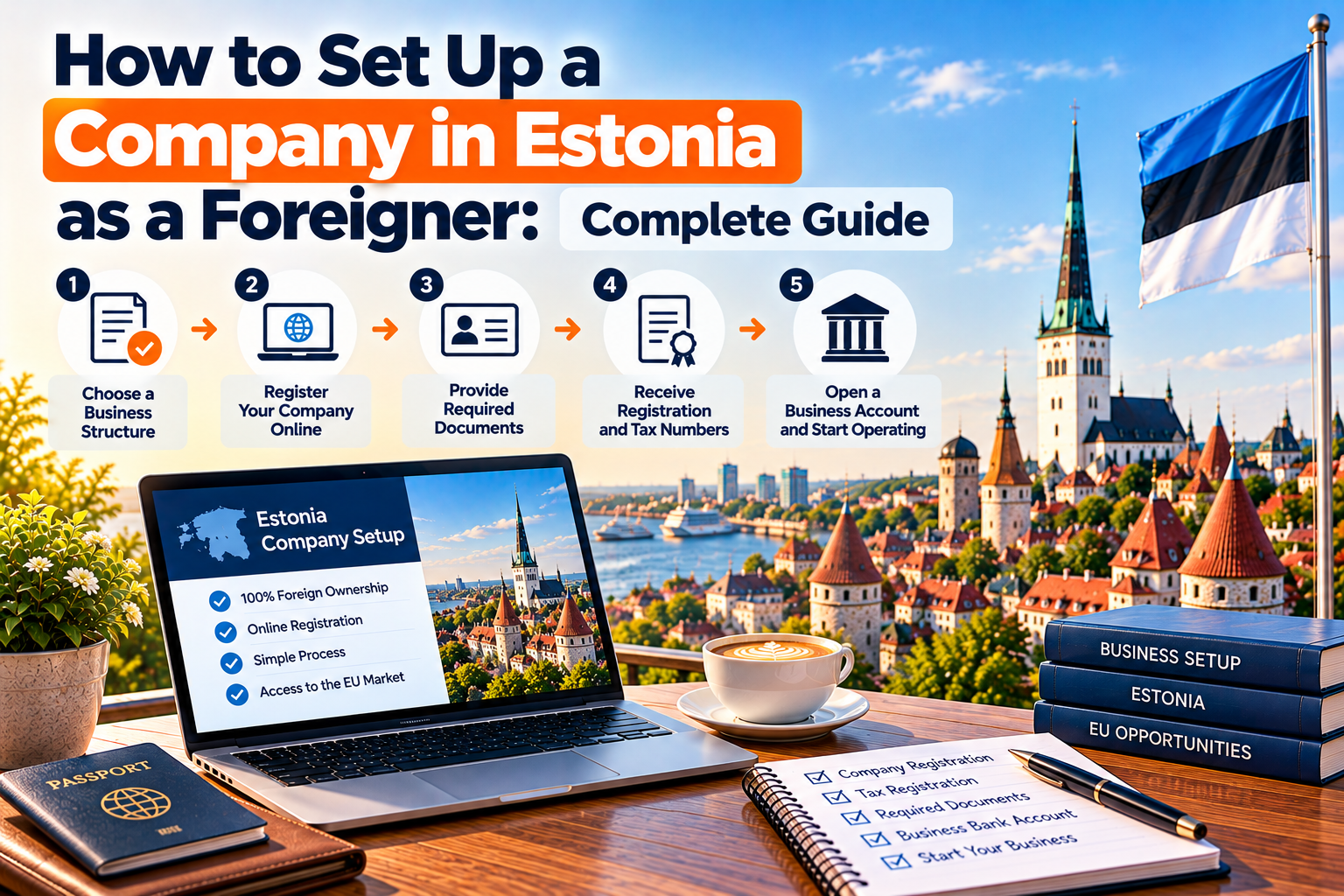
The incorporation process primarily involves providing company information, identifying shareholders and management board members, arranging a legal address, and completing the required registration procedures.
The company must also comply with applicable share capital requirements.
Banking arrangements can generally be organised separately from incorporation.
This allows entrepreneurs to establish their companies before applying for suitable financial services.
Yes, in certain circumstances.
An Estonian company may use an eligible regulated payment account or electronic money account for its business transactions.
Depending on the provider, these accounts may offer:
For companies primarily receiving customer payments and paying suppliers, these services may provide a practical alternative to traditional banking.
However, an electronic money account is not a bank account, and the regulatory protections are different.
Yes. An Estonian company may use an eligible business account with an IBAN issued in another European country.
The account does not generally need to have an Estonian IBAN simply because the company is registered in Estonia.
Under applicable European payment rules, covered euro transfers benefit from protections against certain forms of IBAN discrimination.
However, the account must support the company's required payment services and meet the financial institution's eligibility requirements.
A traditional business bank account is provided by a licensed credit institution.
It may offer payment services, deposit facilities, and other banking products.
A business e-money account is provided by a regulated electronic money institution and is designed primarily for electronic money and payment transactions.
Some e-money accounts offer EU IBAN facilities, SEPA transfers, and international payments.
However, e-money balances are not traditional bank deposits and do not receive ordinary bank deposit guarantee protection.
Instead, electronic money institutions must comply with applicable safeguarding requirements.
Businesses should consider these differences before choosing their financial services.
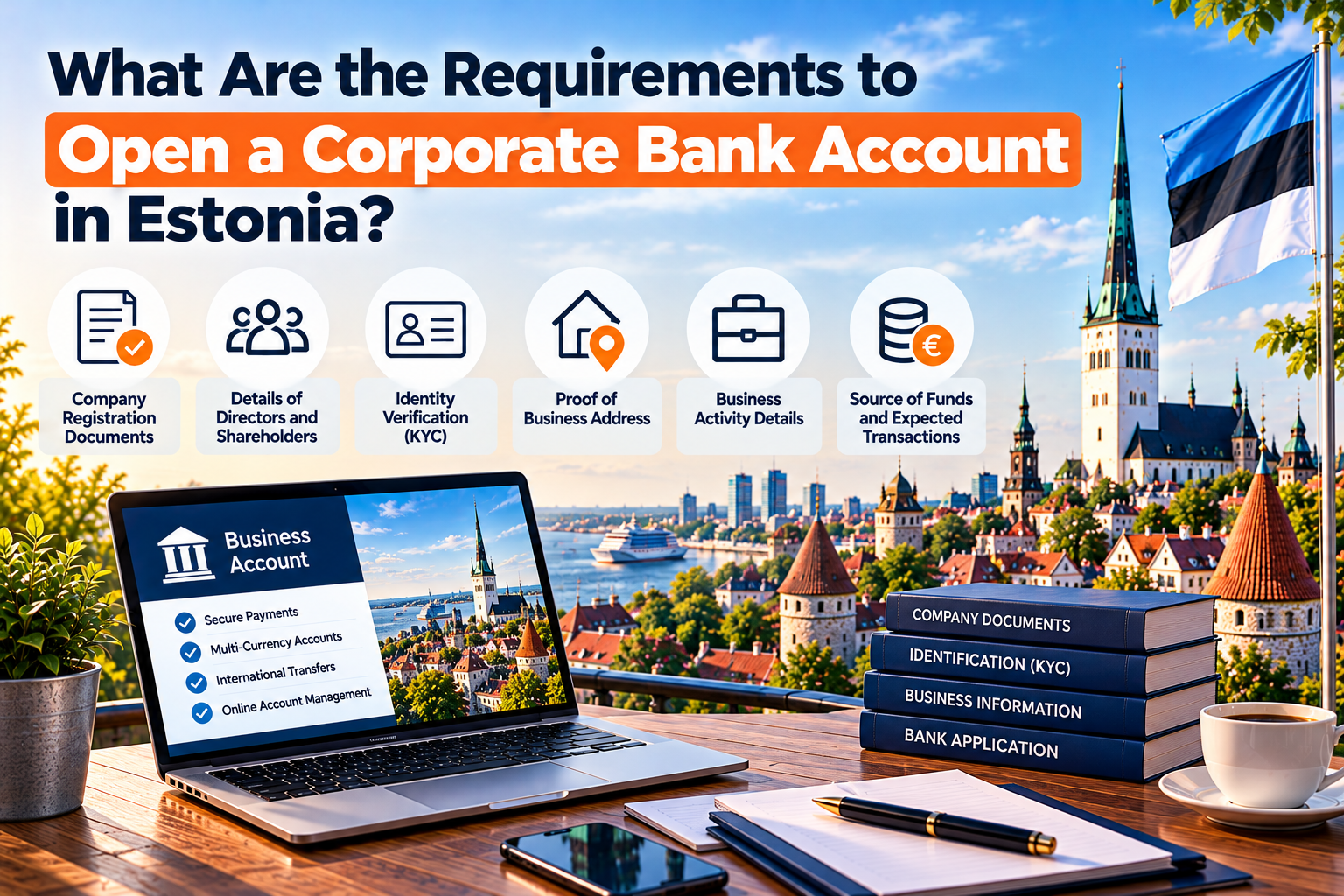
Financial institutions generally require information about the company and the individuals who own or control it.
Typical requirements include:
Additional documents may be required depending on the company's ownership structure and activities.
Yes. A newly incorporated Estonian company can apply for business financial services even without an established trading history.
However, approval is not automatic.
Financial institutions must complete identity verification and compliance assessments before providing services.
Foreign-owned companies may face additional requirements, particularly where the business has limited economic connections to Estonia.
Preparing accurate company documentation can help reduce unnecessary delays.
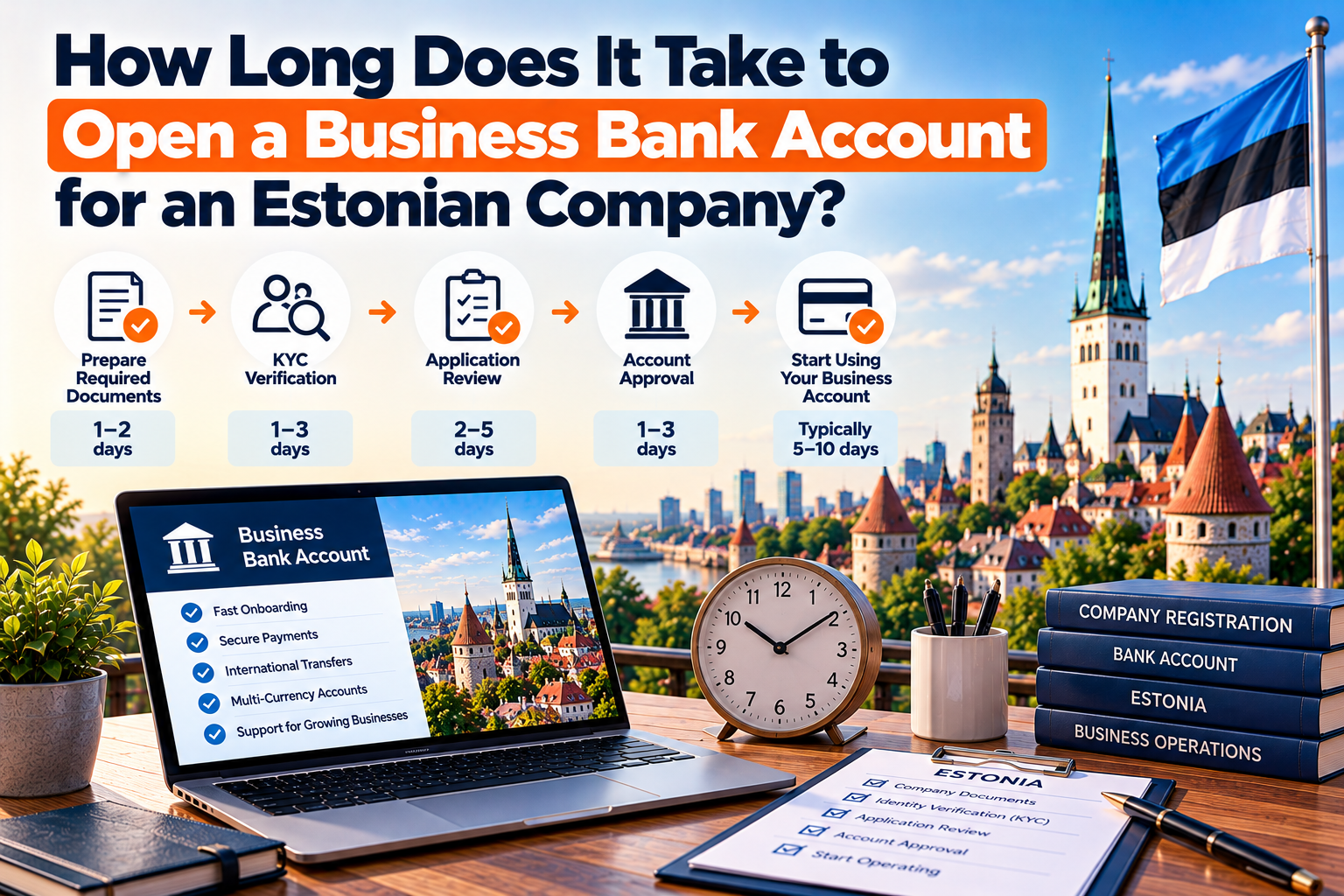
Processing times depend on the financial institution and the complexity of the application.
Some straightforward applications may be completed within a few working days.
Others may take several weeks or longer, particularly where additional compliance checks are required.
Entrepreneurs should arrange their payment facilities early to avoid delays when starting commercial operations.
An Estonian OÜ is a separate legal entity from its shareholders.
For this reason, company transactions should be kept separate from personal finances.
Using a personal account for regular company transactions may breach the account provider's terms and create accounting or compliance complications.
A dedicated business account is generally the more appropriate solution for receiving revenue, paying business expenses, and maintaining clear financial records.
An Estonian company must meet its tax obligations regardless of whether it uses a traditional bank account or another suitable payment arrangement.
Tax payments must be made through methods accepted by the relevant authorities.
Businesses should confirm that their chosen financial account supports the payment references, transfers, and other requirements necessary to meet their obligations.
No. A traditional business bank account is not generally required before company registration.
Yes. An eligible Estonian company may use a regulated corporate e-money account for supported business payments.
Not generally. An eligible business account with an IBAN issued in another European country may be suitable.
Some financial institutions support remote onboarding, although approval depends on their eligibility and compliance requirements.
It may remain registered without an active financial account, but most trading businesses need suitable payment facilities to operate effectively.
No. E-Residency does not automatically provide a bank account or guarantee approval from a financial institution.
Some regulated e-money providers support international payments and currency conversion, depending on their available services.
An Estonian OÜ does not generally need a traditional business bank account to be incorporated, but most operating companies require suitable business payment facilities.
Foreign entrepreneurs can consider traditional corporate bank accounts as well as regulated payment and e-money accounts offering EU IBAN facilities.
The most suitable option depends on the company's commercial activities, expected transactions, currencies, and financial requirements.
By arranging appropriate payment services and maintaining clear accounting records, Estonian companies can manage their business transactions while meeting their ongoing financial and regulatory obligations.