By

October 15, 2026
Can I Register a Company in Estonia Without Visiting the Country?
Estonia is one of Europe's most digitally advanced countries, offering entrepreneurs the opportunity to establish and manage businesses remotely. Its modern company registration system, electronic government services, and internationally accessible business environment make it an attractive destination for entrepreneurs seeking to establish a company within the European Union.
One of the most frequently asked questions among foreign entrepreneurs is whether it is possible to register a company in Estonia without physically travelling to the country.
Yes, you can register a company in Estonia without visiting the country, provided that you meet the relevant incorporation requirements and have access to an accepted digital identification and electronic signing method.
Through Estonia's digital company registration system, eligible entrepreneurs can complete the incorporation process online, including preparing company information, signing documents, paying registration fees, and submitting the application.
However, entrepreneurs who need to obtain an Estonian e-Residency digital identity card must normally collect it in person at an approved location. This collection does not necessarily require travelling to Estonia.
This comprehensive guide explains how to register a company in Estonia remotely, the documents required, the costs involved, and the important considerations for international entrepreneurs.
Yes. Estonia allows eligible individuals to establish companies through an electronic registration system without attending a physical registration office.
The process is particularly suitable for foreign entrepreneurs, freelancers, consultants, technology companies, and businesses operating internationally.
Remote company formation generally allows entrepreneurs to:
The ability to complete incorporation remotely depends on the company's structure and whether all required parties can use the supported electronic signing methods.
Remote company registration is possible because Estonia has developed an extensive digital government infrastructure.
The country's electronic business registration system allows eligible applicants to establish companies without relying on traditional paper-based incorporation procedures.
For many international entrepreneurs, the most common structure is the Estonian private limited company, known as an OÜ.
This legal structure is widely used by small businesses, technology startups, consulting companies, and online service providers.
Electronic incorporation: Eligible applicants can submit company registration applications digitally.
Digital signatures: Required parties can sign incorporation documents electronically.
Remote ownership: Foreign individuals can generally own Estonian companies without living in Estonia.
Online administration: Many company records, tax declarations, and annual reports can be managed electronically.
European corporate structure: An Estonian company operates within the legal framework of an EU member state.
These features make Estonia a practical option for entrepreneurs seeking to establish an international business without relocating.
The first step in registering a company remotely is selecting the appropriate legal structure.
For many international entrepreneurs, a private limited company is a suitable option.
Other business structures may be available, but certain structures and complex incorporation arrangements may require additional formalities.
Entrepreneurs should select the legal structure that best matches their ownership arrangements, financial requirements, and intended activities.
To register an Estonian company electronically, the required signatories must have access to an accepted digital identification and signing method.
For foreign entrepreneurs, one common option is Estonia's e-Residency programme.
E-Residency is a government-issued digital identity that allows eligible non-residents to access selected Estonian electronic services.
It enables entrepreneurs to authenticate themselves online and digitally sign documents.
E-Residency does not provide citizenship, a residence permit, immigration rights, or automatic tax residency.
It is designed to provide digital access rather than permission to live or work in Estonia.
Foreign entrepreneurs who require e-Residency can generally submit their applications online.
Not necessarily.
Approved collection locations are available in several countries, allowing applicants to collect their cards outside Estonia.
However, the card must normally be collected personally because identity verification and biometric procedures are required.
Entrepreneurs should check the available collection locations before applying.
Once the digital identity card has been collected and activated, it can be used for supported electronic company registration procedures.
The next step is choosing a suitable name for the company.
The proposed company name must comply with Estonian registration requirements and be sufficiently distinguishable from existing registered names.
Entrepreneurs should check name availability before preparing the registration application.
For businesses planning to operate internationally, it may also be useful to consider website domain availability and branding requirements.
An Estonian company must provide a registered address that meets the relevant legal requirements.
Foreign entrepreneurs who do not maintain physical premises in Estonia may be able to use an appropriate registered address service.
Alternatively, certain companies may register an eligible foreign address, subject to applicable contact person requirements.
The registered address is the company's official address for corporate registration and legal communications.
A contact person is appointed to receive and forward certain official documents and legal communications.
A contact person does not automatically become a director or acquire authority to manage the company's business activities.
Where a company's registered address is outside Estonia, the appointment of an authorised contact person in Estonia is generally required.
These arrangements can often be completed remotely before submitting the incorporation application.
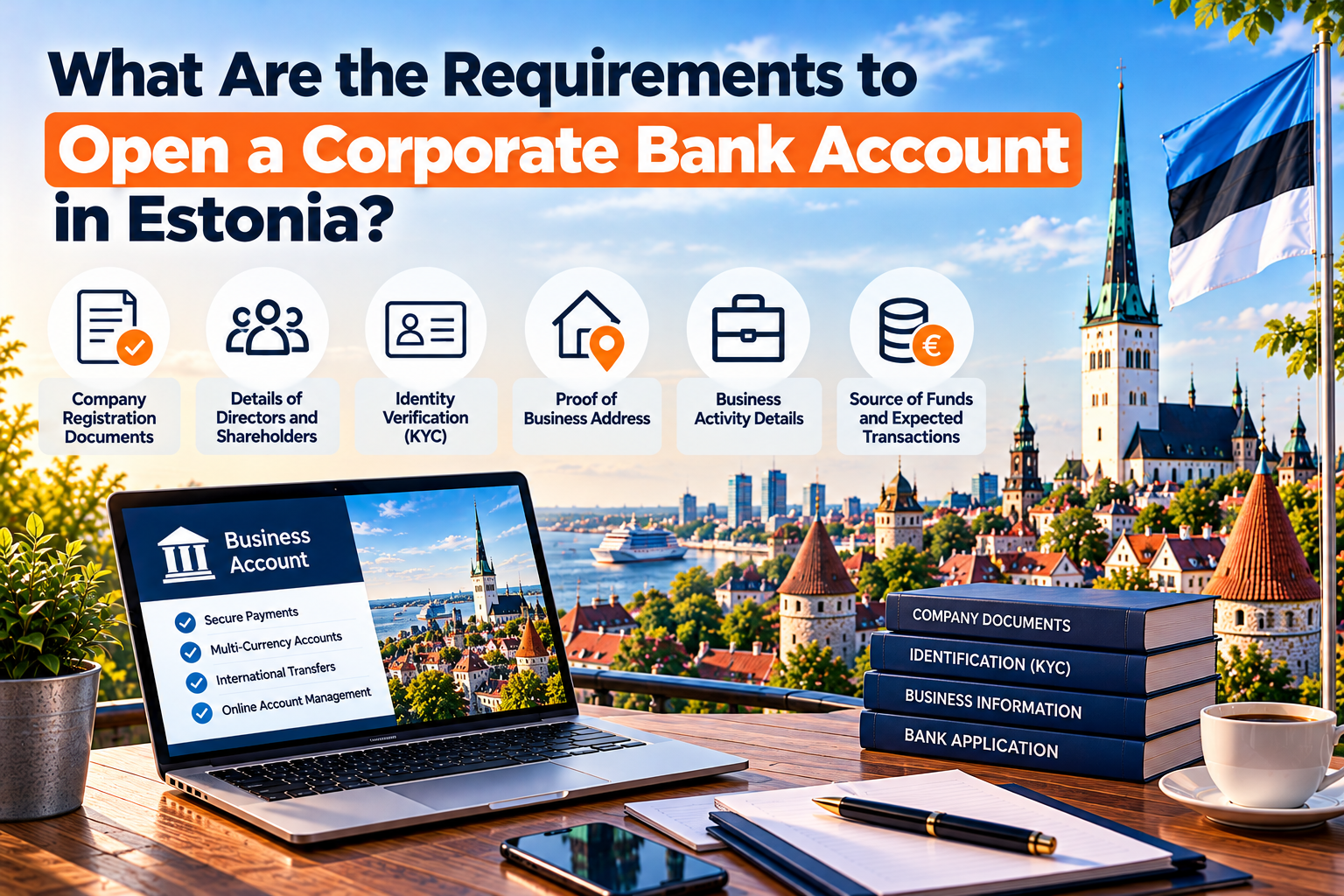
Before submitting the electronic application, entrepreneurs must prepare the required incorporation information.
Additional documentation may be required where a shareholder is another legal entity or the ownership structure is more complex.
Accurate preparation of the incorporation documents can help avoid delays during registration.
An Estonian private limited company can be established with relatively low initial share capital.
The minimum nominal value of a share can be as low as €0.01.
However, entrepreneurs should choose an appropriate capital amount based on their business needs.
Special shareholder liability rules may apply to companies with share capital below €2,500.
The founders must also comply with the applicable share capital contribution and registration requirements.
Although Estonia offers flexibility, sufficient financial resources remain important for the successful operation of the company.
Once the required information has been prepared, eligible entrepreneurs can submit the incorporation application electronically.
All required parties must complete the necessary digital signatures.
If the electronic registration requirements cannot be satisfied, an alternative incorporation procedure, potentially involving a notary, may be required.
After the application has been submitted, the registration authority reviews the information.
If the application meets the relevant legal requirements, the company is entered into the Estonian Commercial Register.
Straightforward electronic applications may be processed relatively quickly, sometimes within one business day.
However, processing times vary depending on the completeness and complexity of the application.
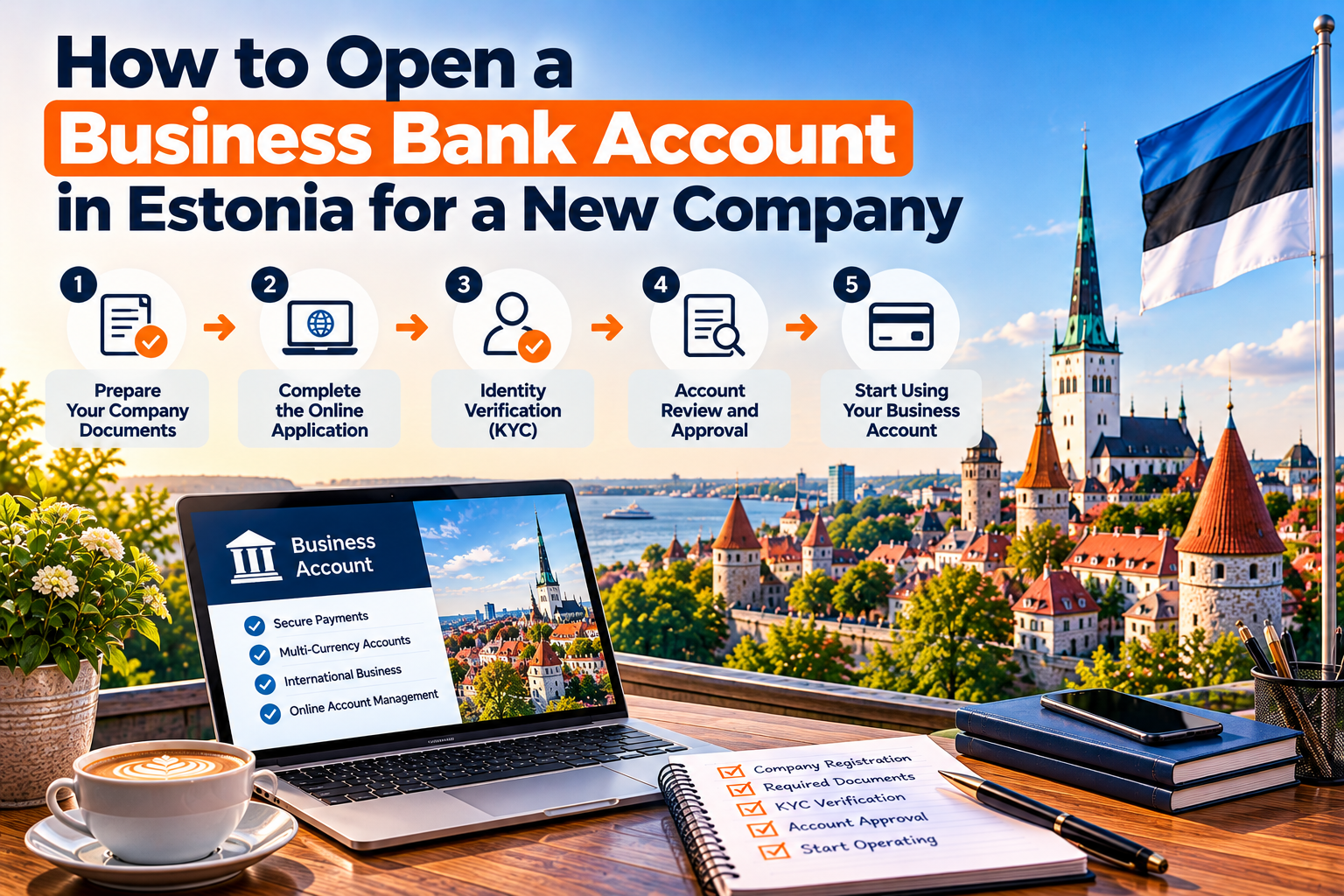
Once the company has been registered, entrepreneurs should arrange a suitable business account.
An Estonian company may apply for an account with an eligible bank or regulated payment institution.
Some financial institutions offer remote onboarding, while others may require additional verification or an in-person appointment.
Account approval depends on the financial institution's policies and compliance assessment.
Registering a company in Estonia does not automatically guarantee access to banking or payment services.
Entrepreneurs seeking to operate entirely remotely should investigate account opening options before incorporating.
After incorporation, the company must assess its tax obligations.
Estonia has a distinctive corporate income tax system under which ordinary profits retained within the company are generally not subject to immediate Estonian corporate income tax.
Corporate income tax generally becomes payable when profits are distributed or certain taxable payments and expenses arise.
Companies should understand the tax treatment of retained earnings, dividends, and other relevant transactions.
VAT registration may be required depending on taxable turnover and the nature of the company's transactions.
International sales may involve additional VAT obligations.
Companies employing staff or making certain payments may need to comply with payroll and employment-related tax requirements.
An Estonian company may also have tax obligations in another country if its effective management, employees, permanent establishment, or business activities are located there.
Remote incorporation does not automatically eliminate taxation outside Estonia.
After incorporation, many ongoing company administration tasks can be completed online.
This is particularly useful for international entrepreneurs who do not intend to relocate.
Although many responsibilities can be managed digitally, companies must continue to comply with applicable accounting, reporting, and regulatory requirements.
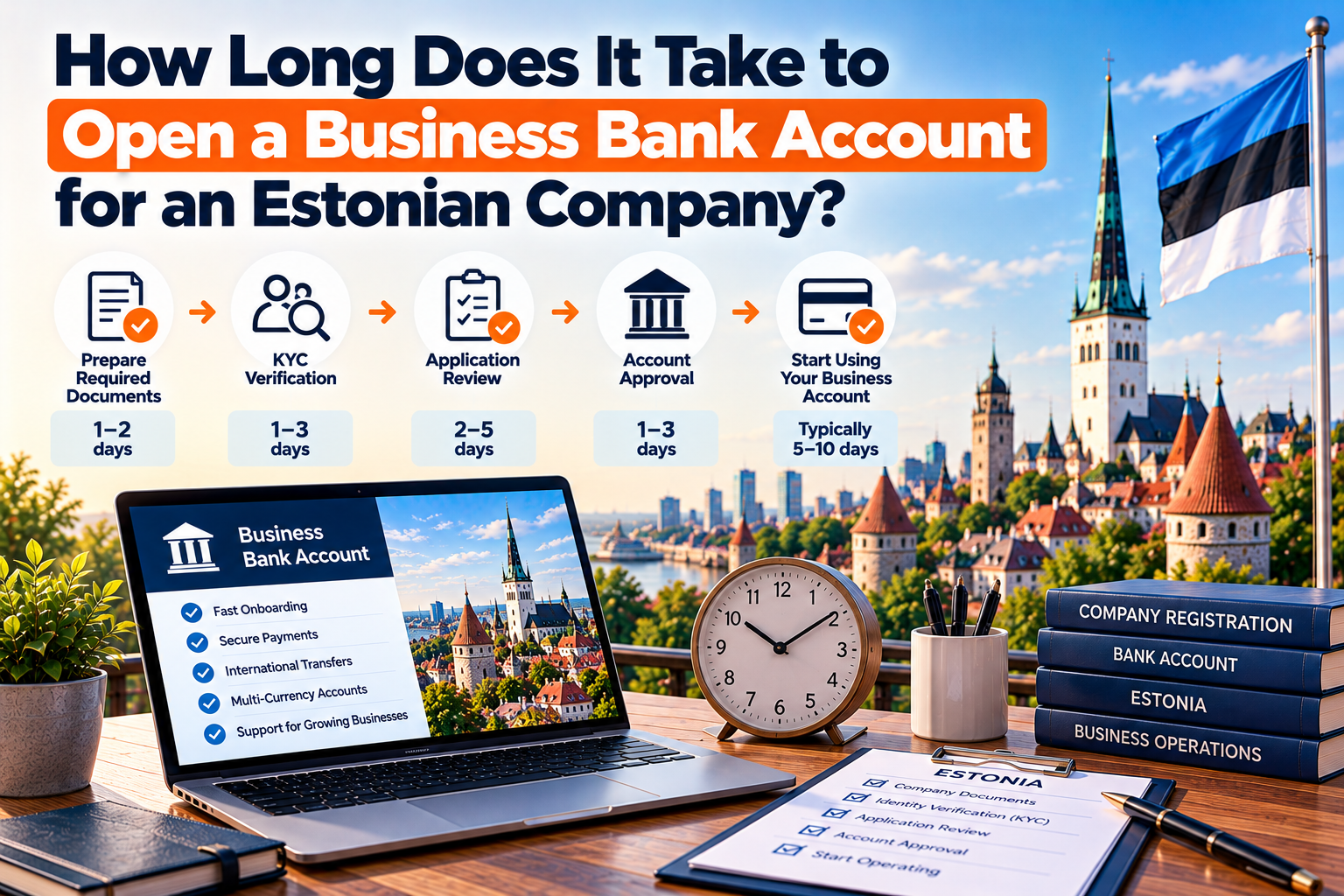
The total time required depends on whether the entrepreneur already possesses an accepted digital identity.
Where all documentation is prepared and the application is straightforward, electronic company registration may be completed within a short period.
Additional time is required for:
The complete e-Residency process may take several weeks.
Business account opening and any required licences may extend the time needed to establish a fully operational company.
The cost depends on the registration method and the services required.
E-Residency application: A fee applies to obtaining the digital identity.
Company registration: A state registration fee applies to incorporation.
Registered address: A commercial registered address service may involve recurring charges.
Contact person: Additional fees may apply where an authorised contact person is required.
Accounting services: Companies must maintain appropriate financial records and meet reporting obligations.
Business banking: Account providers may charge maintenance or transaction fees.
Professional assistance: Entrepreneurs may choose to obtain legal, accounting, or incorporation support.
The overall cost depends on the company's structure, activities, and ongoing administrative requirements.
Entrepreneurs should verify the applicable fees before proceeding.
Yes. Eligible non-EU citizens can generally establish Estonian companies remotely.
Estonian company law generally permits foreign ownership, subject to applicable legal and regulatory requirements.
A non-EU entrepreneur may establish a private limited company, own its shares, and serve as a management board member without necessarily residing in Estonia.
However, the applicant must satisfy the relevant identification and incorporation requirements.
Additional restrictions or verification procedures may apply depending on nationality, residence, sanctions rules, and the nature of the business.
Estonia can be particularly suitable for businesses that operate digitally or provide services internationally.
Certain business activities may require licences or additional regulatory approvals.
Entrepreneurs should assess the requirements applicable to their specific business before commencing operations.
Remote incorporation offers several advantages for international entrepreneurs.
Eligible applicants can complete company registration without travelling to Estonia.
Electronic signatures allow important company documents to be completed remotely.
Many corporate responsibilities can be handled through online systems.
Foreign entrepreneurs can generally establish Estonian companies subject to applicable requirements.
An Estonian company provides a legal corporate structure within an EU member state.
Private limited companies can generally be owned by one or more foreign shareholders.
Retained business profits are generally not subject to immediate Estonian corporate income tax.
These benefits make Estonia an attractive option for entrepreneurs seeking an internationally accessible business structure.
Although remote company formation offers convenience, entrepreneurs should understand the potential challenges.
All required signatories must have access to an accepted identification and signing method for electronic incorporation.
Applicants who require e-Residency normally need to collect their digital identity cards personally.
Not every financial institution offers remote account opening to every company.
A company managed from another jurisdiction may create additional tax obligations.
Estonian companies must maintain proper accounting records and submit required reports.
Certain activities require additional authorisations before operations can begin.
Careful planning can help entrepreneurs avoid unexpected complications.
Yes. Eligible entrepreneurs can register an Estonian company electronically without travelling to Estonia, provided that they meet the applicable identification and incorporation requirements.
Yes. Many entrepreneurs can complete incorporation from their home country using accepted digital identification and electronic signing methods.
Not necessarily. E-Residency is one option for accessing Estonia's electronic company services. Other accepted identification methods or alternative incorporation procedures may be available.
Yes. Applicants can generally apply online and collect their digital identity cards at approved locations outside Estonia. However, collection normally requires personal attendance.
Yes. Foreign individuals can generally own all shares in an Estonian private limited company, subject to applicable legal requirements.
An Estonian private limited company does not generally require a locally resident management board member solely because it is incorporated in Estonia. However, registered address and contact person requirements must be satisfied.
Some financial institutions offer remote onboarding for eligible Estonian companies. Approval depends on their compliance requirements and the company's circumstances.
Yes. Many company administration procedures can be completed remotely. However, managing the company from abroad may create tax and regulatory obligations in that jurisdiction.
No. Another jurisdiction may also assert tax obligations based on the company's effective management, permanent establishment, or business activities.
No. Establishing an Estonian company or obtaining e-Residency does not automatically provide the right to live or work in Estonia.
Straightforward electronic applications may be processed within a short period. Applicants who need e-Residency should allow additional time for approval and card collection.
Yes. Estonian companies generally must prepare and submit annual reports, even when business activity is limited.
Registering a company in Estonia without visiting the country is possible for eligible entrepreneurs who meet the necessary digital identification and incorporation requirements.
Estonia's electronic business registration infrastructure allows foreign entrepreneurs to establish companies, sign documents, and complete many administrative procedures remotely.
For international business owners, freelancers, technology companies, and digital service providers, this can offer substantial convenience and flexibility.
However, remote company formation does not mean that every aspect of establishing and operating a business can always be completed online.
E-Residency card collection, business banking, certain notarial procedures, and regulatory requirements may involve additional verification or physical attendance.
Entrepreneurs must also consider international tax obligations, accounting responsibilities, and ongoing compliance requirements.
With appropriate preparation, Estonia provides a practical and digitally advanced route to establishing a European company without the need to relocate or travel to the country for the incorporation process itself.