By

October 16, 2026
Can I Open an Estonian Business Bank Account Entirely Online?
Estonia has become a popular destination for international entrepreneurs looking to establish and manage businesses remotely. Its digital infrastructure, online company administration and e-Residency programme have made it possible for eligible entrepreneurs to establish and operate Estonian companies without permanently relocating to the country.
However, one important question remains: Can I open an Estonian business bank account entirely online without visiting Estonia?
The answer depends on the type of account you want to open.
Some regulated business payment and electronic money accounts can be opened entirely online, subject to successful verification and approval. Traditional Estonian business bank accounts may require additional checks, a connection to Estonia or an in-person identification process.
Importantly, registering an Estonian company or obtaining e-Residency does not automatically entitle an entrepreneur to a business bank account.
This guide explains the options available to Estonian companies, how remote account applications work, what documentation is required and how international entrepreneurs can manage business payments without necessarily travelling to Estonia.
Yes, it may be possible to open a business account for an Estonian company entirely online.
However, it is important to distinguish between a traditional bank account and an account provided by a regulated payment or electronic money institution.
Traditional banks provide deposit accounts and may offer services such as lending, business financing and other banking facilities.
Depending on the institution and the applicant's circumstances, opening an account may involve in-person identification, additional verification or evidence of a substantial connection to Estonia.
Remote applications are not guaranteed.
Regulated electronic money and payment institutions may offer online onboarding, international transfers, currency conversion and business payment services.
Depending on the arrangement, these accounts may support:
An electronic money account is not the same as a traditional bank deposit account, even where it provides similar payment functionality.
For entrepreneurs who want to manage an Estonian company remotely, an eligible online business payment account may offer an alternative to opening a traditional bank account.
No. Estonia's e-Residency programme does not automatically provide a business bank account.
E-Residency is a government-issued digital identity programme that allows eligible individuals to access certain Estonian electronic services.
It can help entrepreneurs establish and administer an Estonian company remotely.
However, e-Residency does not:
Financial institutions make their own onboarding decisions based on their eligibility requirements, risk assessments and applicable regulations.
Therefore, entrepreneurs should consider their payment account requirements separately from company registration.
Not necessarily.
An Estonian company can have directors or shareholders who live outside Estonia.
Some financial institutions accept applications from companies with non-resident owners or directors.
However, eligibility may depend on:
Certain traditional banking arrangements may require a stronger local connection.
Other regulated payment account arrangements may be available to eligible businesses operating internationally.
Estonia's e-Residency programme enables many eligible entrepreneurs to establish and manage companies through digital government services.
For example, an entrepreneur may be able to register an Estonian private limited company, known as an OÜ, using an eligible digital identity.
However, company registration and business account opening are separate processes.
A typical remote company setup may involve:
Although much of the company administration can be performed remotely, obtaining an e-Residency digital identity card ordinarily involves an in-person collection and identity verification appointment.
This means that online company management does not necessarily mean every part of the initial setup can be completed without any physical appointment.
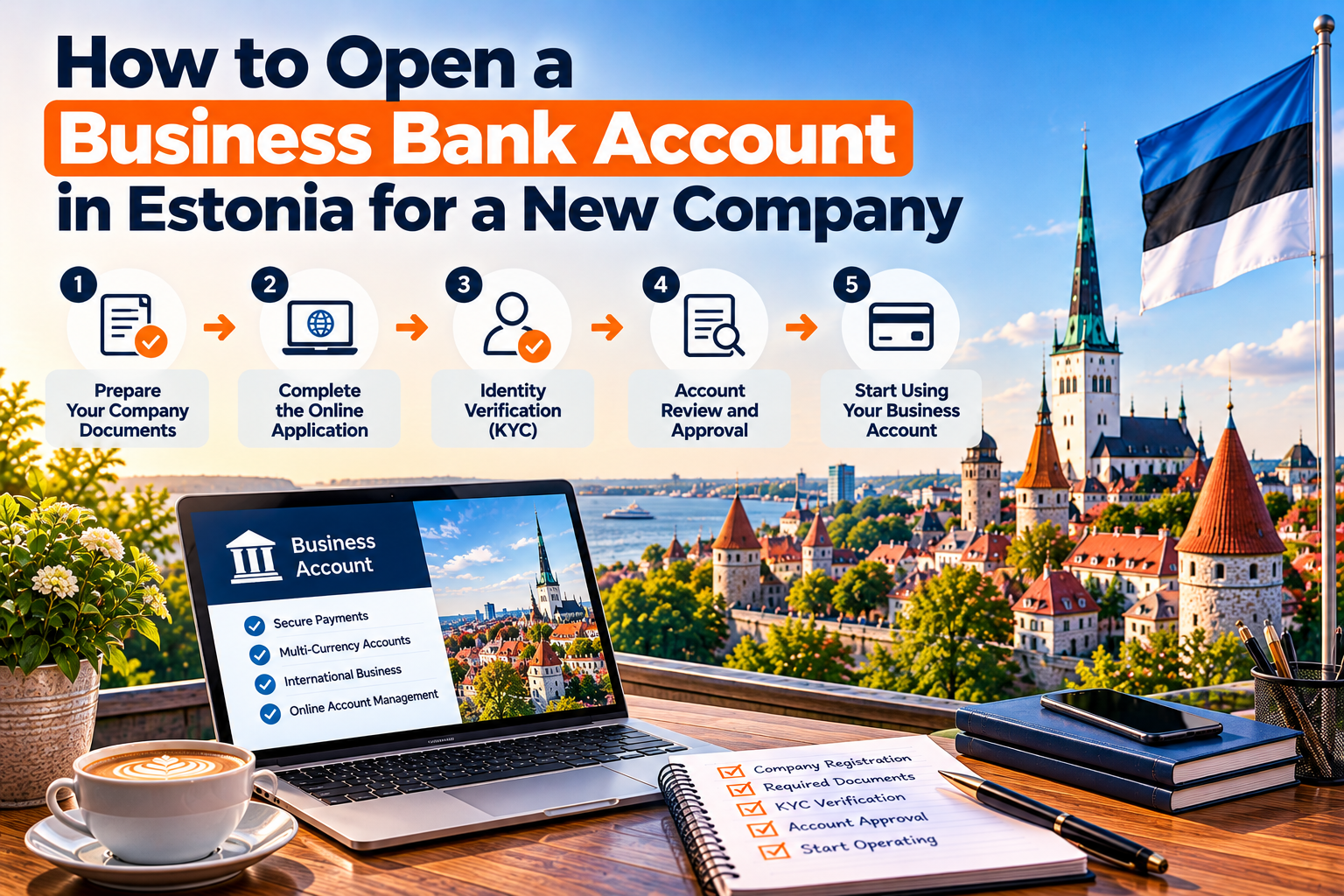
Business account applications generally involve company verification and customer due diligence.
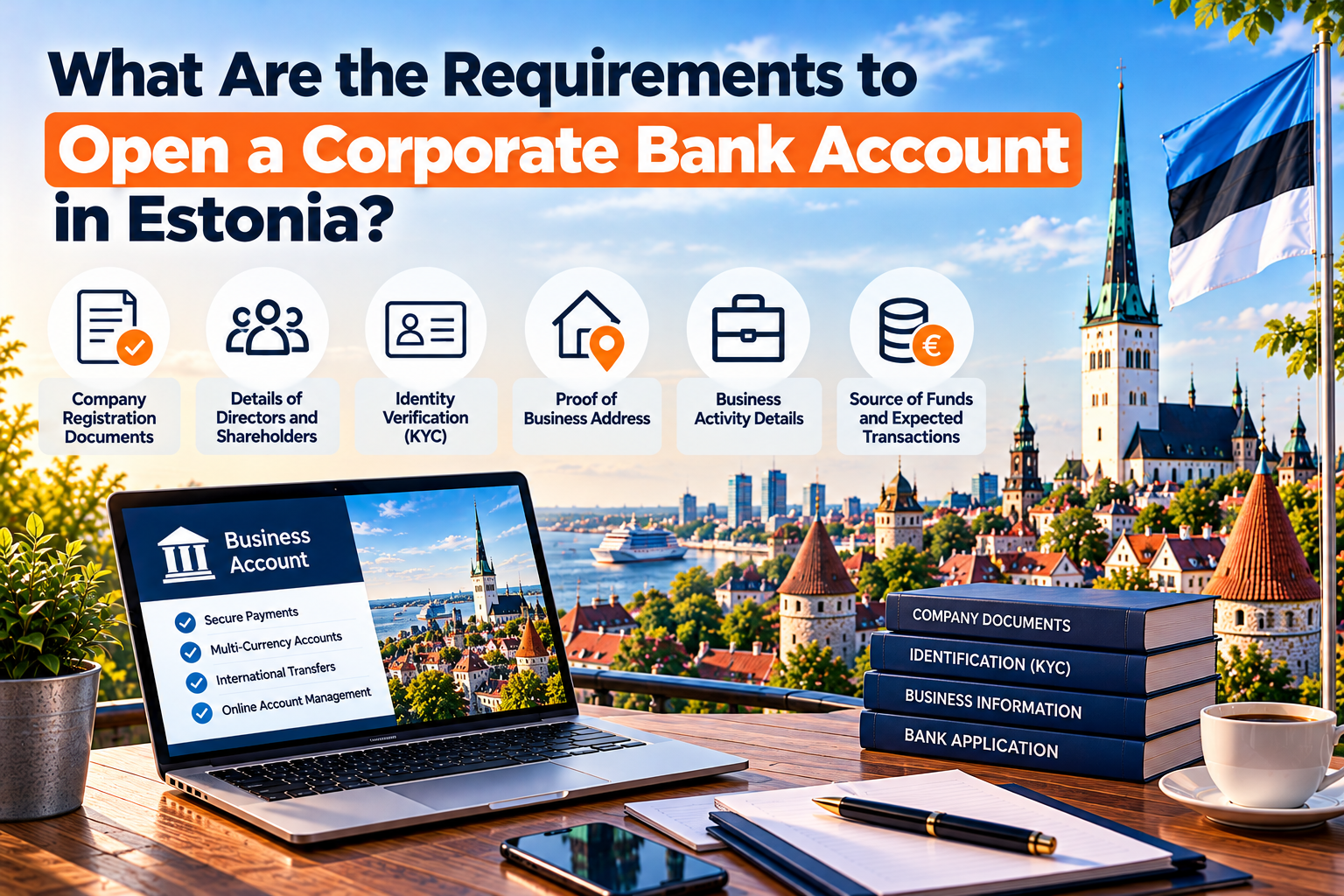
Requirements vary, but applicants should be prepared to provide the following information.
Directors, beneficial owners and authorised account users may need to provide valid identity documents.
Remote verification may include electronic identity checks, video identification or additional documentation.
Applicants should be prepared to explain:
Additional evidence may include:
Newly incorporated companies may be asked to provide business plans or other evidence of their intended activities.
Complete documentation can help reduce unnecessary application delays.
Yes. An Estonian company may be eligible for an account with an IBAN issued within the European payment area.
An International Bank Account Number (IBAN) identifies an account for payments in participating countries and payment systems.
A company registered in Estonia does not necessarily need an IBAN beginning with EE.
Depending on the financial arrangement, it may use an eligible IBAN issued under another participating country's account framework.
The IBAN country code identifies the account's relevant national numbering framework, not necessarily the country where the company itself is incorporated.
Businesses should confirm that their account supports the required incoming and outgoing payments.
Yes. Eligible Estonian companies can use supported SEPA euro payment services.
Estonia participates in the Single Euro Payments Area, which provides common schemes and standards for euro-denominated payments across participating countries and territories.
A suitable business account may support:
The specific payment capabilities depend on the account arrangement.
Not every account supports every SEPA scheme or instant payment feature.
This distinction is particularly important for international entrepreneurs seeking remote account opening.
A traditional bank account is a deposit account maintained with an authorised bank.
Depending on the product, it may support business deposits, payment services, financing and other banking facilities.
Eligible deposits may be protected under the applicable deposit guarantee scheme, subject to relevant conditions and limits.
An electronic money account is a regulated payment-related arrangement that allows eligible customers to hold electronic money and make supported transactions.
Depending on the service, it may provide:
Electronic money is not a bank deposit.
Relevant customer funds are subject to applicable safeguarding requirements rather than traditional bank deposit guarantee protection.
Entrepreneurs should therefore evaluate the account's legal structure, regulatory protections and functionality before applying.
Potentially, yes.
Newly incorporated Estonian companies may apply for business accounts, including suitable remote payment account arrangements.
However, newly established businesses often have limited financial history.
As a result, additional information may be requested to understand the company's proposed activities.
This may include:
Approval depends on the account provider's eligibility criteria and compliance assessment.
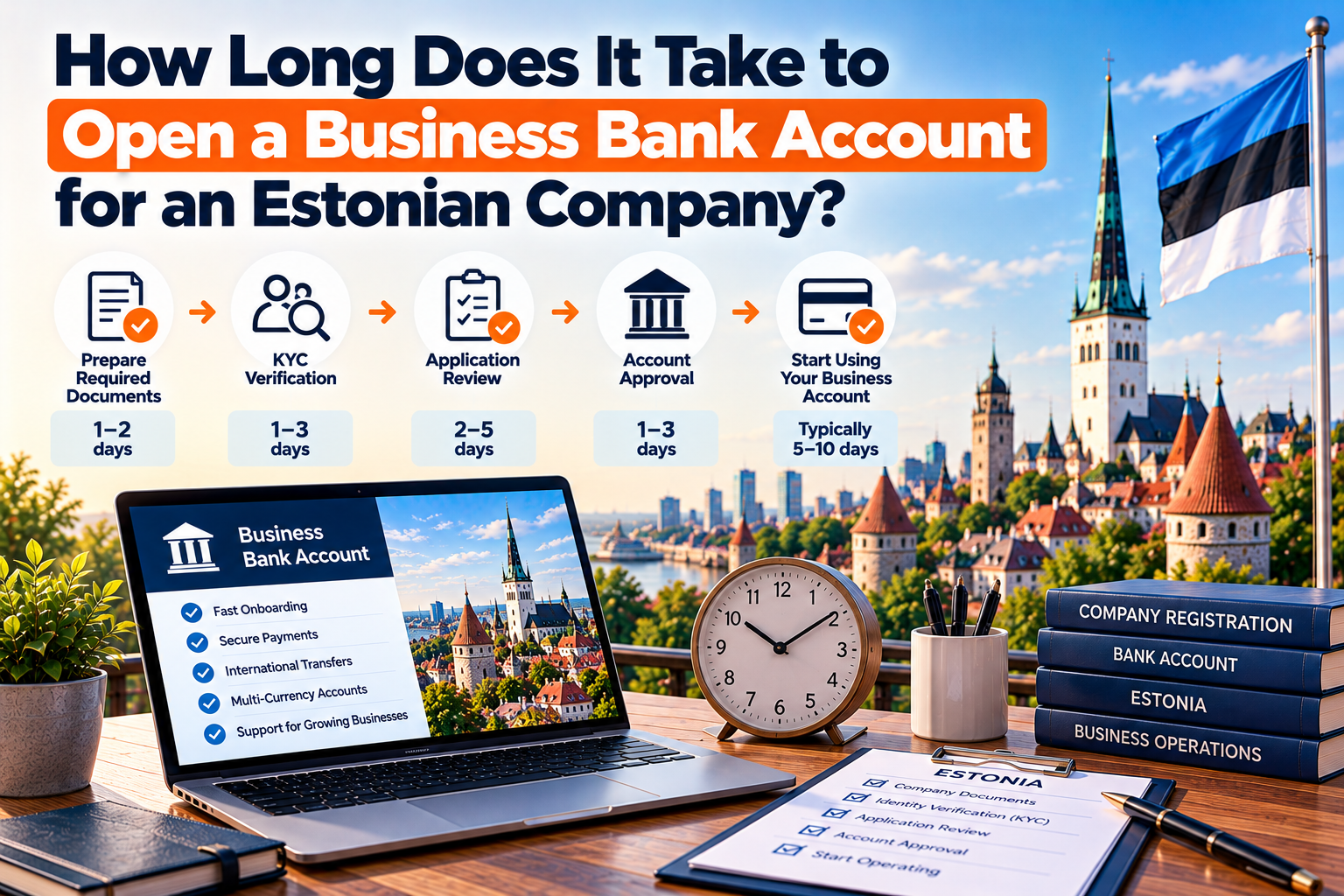
The time required varies according to the account type, company structure and verification requirements.
Some straightforward online applications may be reviewed relatively quickly.
More complex applications can take longer, particularly when they involve:
Traditional bank account applications may also involve appointments or additional local verification.
Businesses should avoid assuming that an online application guarantees immediate account approval.
The cost of an Estonian business account depends on the financial arrangement and services used.
Potential charges include:
Some account arrangements charge a setup or onboarding fee.
Recurring administration or account service charges may apply.
Charges may apply to outgoing or incoming euro transfers.
Transfers outside supported regional payment arrangements may involve additional costs.
Businesses converting between EUR, GBP, USD or other currencies may incur foreign exchange fees.
The offered conversion rate may include a margin relative to a reference market rate.
Certain account arrangements may apply charges for specific administrative services.
Companies should compare the complete pricing structure against their expected transaction activity.
Yes. Estonia's digital business infrastructure allows many administrative activities to be completed remotely.
Depending on the company's circumstances and the services available, business owners may be able to:
However, remote company management does not automatically determine where a company is taxed.
An Estonian company managed from another country may have tax obligations in that country depending on applicable domestic law and international tax treaties.
Entrepreneurs should obtain appropriate advice about corporate tax residency, permanent establishment and reporting requirements.
Financial institutions may decline applications for several reasons.
The applicant may not provide enough evidence to explain the company's activities.
The origin of the company's funds may not be adequately documented.
Certain industries or commercial activities may fall outside an institution's risk appetite.
Additional verification may be necessary where ownership involves multiple jurisdictions or corporate shareholders.
Some traditional banking arrangements may require evidence of meaningful business connections to Estonia.
Differences between company records, identification documents and commercial information can delay or prevent approval.
Some account arrangements restrict certain countries, currencies or payment activities.
Providing accurate information and selecting an account appropriate to the company's actual operations can help avoid unnecessary applications.
Before applying, entrepreneurs should consider several practical questions.
Confirm whether identification, document submission and approval can be completed without visiting a branch.
Not every financial institution accepts every company structure or jurisdiction.
Check eligibility where directors or shareholders live outside Estonia.
Determine whether the account supports euro balances and the required SEPA payment schemes.
Confirm whether suitable receiving details will be provided.
Businesses operating globally should verify destination countries and supported currencies.
Review account charges, payment fees and currency conversion costs.
Understand whether the arrangement is a bank deposit account, electronic money account or another type of regulated payment account.
The most suitable option depends on the company's actual commercial requirements.
Possibly, depending on the bank and its verification requirements. Some traditional banks may require an in-person appointment or evidence of a local connection. Eligible online payment and electronic money accounts may offer fully remote onboarding.
No. E-Residency provides access to certain digital services but does not guarantee account approval.
Potentially, yes. Eligibility depends on the financial institution, company structure, residence of the owners and the business's activities.
Yes, eligible companies may obtain suitable IBAN payment details through supported financial arrangements.
No. An Estonian company may be able to use an eligible IBAN issued under another participating country's framework.
Yes, provided its account supports the relevant EUR receiving method.
You may be able to apply after registration, but approval depends on the required verification and eligibility checks.
No. Electronic money accounts and bank deposit accounts have different legal structures and regulatory protections.
Yes, many company administration activities can be performed remotely, although tax and regulatory obligations depend on the company's circumstances.
Not generally. An Estonian company may use an appropriate account arrangement elsewhere, provided it meets the company's operational and applicable legal requirements.
Opening a business account for an Estonian company entirely online is possible in certain circumstances, but the answer depends on the type of financial account and the applicant's eligibility.
Traditional Estonian business bank accounts may require additional verification, evidence of a local business connection or an in-person appointment.
In contrast, some regulated payment and electronic money accounts provide remote onboarding and support services such as EUR balances, IBAN details, SEPA payments and international transfers.
For international entrepreneurs, the important distinction is between opening a traditional bank deposit account and obtaining a regulated business payment account that meets the company's operational needs.
An Estonian company does not necessarily need a traditional Estonian bank account to manage international payments, but it does need suitable financial arrangements that support its business activities.
By understanding the available account types, preparing the necessary documents and reviewing payment capabilities, entrepreneurs can make informed decisions about managing an Estonian business remotely.
Disclaimer: This article provides general educational information and does not constitute legal, financial, tax or regulatory advice. Account eligibility, remote onboarding procedures, fees and regulatory protections vary according to the institution and applicable requirements.