By

October 8, 2026
Can a Non-EU Citizen Start a Company in the Netherlands?
The Netherlands is an attractive destination for international entrepreneurs, foreign investors, and business owners looking to establish a presence in Europe. Its strategic location, developed infrastructure, and access to the European Union market make it a popular choice for international company formation.
But can a non-EU citizen start a company in the Netherlands?
Yes. Non-EU citizens can generally establish and own a company in the Netherlands, even if they do not live in the country. Dutch company law allows foreign individuals and businesses to own shares in Dutch companies, subject to applicable legal and regulatory requirements.
However, company ownership, immigration permission, business registration, and taxation are separate matters.
This guide explains how to register a company in the Netherlands as a non-EU citizen, including the requirements for establishing a Dutch BV, remote incorporation, residence permits, and business banking.
Yes. Non-EU nationals can generally own 100% of a Dutch private limited company (BV) without requiring a Dutch or EU shareholder.
A Dutch BV, officially known as a Besloten Vennootschap, is one of the most common legal structures for foreign entrepreneurs.
Its main advantages include:
A Dutch BV can be suitable for consulting, e-commerce, international trade, technology, and other lawful commercial activities.
A non-EU citizen does not generally need a Dutch residence permit simply to own shares in a Dutch company.
However, if the entrepreneur intends to relocate to the Netherlands and actively work in the business, an appropriate residence permit or work authorisation may be required.
Depending on the circumstances, immigration options may include a self-employed residence permit or a startup residence permit.
Eligibility depends on nationality, business activities, and applicable immigration rules.
Registering a Dutch company does not automatically grant the right to live or work in the Netherlands.
For many foreign entrepreneurs, the Dutch BV is a practical choice because it offers separate legal personality and flexible ownership arrangements.
A Dutch BV can be established by a single shareholder and can have directors residing outside the Netherlands.
Other options include registering a Dutch branch of an existing overseas company or establishing a subsidiary owned by a foreign parent company.
The appropriate structure depends on the intended business activities, ownership arrangements, liability considerations, and long-term commercial objectives.
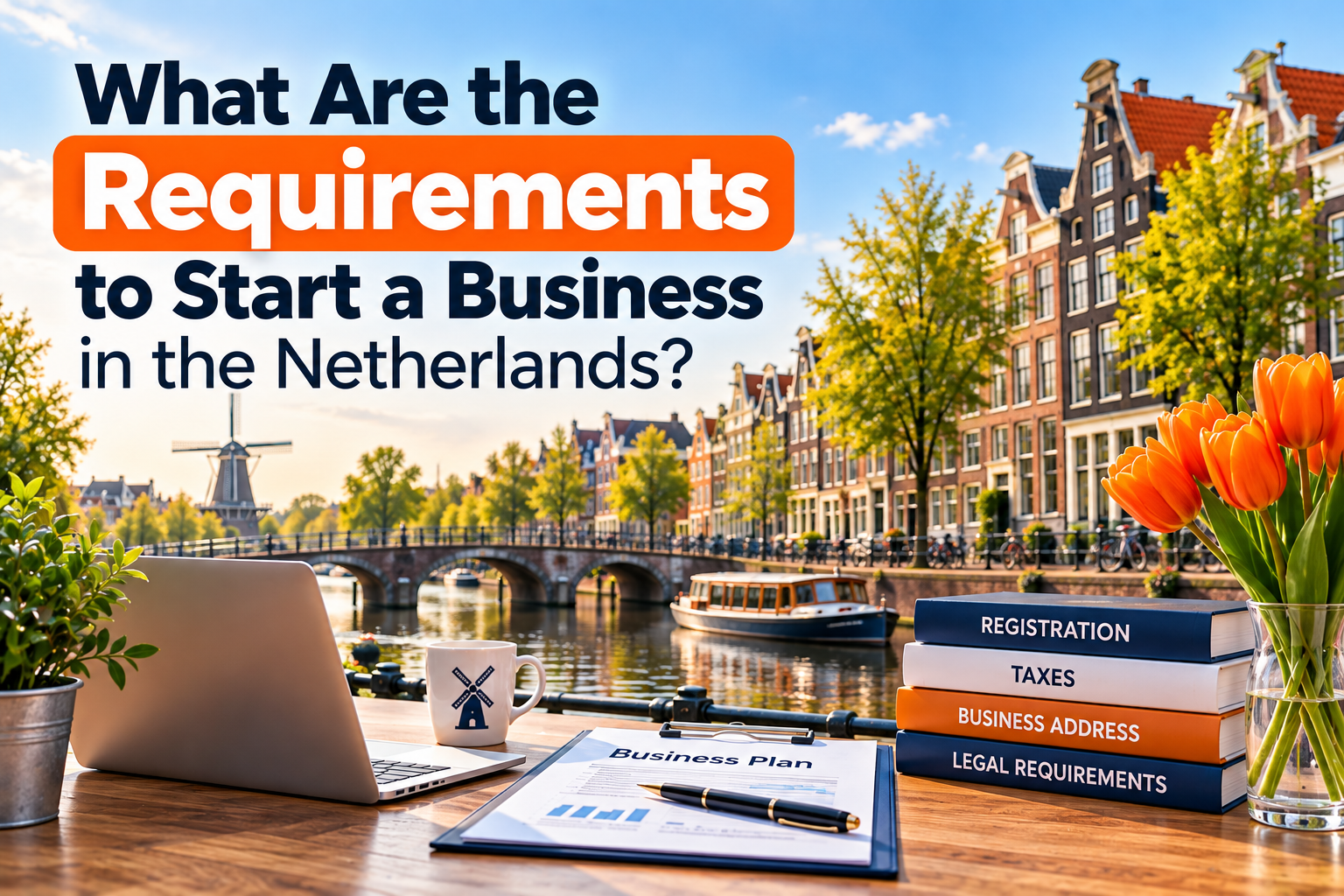
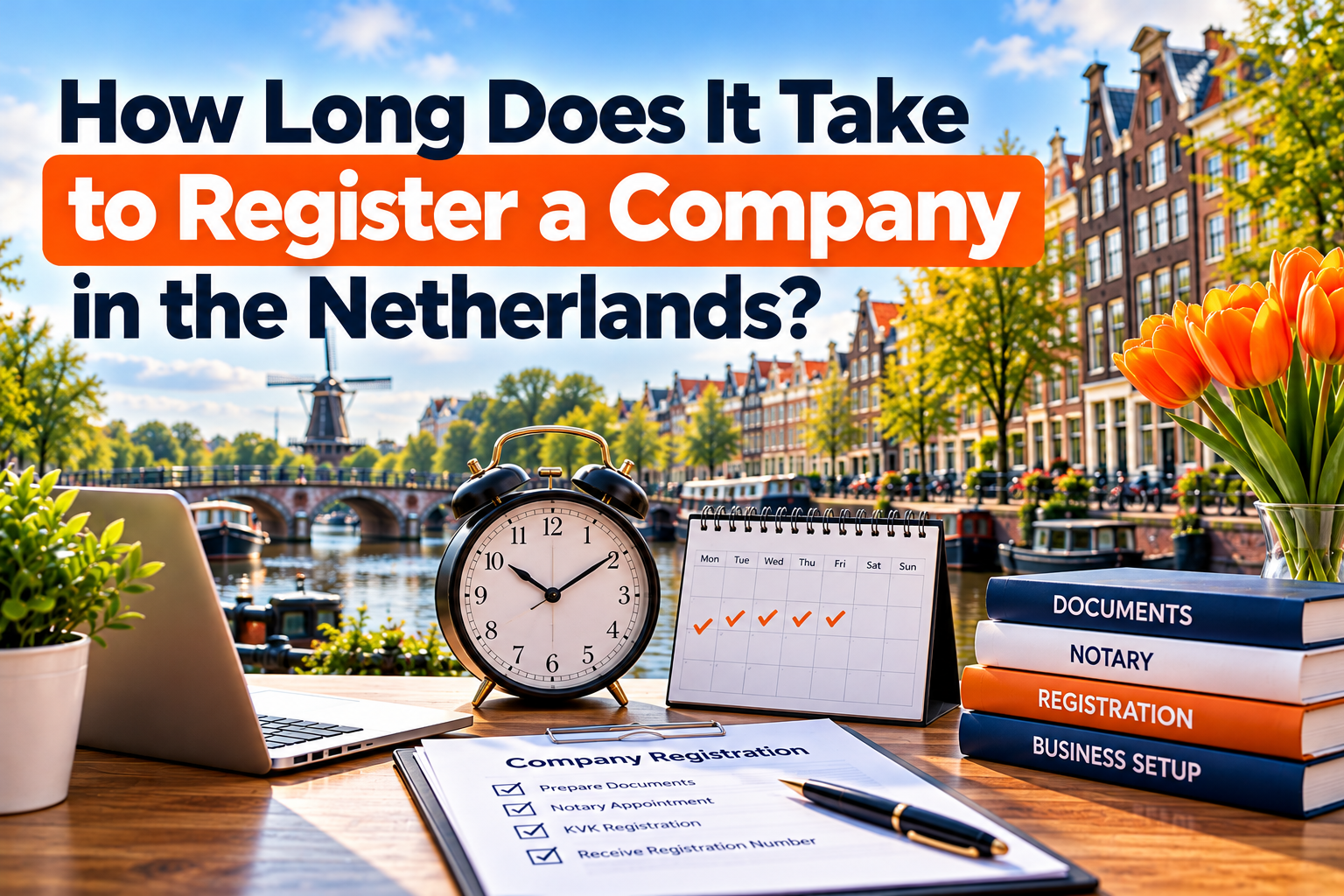
The Netherlands company formation process generally involves the following steps.
Step 1: Choose the Company Structure
Determine whether a Dutch BV, branch, or subsidiary best suits your business requirements.
Step 2: Prepare the Required Documents
Gather identification documents, shareholder and director information, a proposed company name, and details of the intended business activities.
Step 3: Arrange a Dutch Business Address
A qualifying Dutch business address is generally required for company registration.
Step 4: Complete Notarial Incorporation
A Dutch civil-law notary prepares and executes the incorporation deed and articles of association for a BV.
Step 5: Register With the Chamber of Commerce
The company is registered with the Dutch Chamber of Commerce (KVK), which issues its official registration number.
Step 6: Arrange Tax Registration and Banking
Complete the applicable tax registration requirements and apply for a suitable business bank or payment account.
Yes. In certain circumstances, non-EU entrepreneurs can establish a Dutch BV without physically visiting the Netherlands.
Remote incorporation may be possible through a Dutch civil-law notary, subject to identity verification and applicable legal requirements.
Additional documentation, certified identification, or authorised representation may be necessary.
The availability of remote incorporation depends on the notary's procedures and the complexity of the application.
The documentation required depends on the ownership structure and the entrepreneur's circumstances.
Common requirements include:
Foreign-issued documents may require translation, certification, or legalisation.
A Dutch BV does not generally require a director who resides in the Netherlands.
Non-EU citizens can serve as directors while living abroad.
However, the location where the company is effectively managed may affect its tax residency, banking arrangements, and international compliance obligations.
Entrepreneurs should therefore assess the tax implications of managing a Dutch company from another country.
Non-EU entrepreneurs can apply for business banking services for their Dutch companies.
However, account approval is subject to the financial institution's eligibility and compliance requirements.
Banks commonly request company registration documents, shareholder identification, beneficial ownership information, and details of expected business activities.
Some institutions may require evidence of a genuine commercial connection to the Netherlands or additional identity verification.
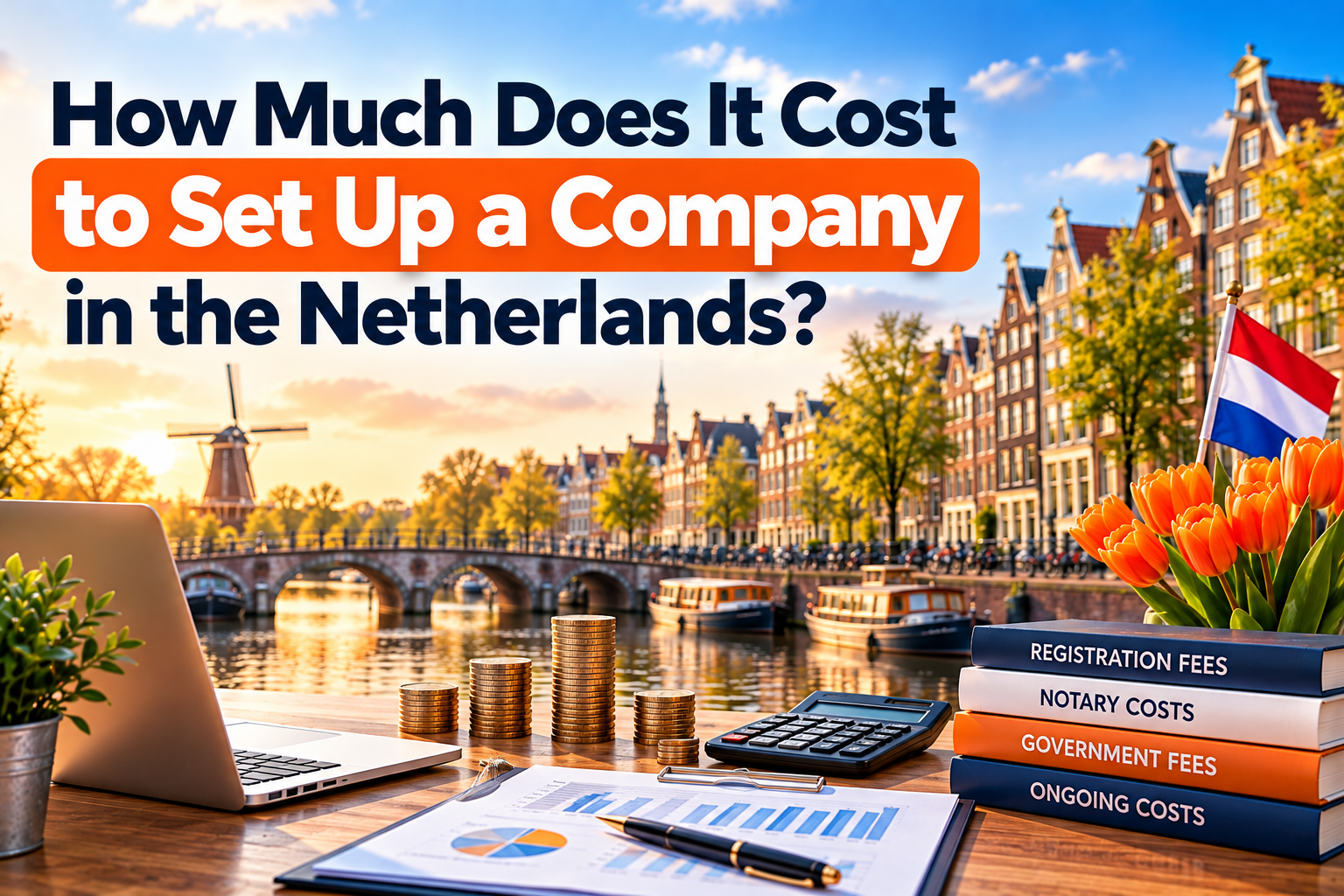
The cost of establishing a Dutch company depends on the business structure and professional services required.
Typical expenses include notary fees, Chamber of Commerce registration, a qualifying business address, and incorporation assistance.
Additional costs may arise from foreign document certification, translation, legalisation, or remote identification requirements.
A personalised quotation can help entrepreneurs understand both the initial incorporation costs and ongoing annual expenses.
A Dutch BV is generally subject to Dutch corporate income tax under applicable tax rules.
Other potential obligations include VAT, dividend withholding tax, payroll taxes, and annual financial reporting.
Where the company is managed from outside the Netherlands, additional international tax considerations may arise.
These can include double taxation agreements, permanent establishment rules, and effective management requirements.
Yes. Non-EU individuals and companies can generally own 100% of the shares in a Dutch BV.
Yes. Dutch residency is generally not required to own a BV, although business registration and tax requirements must be satisfied.
No. A Dutch or EU business partner is not generally required to establish a Dutch BV.
Establishing a company does not automatically qualify an entrepreneur for a residence permit. Immigration applications are assessed separately under the applicable rules.
In certain circumstances, yes. Remote incorporation may be possible through a Dutch civil-law notary.
Yes. A Dutch BV can conduct lawful online business activities, subject to relevant tax, licensing, consumer protection, and other regulatory requirements.
Starting a company in the Netherlands as a non-EU citizen involves coordinating legal documentation, notarial incorporation, business registration, and ongoing compliance.
Foreign entrepreneurs may also need assistance understanding immigration considerations, international taxation, and banking requirements.
Professional company formation services can help simplify the incorporation process and reduce avoidable administrative delays.
Are you planning to register a Dutch BV as a non-EU citizen, establish a company in the Netherlands remotely, or expand your international business into Europe?
Our Netherlands company formation services can help guide you through the incorporation process, including company structure selection, documentation, registration requirements, and corporate compliance.
Contact us today to discuss your Netherlands company formation requirements and request a personalised quotation.
Establish your European business presence with professional guidance, even if you currently live outside the European Union.