By

October 19, 2026
How Long Does It Take to Register a Company in Spain? A Complete Guide
Registering a company in Spain is an important step for entrepreneurs, startups, foreign investors, and international businesses planning to establish a presence in the European Union.
One of the most frequently asked questions is: How long does it take to register a company in Spain?
The answer depends on several factors, including the type of company, the incorporation procedure, the availability of the required documents, and whether the shareholders are Spanish residents or foreign investors.
A straightforward Spanish limited company (Sociedad Limitada or SL) may be incorporated and registered within a few business days when all documents are ready and an eligible electronic procedure is used. More complex applications can take several weeks.
This guide explains the typical company registration timeline in Spain, the steps involved, what can cause delays, and how entrepreneurs can make the incorporation process more efficient.
For planning purposes, a straightforward Spanish SL incorporation may take approximately one to three weeks from the start of preparations to completed registration.
Some eligible incorporations can be completed faster, particularly when the founders have all the required identification documents and use streamlined electronic procedures.
Companies with foreign shareholders, complex ownership structures, or additional documentation requirements may take several weeks or longer.
These are general planning estimates, not guaranteed processing times.
The overall timeframe depends on:
It is important to distinguish between the time required to prepare an incorporation and the time required for the Commercial Registry to complete registration.
The process of registering a Spanish limited company involves several stages.
The first step is to select the appropriate legal structure.
For many entrepreneurs, a Sociedad Limitada (SL) is a suitable option because it provides a separate legal entity and generally limits shareholder liability.
Other structures include the Sociedad Anónima (SA), branches of foreign companies, and self-employment as an autónomo.
The chosen structure determines the applicable incorporation requirements.
Foreign individuals participating in the incorporation process may need a Spanish foreigner identification number (NIE).
Foreign corporate shareholders may require a Spanish tax identification number (NIF).
Obtaining the required identification numbers can influence the overall timeline, particularly when applications must be completed from abroad.
A Spanish SL generally requires a certificate confirming that its proposed company name is available.
This certificate is issued by the Central Commercial Registry (Registro Mercantil Central).
It is known as the certificación negativa de denominación social.
If the preferred name is unavailable, the founders may need to submit alternative names.
Preparing several suitable names can help avoid unnecessary delays.
The company's incorporation documents must be prepared before the notarial formalities are completed.
These typically include information about:
For a Spanish SL, the statutory minimum share capital is €1, although additional legal rules apply while capital remains below €3,000.
A Spanish SL is generally established through a public deed signed before a Spanish notary.
The deed of incorporation, known as the escritura de constitución, records the company's formation and essential legal details.
Depending on the circumstances, shareholders may sign personally or through authorized representatives.
The company requires a Spanish tax identification number (NIF).
A provisional NIF may be obtained during incorporation, followed by definitive documentation after the relevant registration requirements have been completed.
The incorporation deed is submitted to the relevant provincial Commercial Registry (Registro Mercantil).
Registration is a fundamental stage in establishing the SL as a fully registered legal entity.
The Registry reviews the documentation and records the company's legal details.
If corrections or additional information are required, the process may take longer.
Following incorporation, the company must complete the relevant tax registrations and other formalities required for its activities.
These may include VAT registration, business activity declarations, Social Security procedures, and sector-specific licences.
Some of these steps can be coordinated through electronic incorporation systems.
However, completing company registration does not automatically mean that every authorization required to begin trading has been obtained.
Certain streamlined electronic incorporation procedures are designed to process eligible applications rapidly.
However, a company should not assume that the entire formation process, from initial planning to completed registration, will take only 24 or 48 hours.
Accelerated processing may apply to specific administrative stages once all the necessary information and documentation have been submitted.
The total timeframe may still include obtaining identification numbers, reserving a company name, arranging the notarial deed, and completing other formalities.
Entrepreneurs should confirm the applicable procedure and processing arrangements before relying on a particular completion date.
Electronic incorporation can reduce administrative work and simplify coordination between public authorities.
Spain offers company formation services through the Centro de Información y Red de Creación de Empresas (CIRCE).
Eligible entrepreneurs can use electronic procedures to coordinate incorporation and related administrative steps.
Benefits may include:
However, not every company or ownership structure qualifies for the same streamlined procedure.
Foreign-owned companies and businesses requiring customized documentation may need additional time.
Foreign individuals can generally establish and own companies in Spain.
However, the incorporation process may take longer when additional documentation is required.
For example, foreign shareholders may need to obtain Spanish identification numbers or provide documents issued in another country.
Depending on the circumstances, documents may require certified translation, legalization, or an apostille.
Companies owned by foreign corporate entities may also need to provide additional information about their ownership structure and authorized representatives.
The time required depends on the completeness of the documents and the applicable administrative procedures.
Foreign ownership does not automatically mean that incorporation will be delayed, but preparing the necessary documentation in advance is particularly important.
Several factors can affect the time required to register a Spanish company.
Missing identification details, incorrect company information, or incomplete incorporation documents can result in additional administrative requests.
If the proposed company name is unavailable or does not meet registration requirements, the founders must select another name.
Foreign corporate documents, identification requirements, and international ownership structures may require additional verification.
Scheduling the execution of the incorporation deed can affect the overall timeline.
If the Registry identifies defects in the submitted documentation, corrections may be necessary before registration can be completed.
Companies involving multiple shareholders, holding companies, or specialized governance arrangements may require more extensive preparation.
Certain regulated business activities require separate licences or permissions before operations can begin.
These requirements may extend the time between incorporation and the start of trading.
Entrepreneurs can reduce avoidable delays by preparing carefully before beginning the incorporation process.
Useful steps include:
Professional assistance may be useful for incorporations involving foreign shareholders or complex ownership structures.
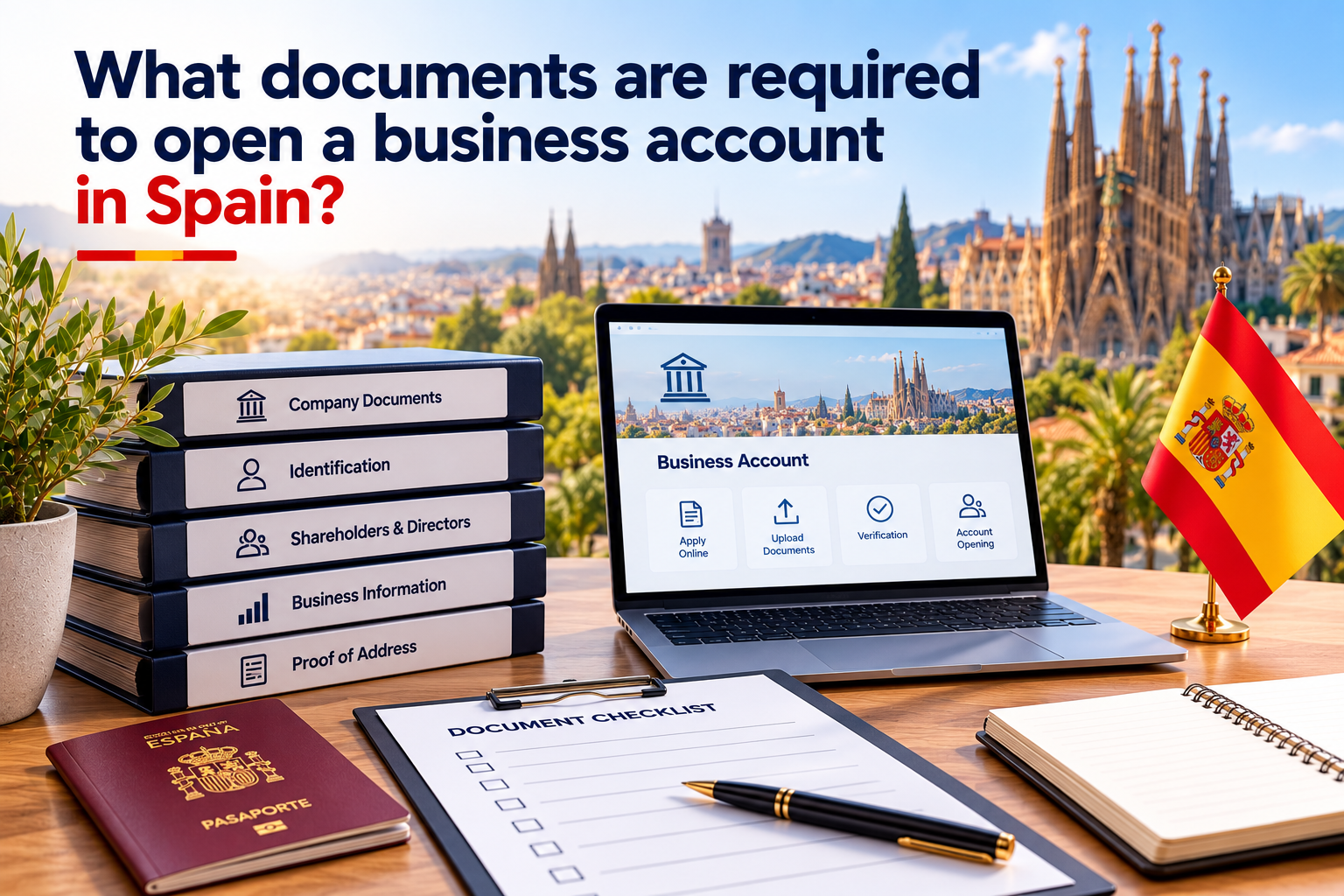
Once the company has the required documents, it can apply for a business account.
The time required depends on the financial institution, the company's ownership structure, and the necessary compliance checks.
Some straightforward online business account applications may be approved within a few business days, while applications requiring additional verification may take longer.
Commonly requested documents include:
Many regulated financial institutions allow eligible Spanish companies to apply for business accounts online.
For companies primarily conducting euro transactions, a dedicated EUR IBAN with SEPA payment capabilities can provide a convenient way to manage payments across Europe.
Not necessarily.
Spanish companies may be able to use eligible European business accounts issued by regulated financial institutions in other EU countries.
Under applicable European Union rules, certain forms of IBAN discrimination are prohibited for covered euro credit transfers and direct debits.
An eligible European IBAN with SEPA payment capabilities may therefore support a Spanish company's domestic and cross-border euro transactions.
However, businesses should confirm that the chosen account supports their specific requirements, including tax payments, payroll, and other administrative obligations.
A Spanish company can generally begin commercial operations once it has satisfied the legal and administrative requirements applicable to its activities.
Completing Commercial Registry registration is an important milestone, but additional obligations may apply.
Depending on the business, these may include:
Businesses should ensure that all relevant requirements have been completed before beginning regulated activities.
A straightforward SL incorporation may take approximately one to three weeks from initial preparation to completed registration, although eligible electronic procedures can be faster and complex cases may take longer.
Certain electronic procedures provide accelerated processing for eligible applications, but completing every incorporation requirement within one day cannot be guaranteed.
Electronic incorporation can simplify administrative procedures and reduce processing time for eligible companies.
The timeframe depends on identification requirements, document preparation, shareholder structure, and the incorporation procedure.
Not always. Depending on the circumstances, shareholders may be represented through valid powers of attorney or use available remote procedures.
Processing times depend on the applicable tax identification procedure and the completeness of the submitted documentation.
The statutory minimum is €1. Additional legal rules apply while share capital remains below €3,000.
Generally, yes. Foreign individuals and companies can wholly own a Spanish SL, subject to any applicable investment or sector-specific restrictions.
Some financial institutions may offer arrangements for companies in formation, but operational business account eligibility depends on the provider and the company's documentation.
Yes. Eligible European IBANs can support covered SEPA payments, although companies should verify their specific operational and administrative requirements.
The time required to register a company in Spain depends on the legal structure, incorporation method, documentation, and circumstances of the shareholders.
A straightforward Spanish SL may be established within a few business days when an eligible electronic procedure is used and all documents are ready. For general planning, entrepreneurs may allow approximately one to three weeks, with additional time for more complex cases.
Preparing identification documents, reserving a suitable company name, and using streamlined incorporation procedures where available can help reduce unnecessary delays.
Once registration is complete, businesses should address their tax obligations, any required licences, and financial arrangements.
Opening a suitable business account is an important step in preparing the company to receive customer payments, pay suppliers, and manage everyday operating expenses.
For Spanish companies primarily conducting euro transactions, an online EUR business account with SEPA payment capabilities can provide a practical solution for managing European payments.
Looking for a Business Account for Your Newly Registered Company in Spain?
If you are establishing a Spanish SL or have recently completed company registration, explore online EUR business account solutions for eligible European companies.
A dedicated EUR IBAN with SEPA payment capabilities can help your business receive payments, pay suppliers, and manage euro transactions across Europe.